
A nurse is assessing a client who has hypocalcemia. Which of the following findings should the nurse expect? (Select all that apply.)
Tingling sensation around the lips
Abdominal distention
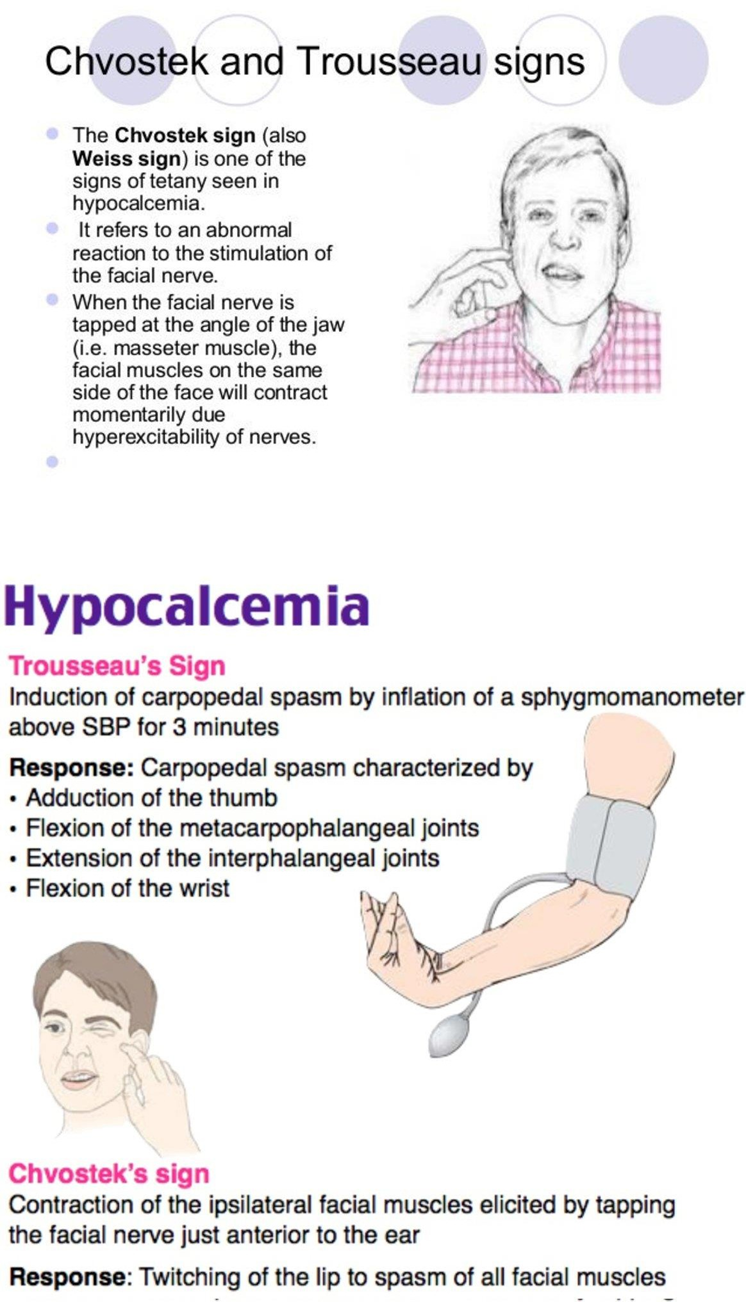
Positive Trousseau's sign
Negative Chvostek's sign
Muscle cramps
Correct Answer : A,C,E
A. Hypocalcemia can lead to paresthesia, including tingling sensations around the lips.
B. Abdominal distention is not typically associated with hypocalcemia.
C. Hypocalcemia can result in a positive Trousseau's sign, where carpal spasm is induced by inflating a blood pressure cuff above the systolic pressure for a few minutes.
D. Chvostek's sign is typically positive in hypocalcemia, not negative.
E. Hypocalcemia can cause muscle cramps due to increased neuromuscular excitability.
Nursing Test Bank
Naxlex Comprehensive Predictor Exams
Related Questions
Correct Answer is ["A","B","D"]
Explanation
A. The nurse's signature confirms that the client signed the informed consent document in the nurse's presence, verifying that the client provided consent voluntarily.
B. The nurse's signature confirms that the client has legal capacity and authority to provide consent for the proposed treatment or procedure.
C. The nurse's signature does not confirm the absence of a mental health condition; rather, it confirms that the client has provided informed consent.
D. The nurse's signature confirms that the client provided consent voluntarily and was not coerced or unduly influenced to do so.
E. While it is important for the client to understand the information provided, the nurse's signature does not specifically confirm this requirement.
Correct Answer is ["A","C","E"]
Explanation
A. Hypocalcemia can lead to paresthesia, including tingling sensations around the lips.
B. Abdominal distention is not typically associated with hypocalcemia.
C. Hypocalcemia can result in a positive Trousseau's sign, where carpal spasm is induced by inflating a blood pressure cuff above the systolic pressure for a few minutes.
D. Chvostek's sign is typically positive in hypocalcemia, not negative.
E. Hypocalcemia can cause muscle cramps due to increased neuromuscular excitability.
Whether you are a student looking to ace your exams or a practicing nurse seeking to enhance your expertise , our nursing education contents will empower you with the confidence and competence to make a difference in the lives of patients and become a respected leader in the healthcare field.
Visit Naxlex, invest in your future and unlock endless possibilities with our unparalleled nursing education contents today