
A nurse is caring for a client who has bulimia nervosa. Which of the following actions should the nurse take first?
Observe the client during and after meals.
Suggest that the client assist with meal planning.
Instruct the client about effective coping strategies.
Refer the client to a support group for clients who have eating disorders.
The Correct Answer is A
A. Correct. Observing the client during and after meals is a priority because clients with bulimia nervosa often engage in episodes of binge eating followed by purging behaviors. Monitoring the client's behavior during meals and immediately after can help assess for potential purging behaviors.
B. Incorrect. While involving the client in meal planning might be helpful, it is not the first action to address potential purging behaviors.
C. Incorrect. Instructing the client about effective coping strategies is important, but observing for potential purging behaviors is the initial action to address the client's immediate safety.
D. Incorrect. Referring the client to a support group is beneficial, but it is not the first action to address the client's immediate risk of purging behaviors.
Nursing Test Bank
Naxlex Comprehensive Predictor Exams
Related Questions
Correct Answer is B
Explanation
A. Incorrect. Over-the-counter topical ointments may worsen herpes simplex outbreaks.
B. Correct. Cleaning skin eruptions with povidone-iodine helps prevent secondary infection.
C. Incorrect. Antiviral medications, not antibiotics, are used to treat herpes simplex outbreaks.
D. Incorrect. Disposable thermometers are not directly related to herpes simplex outbreak management.
Correct Answer is B
Explanation
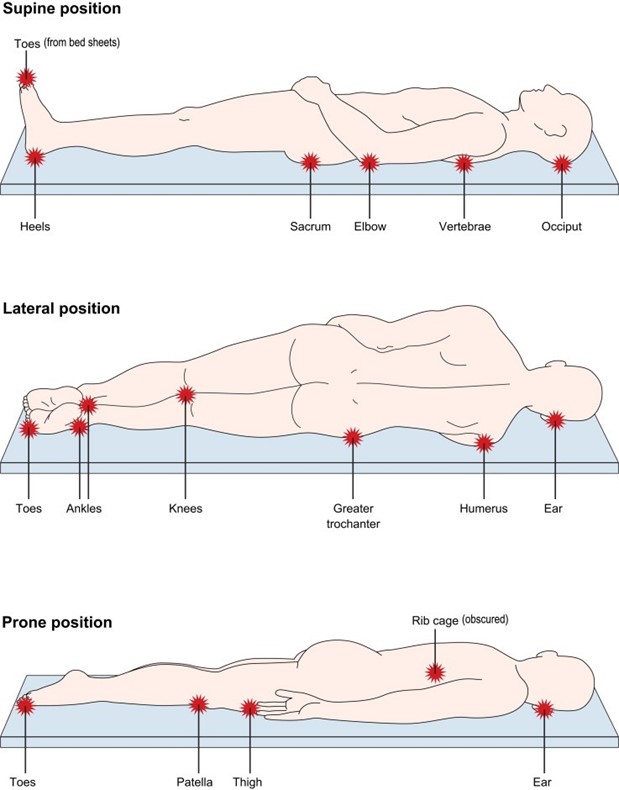
The occiput refers to the back of the head. Placing a small pillow or padding under the occiput can help relieve pressure and provide support to the client's head and neck when they are placed in the supine position.
Breasts: When in the prone position, breasts may be compressed or flattened. To relieve pressure, it may be necessary to use positioning techniques that distribute weight evenly and avoid direct pressure on the breasts, such as using cushions or foam pads to support the chest and torso.
Heels: The heels are prone to pressure ulcers when a client is lying in the supine position for extended periods. To relieve pressure, it is important to use proper heel offloading techniques, such as placing heel protectors or pillows under the lower legs to elevate the heels off the bed surface and prevent direct pressure.
Coccyx: The coccyx is the tailbone region at the base of the spine. When in the supine position, pressure on the coccyx can be relieved by using a cushion or padding under the pelvic area, specifically under the bony prominence of the coccyx, to reduce direct pressure and provide comfort.
Whether you are a student looking to ace your exams or a practicing nurse seeking to enhance your expertise , our nursing education contents will empower you with the confidence and competence to make a difference in the lives of patients and become a respected leader in the healthcare field.
Visit Naxlex, invest in your future and unlock endless possibilities with our unparalleled nursing education contents today