
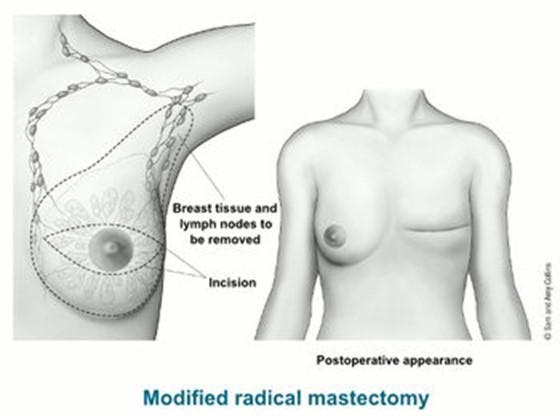
A nurse is caring for a client following a bilateral mastectomy. The client is often tearful and avoids looking at her dressings. Which of the following actions should the nurse take first?
Refer the client to a breast cancer support group.
Identify the impact of the mastectomy on the client's body image.
Encourage the client to assist with her dressing changes.
Provide the client with a mirror to look at her mastectomy incisions.
The Correct Answer is B
The nurse should first identify the impact of the mastectomy on the client’s body image.
This is because the client’s behavior of avoiding looking at her dressings and being tearful suggests that she may be struggling with changes to her body image after the surgery.
By identifying and addressing this issue, the nurse can provide appropriate emotional support and interventions to help the client cope with these changes.
Choice A is not the first action the nurse should take because referring the client to a breast cancer support group may be helpful, but it is not addressing the immediate concern of the client’s emotional state.
Choice C is not the first action because encouraging the client to assist with her dressing changes may be premature if she is still struggling emotionally with her body image.
Choice D is not the first action because providing the client with a mirror to look at her mastectomy incisions may be overwhelming for her if she is not yet ready to confront her changed appearance.
Nursing Test Bank
Naxlex Comprehensive Predictor Exams
Related Questions
Correct Answer is B
Explanation
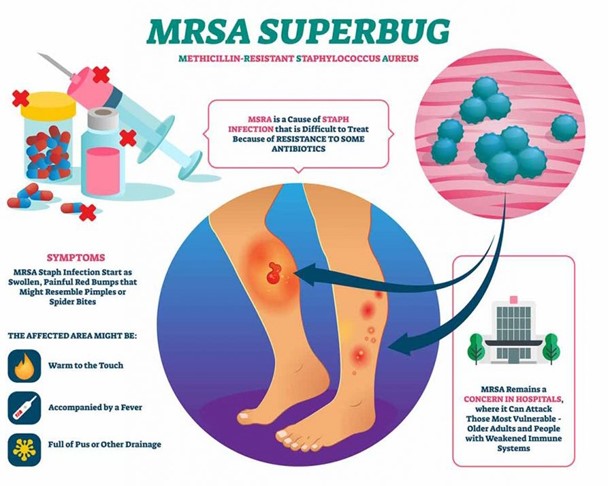
A client with MRSA infection should be placed in a private room to prevent the spread of infection.
Choice A is wrong because an N95 respirator mask is not necessary when caring for a client with an MRSA infection.
Choice C is wrong because the proper sequence for removing personal protective equipment is to remove gloves first, then the gown.
Choice D is wrong because visitors do not need to wear a mask when they are within 3 feet of the client with an MRSA infection.
Correct Answer is B
Explanation
This is because during the alarm reaction stage of general adaptation syndrome, which is also known as the fight-or-flight response, the sympathetic nervous system is activated by the sudden release of hormones.
This hormone release causes physical symptoms such as dilated pupils.
Choice A is wrong because depression is not a manifestation that occurs during the alarm reaction stage of general adaptation syndrome.
Choice C is wrong because bradycardia, or a slow heart rate, is not a manifestation that occurs during the alarm reaction stage of general adaptation syndrome.
Instead, an increase in heart rate is a common physical sign during this stage.
Choice D is wrong because physical exhaustion is not a manifestation that occurs during the alarm reaction stage of general adaptation syndrome.
Physical exhaustion occurs during the final stage of general adaptation syndrome, which is known as the exhaustion stage.
Whether you are a student looking to ace your exams or a practicing nurse seeking to enhance your expertise , our nursing education contents will empower you with the confidence and competence to make a difference in the lives of patients and become a respected leader in the healthcare field.
Visit Naxlex, invest in your future and unlock endless possibilities with our unparalleled nursing education contents today