
A nurse is assisting with postmortem care for a client who was a devout follower of Islam. Which of the following actions should the nurse take?
Allow a family member of the client to stay with the client's body until burial
Position the client's head toward Mecca
Allow a family member to stay with the client's body for 8 hr
Position the client's head northward
The Correct Answer is B
In Islam, it is customary to position the deceased's head toward Mecca, which is considered the holiest city in Islam. Mecca is the direction toward which Muslims face during prayer. Orienting the client's head toward Mecca is a sign of respect for their religious beliefs and customs.
While it is common in some cultural and religious practices for family members to stay with the deceased until burial, this may vary depending on the specific beliefs and customs of the family. It is important to respect the family's wishes and cultural practices, but it is not solely specific to Islam.
The duration of time for a family member to stay with the deceased can vary depending on cultural and religious practices, but there is no specific set duration of 8 hours in Islamic customs.
In Islam, the direction of Mecca is significant, and positioning the client's head toward Mecca is the customary practice. There is no specific requirement to position the head northward in Islamic customs.
Nursing Test Bank
Naxlex Comprehensive Predictor Exams
Related Questions
Correct Answer is ["B"]
Explanation
a. Asking other group members to limit their speaking may place unnecessary pressure on the quiet client and make them feel singled out. The goal is to create a supportive environment where the client feels comfortable contributing when they are ready. Limiting the other group members' participation does not address the individual needs of the client who is silent.
b.Some clients may need extra time to process information or formulate their responses, particularly in a group setting where they might feel overwhelmed or anxious. Allowing the client extra time respects their pace and encourages participation without pressuring them.
c.Appointing the client to lead the discussion if they cannot contribute are not appropriate actions. These approaches can increase the client's discomfort and create a negative atmosphere, which goes against the principles of group therapy. It is important to foster an inclusive and supportive environment that encourages participation at each person's pace.
d.Telling a client to leave the group if they cannot contribute is not appropriate action. These approaches can increase the client's discomfort and create a negative atmosphere, which goes against the principles of group therapy.
Correct Answer is B
Explanation
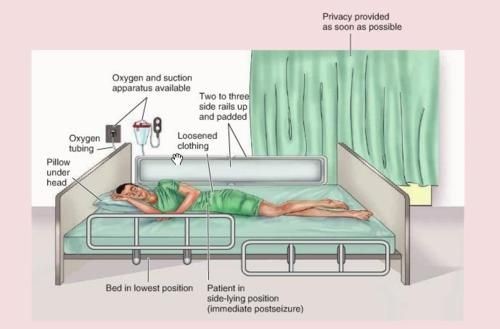
Lowering the side rails of the bed could lead to the client falling from the bed. Instead raise the side rails and place padding on them.
Measuring the seizure duration is a crucial step for medical evaluation afterwards necessary for determining intervention.
Inserting an oral airway into the client's mouth is not indicated during a tonic-clonic seizure. It is generally not recommended to place any objects or devices into the mouth of a person having a seizure, as it can potentially cause injury to the person or damage to the airway.
Whether you are a student looking to ace your exams or a practicing nurse seeking to enhance your expertise , our nursing education contents will empower you with the confidence and competence to make a difference in the lives of patients and become a respected leader in the healthcare field.
Visit Naxlex, invest in your future and unlock endless possibilities with our unparalleled nursing education contents today