
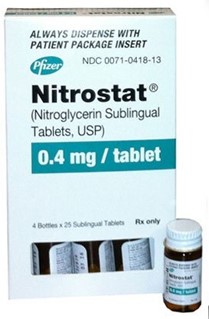
A nurse in the emergency department is caring for a client who took 3 nitroglycerin tablets sublingually for chest pain. The client reports relief from the chest pain but now he is experiencing a headache. Which of the following statements should the nurse make?
"A headache is an indication of an allergy to the medication."
"A headache indicates tolerance to the medication."
"A headache is likely due to the anxiety about the chest pain."
"A headache is an expected adverse effect of the medication."
The Correct Answer is D
A headache is a common and expected adverse effect of nitroglycerin, due to its vasodilating action. The client can take an over-the-counter analgesic to relieve the headache, unless contraindicated.
"A headache is an indication of an allergy to the medication." is not correct, as a headache is not a sign of an allergic reaction to nitroglycerin. An allergic reaction would manifest as rash, itching, swelling, or difficulty breathing.
"A headache indicates tolerance to the medication." is not accurate, as a headache does not indicate tolerance to nitroglycerin. Tolerance would manifest as reduced or absent relief from anginal pain.
"A headache is likely due to the anxiety about the chest pain." is not plausible, as a headache is not likely due to the anxiety about the chest pain. Anxiety would manifest as nervousness, restlessness, palpitations, or sweating.
Nursing Test Bank
Naxlex Comprehensive Predictor Exams
Related Questions
Correct Answer is C
Explanation
Correct Answer is C
Explanation
Ventricular gallop is another name for the S3 sound, which is a low-pitched sound heard at the end of diastole, just after the S2 sound. It is caused by the rapid filling of the ventricles and the vibration of the ventricular walls.
Closure of the pulmonic valve is one of the components of the S2 sound, which is a high-pitched sound heard at the end of the systole, just before the S1 sound. It is caused by the closure of the semilunar valves (pulmonic and aortic).
Closure of the mitral valve is one of the components of the S1 sound, which is a high-pitched sound heard at the beginning of systole, just after the S2 sound. It is caused by the closure of the atrioventricular valves (mitral and tricuspid).
d. Atrial gallop is another name for the S4 sound, which is a low-pitched sound heard at the end of diastole, just before the S1 sound. It is caused by atrial contraction and increased resistance to ventricular filling.
Whether you are a student looking to ace your exams or a practicing nurse seeking to enhance your expertise , our nursing education contents will empower you with the confidence and competence to make a difference in the lives of patients and become a respected leader in the healthcare field.
Visit Naxlex, invest in your future and unlock endless possibilities with our unparalleled nursing education contents today