
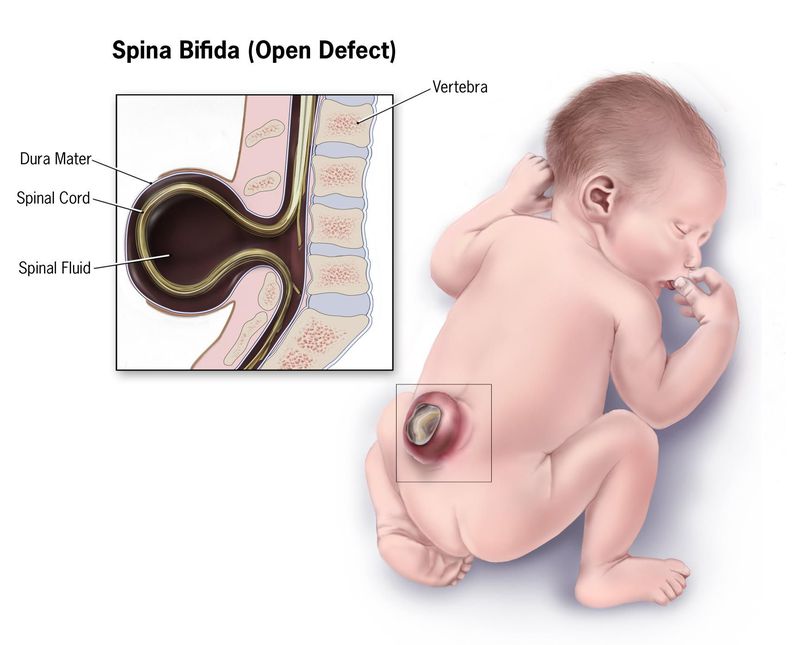
A nurse in planning care immediately following birth for a newborn who has a myelomeningocele that is leaking cerebrospinal fluid. Which of the following actions should the nurse include in the plan of care?
Monitor the rectal temperature every 4 hr.
Administer broad-spectrum antibiotics
Prepare for surgical closure after 72 hr.
Cleanse the site with povidone-iodine
The Correct Answer is B
Correct Answer: B
B. Administer broad-spectrum antibiotics
Newborns with a leaking myelomeningocele are at a high risk for infection, especially meningitis, due to the exposure of cerebrospinal fluid (CSF). Administering broad-spectrum antibiotics helps reduce the risk of infection until the defect is surgically closed.
Incorrect answers:
A. Monitor the rectal temperature every 4 hr. Taking rectal temperatures is contraindicated in a newborn with a myelomeningocele due to the risk of trauma to the rectum and potential introduction of bacteria near the exposed spinal cord and CSF. Axillary temperatures should be used instead.
C. Prepare for surgical closure after 72 hr. Surgical repair of a myelomeningocele is typically performed within the first 24–48 hours of life to reduce the risk of infection and prevent further nerve damage.
D. Cleanse the site with povidone-iodine. Povidone-iodine is not appropriate for cleansing the exposed myelomeningocele site because it can be too harsh and toxic to neural tissue.
Nursing Test Bank
Naxlex Comprehensive Predictor Exams
Related Questions
Correct Answer is D
Explanation
A. Restrict daily oral fluid intake: Restricting oral fluid intake is not generally recommended unless there is a specific medical indication. Adequate hydration is important, especially postpartum, and fluid restriction may not be appropriate unless there are specific reasons to do so.
B. Administer an IV bolus of lactated Ringer’s: In a client with preeclampsia without severe features, intravenous fluid bolus administration is not the primary intervention. Fluid management is important, but it is typically done judiciously based on the client's specific needs, not as a routine IV bolus.
C. Obtain a prescription for misoprostol: Misoprostol is a medication that is sometimes used to prevent or treat postpartum hemorrhage but is not a routine intervention for a client with preeclampsia without severe features. The focus in preeclampsia management is on blood pressure control and monitoring for signs of worsening disease.
D. Assess for edema: This is the correct action. Assessing for edema is an important component of monitoring a client with preeclampsia. While edema is a common symptom in pregnancy, excessive or sudden-onset edema may be an indication of worsening preeclampsia.
Correct Answer is D
Explanation
A. Administer 500 ml lactated Ringer's IV bolus:
This choice may be relevant in the context of postpartum hemorrhage, but the first step should be to assess the client's status, including urinary output. Administering fluids without a clear assessment may not address the underlying cause.
B. Replace the surgical dressing:
Vaginal bleeding after a cesarean birth is unlikely to be addressed by replacing the surgical dressing. This action may not address the root cause of the bleeding, which needs further assessment.
C. Apply an ice pack to the incision site:
Using an ice pack is not the appropriate intervention for postpartum bleeding. Ice is typically used for pain and swelling, not for controlling bleeding.
D. Evaluate urinary output:
This is the correct choice. Evaluating urinary output is crucial to assess the client's overall fluid status and kidney perfusion. In the context of postpartum bleeding, it helps determine if there is hypovolemia or other issues contributing to the bleeding. Adequate urinary output is a positive sign of organ perfusion.
Whether you are a student looking to ace your exams or a practicing nurse seeking to enhance your expertise , our nursing education contents will empower you with the confidence and competence to make a difference in the lives of patients and become a respected leader in the healthcare field.
Visit Naxlex, invest in your future and unlock endless possibilities with our unparalleled nursing education contents today