
A nurse in an urgent care clinic is collecting data from a client who reports having diarrhea for the past 3 days. Which of the following findings indicates hypokalemia?
Pitting edema
Diplopia
Muscle weakness
Hyperactive bowel sounds
The Correct Answer is C
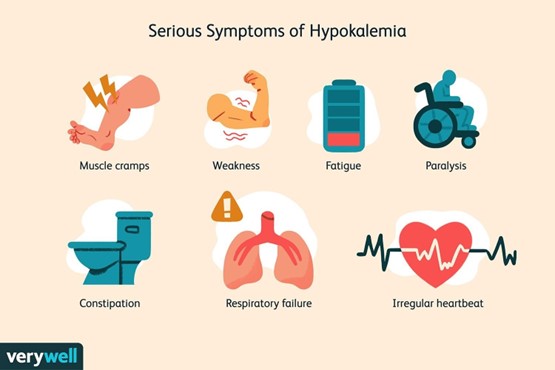
A nurse collecting data from a client who reports having diarrhea for the past 3 days should identify that muscle weakness is a symptom of hypokalemia. Hypokalemia is a condition in which the blood potassium level is low and can be caused by excessive fluid loss through diarrhea. Potassium helps regulate muscle contractions, so when blood potassium levels are low, muscles may produce weaker contractions which result in muscle weakness.
The other options are not typical symptoms of hypokalemia.
a) Pitting edema is not a typical symptom of hypokalemia.
b) Diplopia is not a typical symptom of hypokalemia.
d) Hyperactive bowel sounds are not a typical symptom of hypokalemia.
Nursing Test Bank
Naxlex Comprehensive Predictor Exams
Related Questions
Correct Answer is B
Explanation
To effectively communicate with a client who speaks a different language, it is important to use alternative methods of communication. One effective method is to supplement spoken language with pictures or visual aids. This can help bridge the language barrier and enhance understanding between the nurse and the client.
Recognize that the client nodding indicates an understanding of the information: Nodding does not always indicate understanding. It could be a cultural gesture or a sign of politeness. Relying solely on nodding may lead to miscommunication and misunderstanding.
Speak to the client at an increased volume: Speaking louder does not necessarily overcome the language barrier. It may make communication more difficult and could be perceived as rude or intimidating.
Ask a family member of the client to interpret: While involving a family member may seem helpful, it is not always reliable or appropriate. Family members may not be proficient in both languages or may not fully understand medical terminology. Additionally, the client may desire privacy or may not want to burden their family members with the responsibility of interpretation.
Correct Answer is A
Explanation
Answer: (A) Inject 20 units of air into the vial of NPH insulin.
Rationale:
A) Inject 20 units of air into the vial of NPH insulin:
Injecting air into the vial of NPH insulin is the first step to prevent creating a vacuum, which could make it difficult to withdraw the insulin later. The nurse must inject the corresponding amount of air for the dose needed, ensuring that the insulin can be withdrawn smoothly and accurately without bubbles, which could affect the dose.
B) Inject 5 units of air into the vial of regular insulin:
Injecting air into the regular insulin vial is also necessary before withdrawing the insulin, but it should be done after injecting air into the NPH vial. This sequence ensures that no NPH insulin contaminates the regular insulin vial when the nurse withdraws the doses later.
C) Withdraw 20 units of NPH insulin from the vial:
Withdrawing NPH insulin should be done after air is injected into both vials and after the regular insulin has been drawn up. This sequence prevents the mixing of the two types of insulin and ensures accurate dosing, which is crucial for maintaining the correct blood glucose levels.
D) Withdraw 5 units of regular insulin from the vial:
Withdrawing regular insulin is critical to do before the NPH insulin to prevent contamination of the regular insulin with NPH, which could alter the onset and peak times of the regular insulin. However, it should follow the steps of injecting air into both vials, starting with the NPH vial.
Whether you are a student looking to ace your exams or a practicing nurse seeking to enhance your expertise , our nursing education contents will empower you with the confidence and competence to make a difference in the lives of patients and become a respected leader in the healthcare field.
Visit Naxlex, invest in your future and unlock endless possibilities with our unparalleled nursing education contents today