
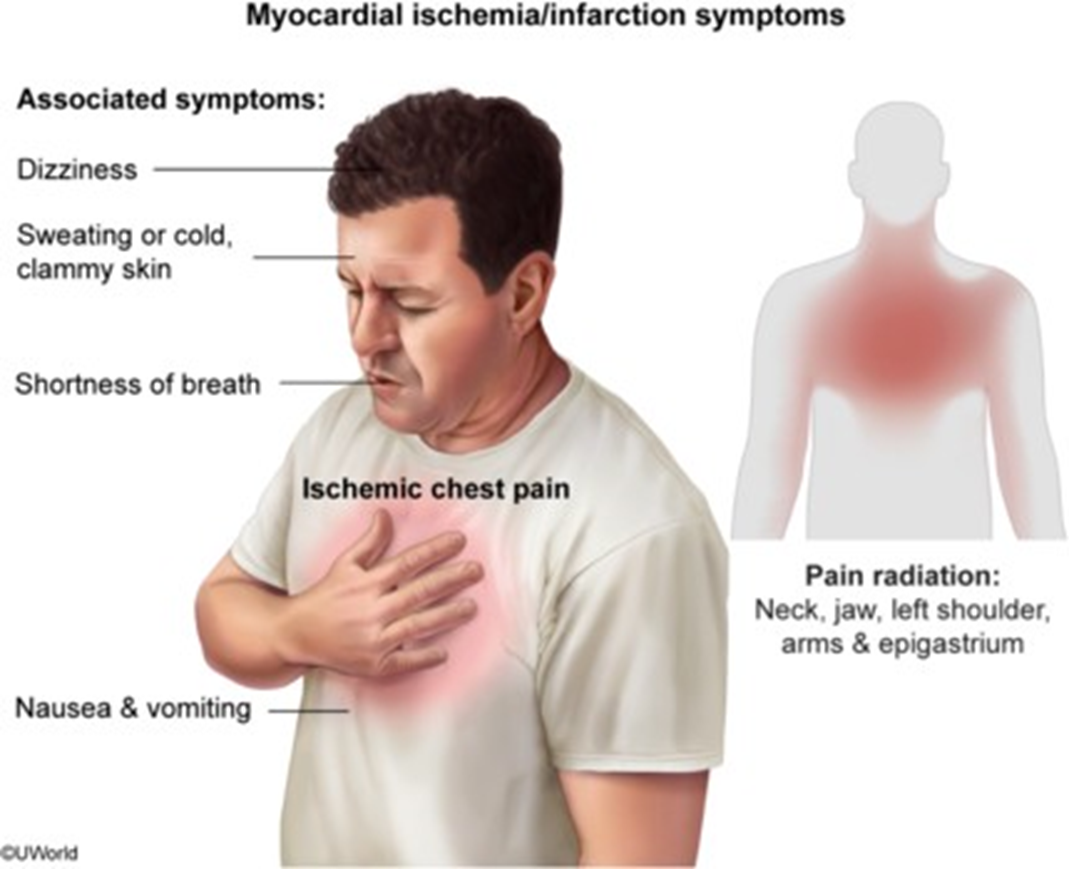
A client presents to the emergency department reporting chest pain that is radiating to the left arm, shortness of breath, and diaphoresis. Which medication does the nurse anticipate being prescribed by the healthcare provider?
Morphine.
Oxycodone.
Hydromorphone.
Fentanyl.
The Correct Answer is A
Choice A rationale
The client’s presentation of chest pain radiating to the left arm, shortness of breath, and diaphoresis are classic symptoms of a myocardial infarction (heart attack)56. Morphine is often administered in this situation to relieve pain and reduce the workload of the heart.
Choice B rationale
Oxycodone is a strong opioid medication used to treat severe pain. However, it is not typically the first choice for pain relief in the setting of a suspected heart attack.
Choice C rationale
Hydromorphone is another strong opioid medication used to treat severe pain. Like oxycodone, it is not typically the first choice for pain relief in the setting of a suspected heart attack.
Choice D rationale
Fentanyl is a potent opioid pain reliever. While it can be used in the management of severe pain, it is not typically the first choice for pain relief in the setting of a suspected heart attack.
Nursing Test Bank
Naxlex Comprehensive Predictor Exams
Related Questions
Correct Answer is A
Explanation
Lower back pain and hypotension are symptoms of an ABO incompatibility reaction, which is a serious complication of blood transfusion. This reaction occurs when the client receives a blood type that is incompatible with their own. It can cause a rapid and severe response, including back pain, hypotension, fever, and chills. This should be reported immediately to the healthcare provider.
Correct Answer is ["A","D","E"]
Explanation
Furosemide is a loop diuretic used to treat fluid retention and high blood pressure by increasing the amount of urine the body makes. Therefore, assessing urinary output is crucial to determine the patient’s response to treatment. Lung sounds and oxygen saturation should also be assessed as furosemide is often used to treat edema caused by heart failure. Improved lung sounds and oxygen saturation can indicate a reduction in fluid buildup in the lungs.
Whether you are a student looking to ace your exams or a practicing nurse seeking to enhance your expertise , our nursing education contents will empower you with the confidence and competence to make a difference in the lives of patients and become a respected leader in the healthcare field.
Visit Naxlex, invest in your future and unlock endless possibilities with our unparalleled nursing education contents today