
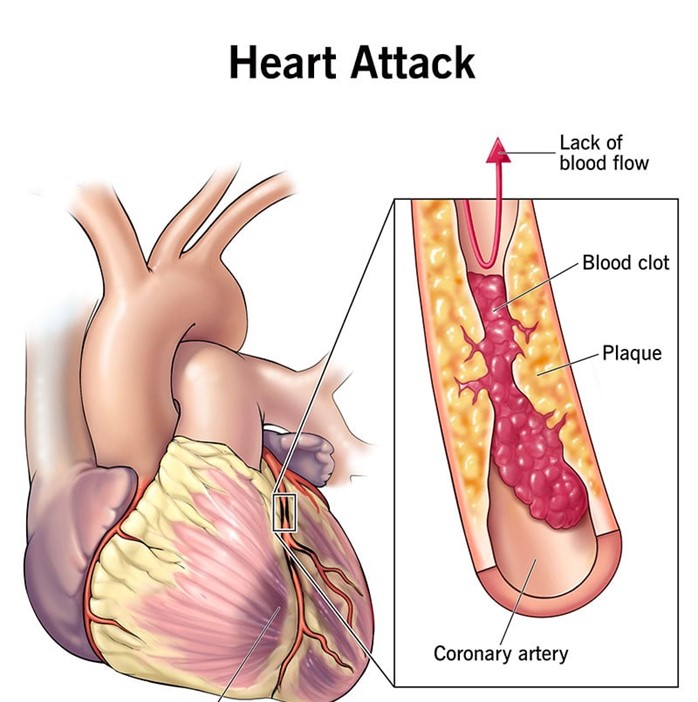
A 46-year-old male client who had a myocardial infarction (MI) 24 hours ago comes to the nurse's station fully dressed and wanting to go home. He tells the nurse that he is feeling much better at this time. Based on this behavior, which client problem should the nurse include in the plan of care?
Ineffective coping related to denial
Emotional conflict due to stress
Deficient knowledge of MI lifestyle changes
Anxiety related to treatment plan
The Correct Answer is A
Choice B reason: Emotional conflict due to stress is not a specific problem for a client who had an MI 24 hours ago and wants to go home despite his condition. Emotional conflict is a state of having mixed or contradictory feelings about something or someone, such as family, work, or self. Stress is a response to any physical, psychological, or environmental demand that exceeds one's coping resources. The nurse should assess the client's sources of stress and conflict and help him manage them.
Choice C reason: Deficient knowledge of MI lifestyle changes is not a primary problem for a client who had an MI 24 hours ago and wants to go home despite his condition. Deficient knowledge is a state of lacking information or understanding about something, such as disease process, treatment options, or self-care measures. Lifestyle changes are modifications in one's habits or behaviors that promote health and well-being, such as diet, exercise, smoking cessation, or stress management. The nurse should assess the client's learning needs and readiness and provide appropriate education.
Choice D reason: Anxiety related to treatment plan is not an evident problem for a client who had an MI 24 hours ago and wants to go home despite his condition. Anxiety is a feeling of apprehension, worry, or fear that interferes with one's normal functioning or well-being. Treatment plan is a set of goals, interventions, and outcomes that guide the care of a client with a specific health problem, such as MI. The nurse should assess the client's level of anxiety and provide information and reassurance about his treatment plan.
Nursing Test Bank
Naxlex Comprehensive Predictor Exams
Related Questions
Correct Answer is B
Explanation
Choice B is correct because initiating a continuous infusion of IV fluids per prescription has highest priority for an infant with pyloric stenosis who is scheduled for a pyloromyotomy. Pyloric stenosis causes projectile vomiting and dehydration, which can lead to metabolic alkalosis and electrolyte imbalance. The infant needs IV fluids to correct these abnormalities and prevent complications.
Choice A is incorrect because marking an outline of the “olive-shaped” mass in the right epigastric area is not a priority action for an infant with pyloric stenosis who is scheduled for a pyloromyotomy. The “olive-shaped” mass is a palpable sign of pyloric stenosis, but it does not require any intervention before surgery.
Choice C is incorrect because monitoring amount of intake and infant's response to feedings is not a priority action for an infant with pyloric stenosis who is scheduled for a pyloromyotomy. The infant may have difficulty feeding due to vomiting and gastric distension, which can worsen their dehydration and malnutrition. The infant may need to be kept NPO (nothing by mouth) before surgery.
Choice D is incorrect because instructing parents regarding care of the incisional area is not a priority action for an infant with pyloric stenosis who is scheduled for a pyloromyotomy. The incisional area will need proper care after surgery, but this can be taught later when the infant is stable and ready for discharge.
Correct Answer is B
Explanation
Choice A: Determining the need for urinary catheterization is not a task that the nurse should assign to the PN, as this requires clinical judgment and critical thinking, which are beyond the scope of practice of the PN. This is a distractor choice.
Choice B: Titrating oxygen to prescribed parameters is a task that the nurse can assign to the PN, as this involves following orders and protocols, which are within the scope of practice of the PN. Therefore, this is the correct choice.
Choice C: Receiving a postoperative client and conducting the assessment is not a task that the nurse should assign to the PN, as this requires initial assessment and data collection, which are the responsibility of the registered nurse. This is another distractor choice.
Choice D: Evaluating and updating plans of care for clients is not a task that the nurse should assign to the PN, as this requires nursing diagnosis and outcome identification, which are part of the nursing process that only the registered nurse can perform. This is another distractor choice.
Whether you are a student looking to ace your exams or a practicing nurse seeking to enhance your expertise , our nursing education contents will empower you with the confidence and competence to make a difference in the lives of patients and become a respected leader in the healthcare field.
Visit Naxlex, invest in your future and unlock endless possibilities with our unparalleled nursing education contents today