
A 25 years old patient at 38 weeks gestation who is in labor is being treated with magnesium sulfate for preeclampsia. Which nursing intervention does not correspond with this medication's toxicity? Select one:
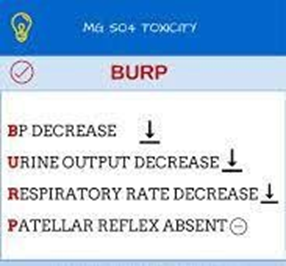
Assess and record urine output.
Assess cervix dilation
Assess deep tendon reflexes
Check respiratory rate
The Correct Answer is B
a. This is an important nursing intervention when a patient is receiving magnesium sulfate, as the medication can affect renal function.
b. Assessing cervix dilation is not related to magnesium sulfate toxicity.
c. This is an important nursing intervention when a patient is receiving magnesium sulfate, as the medication can affect neuromuscular function.
d. This is an important nursing intervention when a patient is receiving magnesium sulfate, as the medication can affect respiratory function.
Nursing Test Bank
Naxlex Comprehensive Predictor Exams
Related Questions
Correct Answer is D
Explanation
a. A negative rubella titer indicates that the client is not immune to rubella.
b. Rubella vaccine is contraindicated during pregnancy.
c. A negative rubella titer does not indicate whether the client is currently experiencing a rubella infection.
d. A negative rubella titer means that the client does not have antibodies against the rubella virus, which can cause congenital defects in the fetus if the mother gets infected during pregnancy. Therefore, the client should receive the rubella vaccine after delivery, when it is safe to do so.
Correct Answer is D
Explanation
a. While this is important, it is not the priority when admitting a pregnant woman who has experienced a bleeding episode in late pregnancy.
b. This is important for managing the bleeding but is not the priority.
c. Monitoring uterine contractions is important, but assessing fetal heart rate (FHR) and maternal vital signs is the priority to determine the status of the fetus and mother.
d. Bleeding in late pregnancy can indicate placental abruption, which is a life- threatening condition for both the mother and the fetus. The nurse should monitor the FHR and maternal vital signs to assess the severity of the bleeding and the fetal and maternal well-being.
Whether you are a student looking to ace your exams or a practicing nurse seeking to enhance your expertise , our nursing education contents will empower you with the confidence and competence to make a difference in the lives of patients and become a respected leader in the healthcare field.
Visit Naxlex, invest in your future and unlock endless possibilities with our unparalleled nursing education contents today