
Which of the following describes Locked-in Syndrome?
Inability to move or respond except for eye movements due to a lesion affecting the pons
Unconsciousness, unarousable unresponsiveness
Unresponsiveness to the environment, makes no movement or sound but sometimes opens eyes
Devoid of cognitive function but has sleep-wake cycles
The Correct Answer is A
Choice A: Inability to move or respond except for eye movements due to a lesion affecting the pons is a description of locked-in syndrome, as it is a state of complete paralysis and preserved consciousness caused by damage to the brainstem.
Choice B: Unconsciousness, unarousable unresponsiveness is not a description of locked-in syndrome, but rather a description of coma, as it is a state of complete loss of consciousness and reflexes caused by severe brain injury.
Choice C: Unresponsiveness to the environment, makes no movement or sound but sometimes opens eyes is not a description of locked-in syndrome, but rather a description of akinetic mutism, as it is a state of severe apathy and reduced motor activity caused by damage to the frontal lobes or basal ganglia.
Choice D: Devoid of cognitive function but has sleep-wake cycles is not a description of locked-in syndrome, but rather a description of persistent vegetative state, as it is a state of minimal awareness and responsiveness caused by widespread brain damage.
Nursing Test Bank
Naxlex Comprehensive Predictor Exams
Related Questions
Correct Answer is C
Explanation
Choice A: Altered level of consciousness is not a sign/symptom of cerebral spinal fluid leakage, but rather a sign/symptom of increased intracranial pressure or brain injury.
Choice B: Painful headache is not a sign/symptom of cerebral spinal fluid leakage, but rather a sign/symptom of meningitis or sinusitis.
Choice C: Salty taste in their mouth, postnasal drip or clear fluid draining from the nose is a sign/symptom of cerebral spinal fluid leakage, as it indicates that the fluid is escaping from the brain or spinal cord through a tear or hole in the meninges or skull.
Choice D: All of the above is not correct, as only choice C is a sign/symptom of cerebral spinal fluid leakage.
Correct Answer is D
Explanation
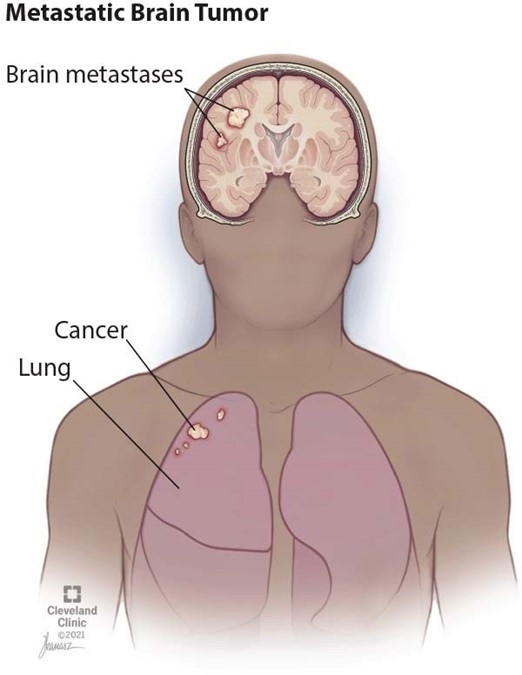
Choice A: Referral to counselor, social worker, home health care, support groups is correct because it can help the patient cope with the emotional, social, and practical aspects of living with a brain tumor. It can also provide information, resources, and assistance to the patient and their caregivers.
Choice B: Presence of family, friends, spiritual advisor, and health care personnel may be supportive is correct because it can provide comfort, companionship, and guidance to the patient. It can also help the patient express their feelings, needs, and preferences.
Choice C: Encourage independence for as long as possible is correct because it can enhance the patient's self-esteem, dignity, and quality of life. It can also help the patient maintain their physical and mental abilities and prevent complications such as depression, anxiety, or immobility.
Choice D: All of the above are correct because they are part of the holistic nursing care for the patient with nervous system metastases or primary brain tumor. They can address the physical, psychological, social, and spiritual needs of the patient and their family.
Whether you are a student looking to ace your exams or a practicing nurse seeking to enhance your expertise , our nursing education contents will empower you with the confidence and competence to make a difference in the lives of patients and become a respected leader in the healthcare field.
Visit Naxlex, invest in your future and unlock endless possibilities with our unparalleled nursing education contents today