
Two clients have been in a similar motor vehicle accident, and have similar injuries. The nurse observes each client's different responses to this stressor. The nurse understands that the degree of stress each client experiences from the crash may be influenced by their: (SELECT ALL THAT APPLY)
health status prior to the accident.
different ages.
external resources.
individual problem-solving skills.
personalities.
Correct Answer : A,B,C,D,E
A. The health status prior to the accident can influence how individuals respond to stress. Clients with pre-existing medical conditions, chronic pain, or disabilities may experience increased stress due to concerns about exacerbation of their conditions, recovery, or long-term consequences. Therefore, health status prior to the accident can impact the degree of stress experienced.
B. Age can influence individuals' coping mechanisms and resilience in response to stress. Younger individuals may have less life experience and coping skills, while older individuals may have accumulated more experience and developed better coping strategies over time. Additionally, age-related factors such as physical resilience and social support networks can affect how individuals respond to stressors. Therefore, different ages can influence the degree of stress experienced.
C. External resources such as social support networks, access to healthcare, financial stability, and community resources can significantly impact individuals' ability to cope with stress. Clients with strong support systems, adequate access to medical care, and financial security may experience lower levels of stress compared to those lacking these resources. Therefore, external resources can influence the degree of stress experienced.
D. Individual problem-solving skills play a crucial role in how individuals perceive and manage stressful situations. Clients with strong problem-solving skills may feel more confident in their ability to address challenges and may experience lower levels of stress. Conversely, clients with limited problem-solving skills may feel overwhelmed and experience higher levels of stress. Therefore, individual problem- solving skills can influence the degree of stress experienced.
E. Personality traits such as resilience, optimism, neuroticism, and coping styles can impact how individuals respond to stressors. For example, individuals with resilient personalities and positive coping styles may adapt more effectively to stressors and experience lower levels of stress. Conversely, individuals with neurotic personalities or maladaptive coping styles may be more prone to experiencing heightened stress levels. Therefore, personalities can influence the degree of stress experienced.
Nursing Test Bank
Naxlex Comprehensive Predictor Exams
Related Questions
Correct Answer is B
Explanation
B. A PICC line is a long, flexible catheter inserted into a peripheral vein, typically in the upper arm, and advanced until the tip lies in the superior vena cava or the cavoatrial junction. PICC lines are suitable for long-term venous access and are often used for administering medications, including antibiotics, over several weeks or months. They offer stable and reliable access, reducing the need for frequent venipunctures.
A. Butterfly needles are typically used for short-term venous access, such as for blood draws or administering medications that do not require long-term therapy. They are not suitable for prolonged use or for administering medications over several weeks, as they are not designed for secure and stable access over an extended period.
C. A peripheral IV-lock, also known as a saline lock or heplock, is a short catheter inserted into a peripheral vein and then capped off for intermittent use. While peripheral IV-locks are suitable for short-term venous access, they are not ideal for prolonged therapy lasting several weeks. Additionally, they may not provide the necessary stability and reliability for administering IV antibiotics over an extended period.
D. A small gauge peripheral angiocath refers to a short catheter inserted into a peripheral vein for intravenous access. While a larger gauge catheter, such as a 16-gauge, may allow for faster infusion rates and is suitable for certain situations requiring rapid fluid administration, it may not be the most appropriate choice for long-term IV antibiotic therapy. The choice of gauge depends on factors such as the client's vein size, the viscosity of the medication, and the duration of therapy.
Correct Answer is D
Explanation
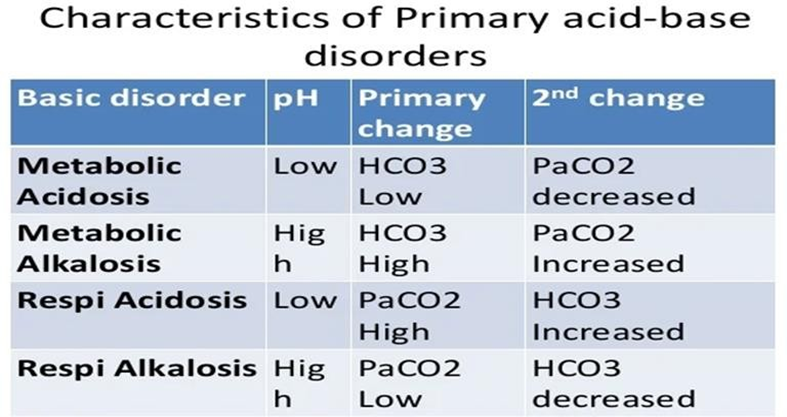
D. In metabolic acidosis, the pH would be low (acidemic) and the HCO3 level would be below the normal range. In the provided ABG results, the pH is low (acidemic) and the HCO3 level is below the normal range, indicating metabolic acidosis.
A. In respiratory alkalosis, the pH would be elevated (alkalotic) and the PaCO2 would be below the normal range (hypocapnia). However, in the provided ABG results, the pH is low (acidemia) rather than high, ruling out respiratory alkalosis.
B. In respiratory acidosis, the pH would be low (acidemic) and the PaCO2 would be above the normal range (hypercapnia). However, in the provided ABG results, the PaCO2 is within the normal range, ruling out respiratory acidosis.
C. In metabolic alkalosis, the pH would be elevated (alkalotic) and the HCO3 level would be above the normal range. However, in the provided ABG results, the pH is low (acidemic) and the HCO3 level is below the normal range, ruling out metabolic alkalosis.
Whether you are a student looking to ace your exams or a practicing nurse seeking to enhance your expertise , our nursing education contents will empower you with the confidence and competence to make a difference in the lives of patients and become a respected leader in the healthcare field.
Visit Naxlex, invest in your future and unlock endless possibilities with our unparalleled nursing education contents today