
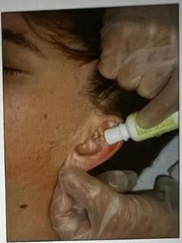
The nurse prepares to instill an adolescent client's ear drops as seen in the picture. Which should the nurse do next?
Reposition the dropper.
Pull the auricle up and out.
Visualize the ear drum.
Administer the ear drops.
The Correct Answer is B
A. The dropper should already be positioned correctly, with the tip pointing toward the ear canal.
B. For adolescents and adults, the auricle (outer ear) should be pulled up and out to straighten the ear canal. This allows the ear drops to flow directly into the ear canal, avoiding the tympanic membrane (eardrum). Correctly positioning the auricle helps to prevent irritation and discomfort during ear drop administration.
C. While visualizing the eardrum is important for certain procedures, it's not necessary when administering ear drops.
D. The ear drops should be administered after the auricle is pulled up and out to ensure proper placement in the ear canal.
Nursing Test Bank
Naxlex Comprehensive Predictor Exams
Related Questions
Correct Answer is D
Explanation
A. This can strain the back and increase the risk of injury. It's important to use proper body mechanics, such as bending the knees and keeping the back straight, when reaching for objects.
B. Bending at the waist can strain the back and increase the risk of injury. It's important to lift objects with the legs, not the back.
C. This can strain the back and hips. It's important to use proper body mechanics, such as using the legs and core muscles to push or pull heavy objects.
D. Standing erect with knees bent provides a strong base of support and helps to distribute weight evenly. Bending the knees allows for lifting with the legs, which is less stressful on the back and reduces the risk of injury. Pulling a draw sheet and moving a client in bed requires a combination of strength and proper body mechanics. Standing erect with knees bent helps to prevent strain on the back and muscles
Correct Answer is B
Explanation
A. Document in the EHR: While documenting the event in the electronic health record is important, it's not sufficient to address the medication error. An incident report provides a more comprehensive and structured approach to documenting and investigating the event.
B. When a medication error occurs, it's crucial to document the event through an incident report. This helps to identify the root cause of the error, prevent similar occurrences in the future, and ensure patient safety. An incident report should include a detailed description of the event, the actions taken, and any potential contributing factors.
C. While informing the next shift is important for continuity of care, it's not the most immediate action needed to address the medication error. Completing an incident report is a higher priority.
D. Notifying the healthcare provider is important, but it should be done in conjunction with completing an incident report. The incident report provides a detailed record of the event, which can be shared with the healthcare provider for further review and investigation.
Whether you are a student looking to ace your exams or a practicing nurse seeking to enhance your expertise , our nursing education contents will empower you with the confidence and competence to make a difference in the lives of patients and become a respected leader in the healthcare field.
Visit Naxlex, invest in your future and unlock endless possibilities with our unparalleled nursing education contents today