
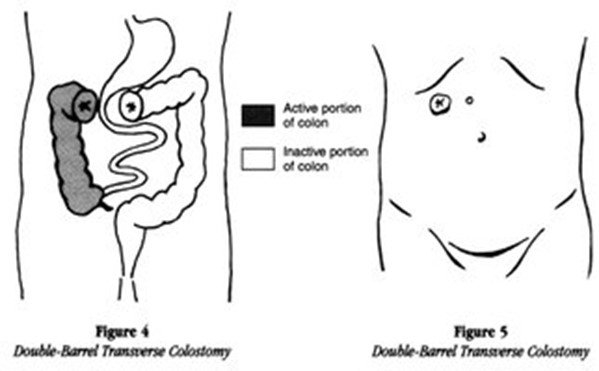
The nurse is preparing a client for surgery and observes on the operative permit that the client will be having a double-barrel colostomy. What portion of the large intestine is the nurse aware that this is performed?
Ascending.
Descending.
Transverse.
Sigmoid.
The Correct Answer is D
sigmoid. A double-barrel colostomy involves surgically creating two separate stomas from the colon, with the proximal stoma discharging stool and the distal stoma discharging mucus. This type of colostomy is typically performed in the sigmoid colon, which is the S-shaped segment of the large intestine located just before the rectum.
Choice A, ascending, is not the correct answer because an ascending colostomy is created in the ascending colon, which is located on the right side of the abdomen.
Choice B, descending, is not the correct answer because a descending colostomy is created in the descending colon, which is located on the left side of the abdomen.
Choice C, transverse, is not the correct answer because a transverse colostomy is created in the transverse colon, which is located across the upper abdomen.
Nursing Test Bank
Naxlex Comprehensive Predictor Exams
Related Questions
Correct Answer is A
Explanation
Giving non-prescription laxatives to a client with cirrhosis can cause severe dehydration and electrolyte imbalances, which can be life-threatening. The nurse should report this intervention immediately to the physician.
Choice B is incorrect because measuring abdominal girth is a standard nursing intervention for clients with cirrhosis to assess for ascites.
Choice C is incorrect because asking the client about food intake is a standard nursing intervention for assessing nutritional status.
Choice D is incorrect because checking for signs of hepatic encephalopathy is a standard nursing intervention for clients with cirrhosis.
Correct Answer is B
Explanation
Provide the client with warm fluids. The shivering can occur due to the anesthesia, the effect of the surgery, or cold temperature in the operating room. The shivering increases the client's oxygen consumption and carbon dioxide production, which can cause hypoxia, hypercapnia, and acidosis. The nurse should provide warm fluids to prevent hypothermia and warm blankets to reduce shivering.
Option A, placing the client on a hypothermia blanket, is incorrect because it is used to lower body temperature, not raise it.
Option C, covering the client with a light blanket, is incorrect because it is not enough to keep the client warm.
Option D, ensuring that the room temperature is below 70°F, is incorrect because it is too cold for the client and can increase shivering.
Whether you are a student looking to ace your exams or a practicing nurse seeking to enhance your expertise , our nursing education contents will empower you with the confidence and competence to make a difference in the lives of patients and become a respected leader in the healthcare field.
Visit Naxlex, invest in your future and unlock endless possibilities with our unparalleled nursing education contents today