
On initial nursing rounds, the diabetic client reports "not feeling well." Later, the nurse finds the client to be diaphoretic and in a stuporous state. What is the immediate action taken by the nurse?
Obtain a glucometer reading.
Administer fruit juice.
Start an IV of dextrose.
Call the physician.
The Correct Answer is A
choice A, Obtain a glucometer reading. The immediate action taken by the nurse is to obtain a glucometer reading to determine the client's blood glucose level. The client's symptoms are suggestive of hypoglycemia, a condition that can lead to coma and seizures if left untreated. Administering fruit juice or starting an IV of dextrose without first checking the client's blood glucose level can worsen the condition if the client's blood glucose is high. The physician should be notified if the client's blood glucose level is critically low or high and if the client's condition does not improve after treatment.
B. Administering fruit juice can worsen the condition if the client's blood glucose is high.
C. Starting an IV of dextrose can worsen the condition if the client's blood glucose is high.
D. Calling the physician is not the immediate action, as the client needs urgent treatment.
Nursing Test Bank
Naxlex Comprehensive Predictor Exams
Related Questions
Correct Answer is A
Explanation
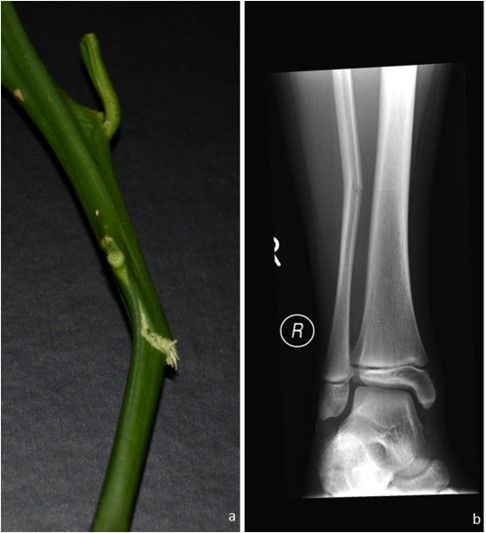
Greenstick fractures are incomplete fractures, which are common in children due to their bones being more flexible than in adults. These fractures occur when the bone is bent and partially broken, but not completely separated. Pathologic fractures occur in bones that are weakened due to conditions such as osteoporosis or cancer. Compound fractures occur when the broken bone pierces the skin. Impacted fractures occur when the broken ends of a bone are driven into each other.
Correct Answer is C
Explanation
Tinnitus and sensorineural hearing loss. Salicylates, loop diuretics, quinidine, quinine, or aminoglycosides can cause ototoxicity, which includes tinnitus (ringing in the ears) and sensorineural hearing loss. Therefore, the nurse should monitor the client for auditory changes and report them to the healthcare provider immediately.
Option A, impaired facial movement, is incorrect because it is a sign of facial nerve paralysis, which can occur due to Bell's palsy, stroke, or brain injury.
Option B, signs of hypotension, is incorrect because it can be caused by antihypertensive drugs or dehydration, not the drugs listed.
Option D, reduced urinary output, is incorrect because it can be a sign of acute kidney injury or dehydration, not the drugs listed.
Whether you are a student looking to ace your exams or a practicing nurse seeking to enhance your expertise , our nursing education contents will empower you with the confidence and competence to make a difference in the lives of patients and become a respected leader in the healthcare field.
Visit Naxlex, invest in your future and unlock endless possibilities with our unparalleled nursing education contents today