
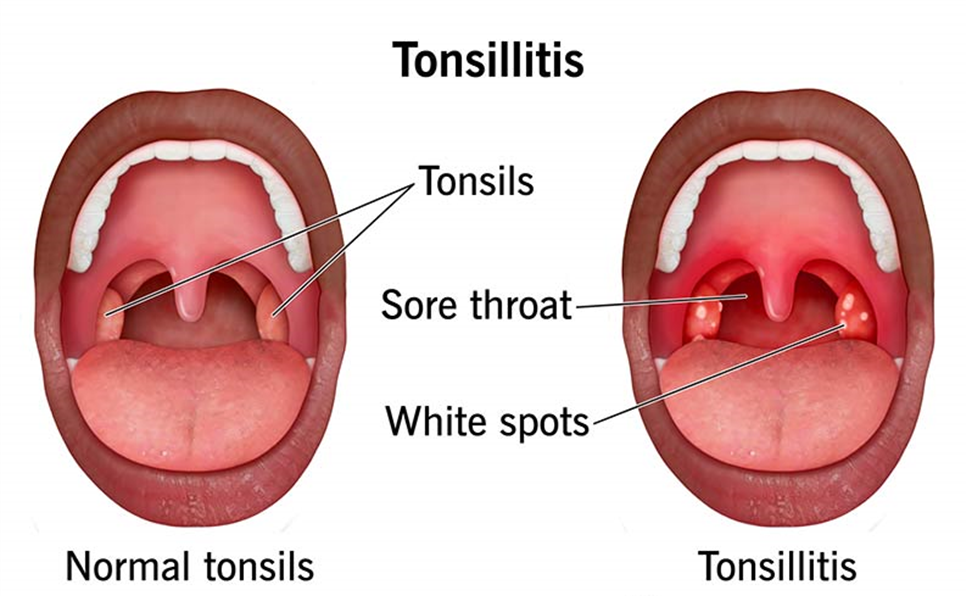
The nurse is collecting data on a child with a diagnosis of tonsillitis. Which clinical manifestation would likely have been noted in the child with this diagnosis?
Inability to make audible voice sounds
Erythema of the pharynx
Bark-like cough
Hoarseness
The Correct Answer is B
A. Inability to make audible voice sounds:
This symptom is more indicative of conditions affecting the vocal cords or larynx, such as laryngitis. Tonsillitis primarily involves inflammation of the tonsils and may not directly impact the ability to make audible voice sounds.
B. Erythema of the pharynx:
Erythema (redness) of the pharynx is a common manifestation of tonsillitis. Inflammation of the tonsils and surrounding areas can lead to redness and swelling in the throat.
C. Bark-like cough:
A bark-like cough is often associated with croup, which involves inflammation of the larynx and trachea, not the tonsils. It is a distinct condition from tonsillitis.
D. Hoarseness:
Hoarseness can be a symptom of various conditions affecting the vocal cords or larynx, but it is not a typical manifestation of tonsillitis. Tonsillitis is more commonly associated with sore throat, difficulty swallowing, and erythema of the pharynx.
Nursing Test Bank
Naxlex Comprehensive Predictor Exams
Related Questions
Correct Answer is B
Explanation
A. Sore throat:
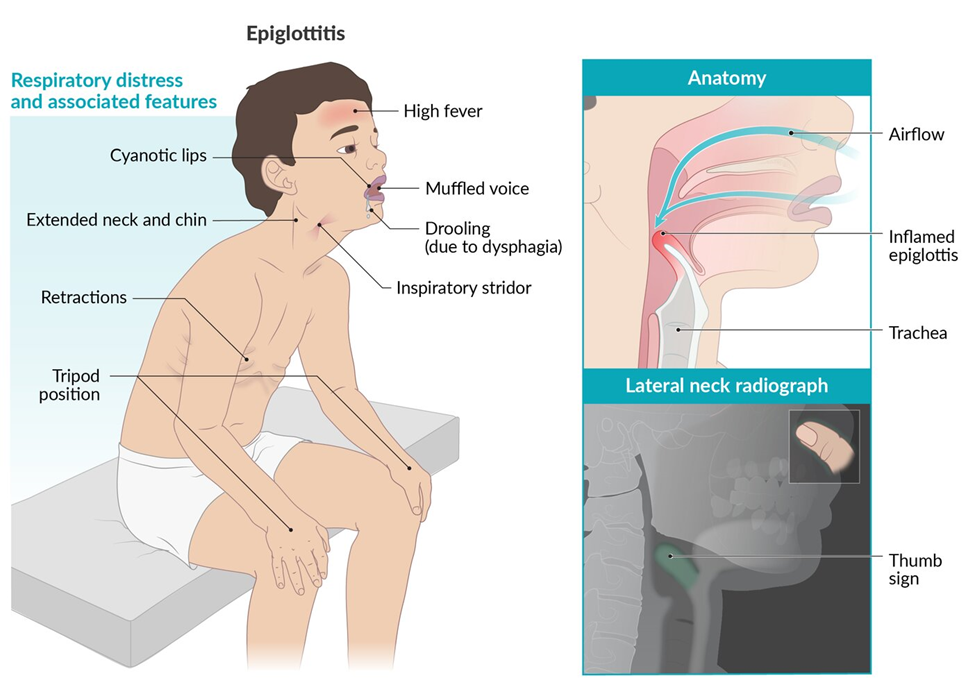
A sore throat is a common symptom of various respiratory tract infections, including acute epiglottitis. However, examining the throat with a tongue depressor is unlikely to directly precipitate a sore throat in this context.
B. Complete obstruction:
Examining the child's throat with a tongue depressor in acute epiglottitis can potentially trigger spasm or swelling of the already inflamed epiglottis, leading to a rapid and complete obstruction of the airway. This is a critical concern and is why healthcare providers approach suspected cases of epiglottitis with great caution.
C. Inspiratory stridor:
Inspiratory stridor (high-pitched sound during inhalation) is a common symptom of upper airway obstruction, including in conditions like acute epiglottitis. It may be present without manipulation, but using a tongue depressor in the throat could exacerbate this symptom.
D. Respiratory tract infection:
Acute epiglottitis is indeed a type of respiratory tract infection. However, examining the throat with a tongue depressor is not likely to directly precipitate a respiratory tract infection.
Correct Answer is B
Explanation
A. Exposure to contaminated body fluid:
HIV can be transmitted through exposure to contaminated body fluids such as blood, semen, vaginal fluids, and breast milk. However, in the context of infants, mother-to-child transmission is the primary mode of concern.
B. Mother-to-child transmission:
Mother-to-child transmission, also known as perinatal or vertical transmission, is the major means of HIV transmission in infants. It can occur during pregnancy, childbirth, or breastfeeding when the virus is passed from an HIV-positive mother to her child.
C. Blood transfusions:
While HIV transmission through blood transfusions was a concern in the past, current blood screening and testing procedures have significantly reduced this risk. It is not a major means of transmission in the infant population.
D. Sharing of infected needles:
The sharing of infected needles is a risk factor for HIV transmission among individuals who use injection drugs. However, this mode of transmission is not relevant to infants, as they are not typically exposed to such risk factors.
Whether you are a student looking to ace your exams or a practicing nurse seeking to enhance your expertise , our nursing education contents will empower you with the confidence and competence to make a difference in the lives of patients and become a respected leader in the healthcare field.
Visit Naxlex, invest in your future and unlock endless possibilities with our unparalleled nursing education contents today