
The nurse is caring for a 4-week-old baby. Mom reports the baby is breech.
What screening test would help rule out a hip problem related to babies who are breech?
Bracing.
Genu valgum.
Adams test.
Ortolani test.
The Correct Answer is D
The Ortolani test is a screening test that would help rule out a hip problem related to babies who are breech.
It is used to check for developmental dysplasia of the hip (DDH).
Choice A is not an answer because bracing is a treatment for DDH, not a screening test.
Choice B is not an answer because genu valgum is a condition where the knees angle in and touch each other when the legs are straightened, and it is not a screening test for DDH.
Choice C is not an answer because the Adams test is used to screen for scoliosis, not DDH.
Nursing Test Bank
Naxlex Comprehensive Predictor Exams
Related Questions
Correct Answer is A
Explanation
“Spiral.” A spiral fracture is a type of fracture that is frequently associated with child abuse.
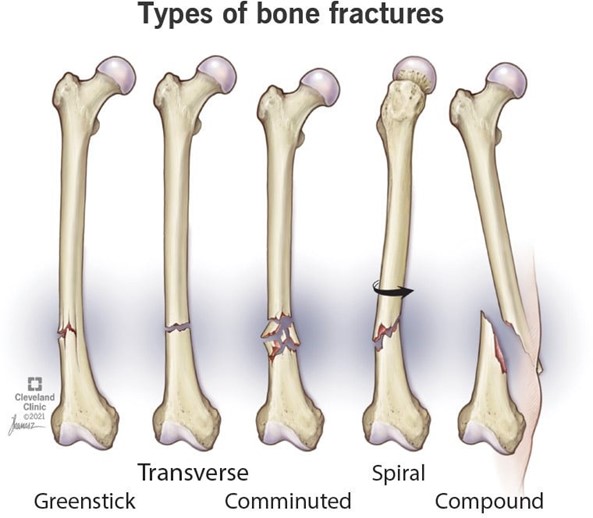
Choice B is incorrect because bowing fractures are not specifically associated with child abuse.
Choice C is incorrect because closed fractures are not specifically associated with child abuse.
Choice D is incorrect because greenstick fractures are not specifically associated with child abuse.
Correct Answer is B
Explanation
The nurse observes Brittny during meal times and for 2 hours after eating to monitor for purging behaviors.
Choice A is incorrect because building a trusting relationship with the patient is important but not the primary reason for observing the patient during meal times and for 2 hours after eating.
Choice C is incorrect because teaching about nutrition is important but not the primary reason for observing the patient during meal times and for 2 hours after eating.
Choice D is incorrect because taking a break with the patient is not the primary reason for observing the patient during meal times and for 2 hours after eating.
Whether you are a student looking to ace your exams or a practicing nurse seeking to enhance your expertise , our nursing education contents will empower you with the confidence and competence to make a difference in the lives of patients and become a respected leader in the healthcare field.
Visit Naxlex, invest in your future and unlock endless possibilities with our unparalleled nursing education contents today