
The client voided twice on your shift (600 mL, 350 mL) and drank half of his 900mL water pitcher plus a 12 oz soft drink during the night. There was 50 mL drainage from the hemovac during the night. Calculate the patient’s total I/O starting at 2300 and ending at 0700.
The Correct Answer is ["-195"]
The water intake is half of 900 mL, which is 450 mL. The soft drink intake is 12 oz, which is equivalent to 355 mL. Therefore, the total fluid intake is 450 + 355 = 805 mL.
The urine output is the sum of the two voids, which is 600 + 350 = 950 mL. The drainage output is 50 mL. Therefore, the total fluid output is 950 + 50 = 1000 mL.
The net I/O is the difference between the fluid intake and output, which is 805 - 1000 = -195 mL. This means that the patient had a negative fluid balance of 195 mL during the night.
Nursing Test Bank
Naxlex Comprehensive Predictor Exams
Related Questions
Correct Answer is A
Explanation
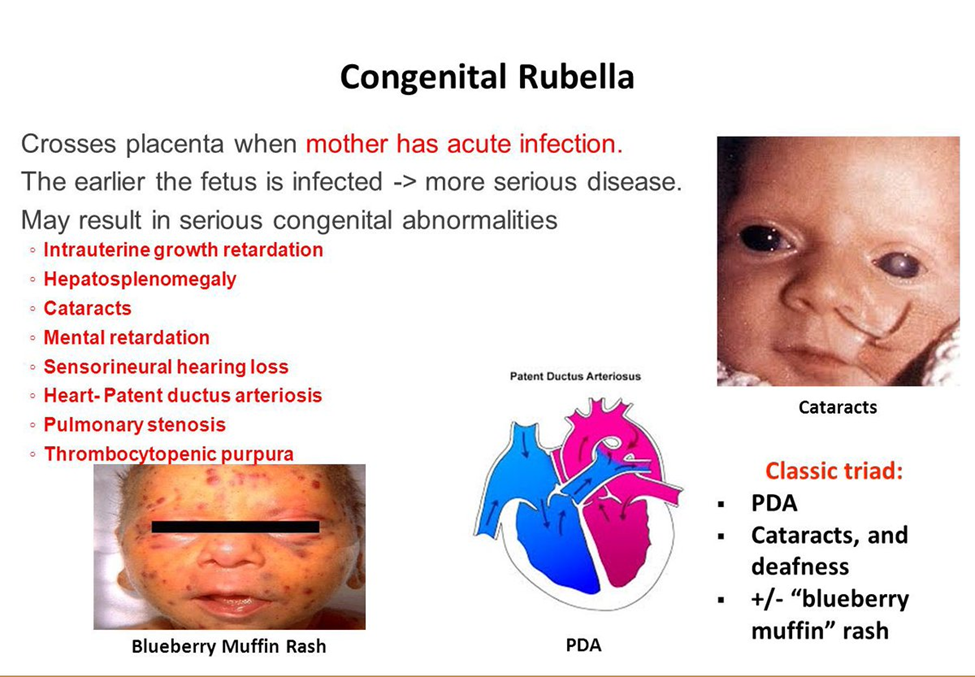
A. Rubella:
Rubella is a viral infection that, when contracted by a pregnant woman during the first trimester, can lead to congenital rubella syndrome (CRS) in the developing fetus. CRS can result in severe birth defects, including heart abnormalities, hearing impairments, and vision problems.
B. Varicella-zoster:
Varicella-zoster virus causes chickenpox. While chickenpox can cause complications in certain populations, it is not specifically associated with severe defects in the fetus when the mother is infected during pregnancy.
C. Rubeola:
Rubeola, commonly known as measles, can lead to complications, but it is not as strongly associated with severe defects in the fetus if the mother is infected during pregnancy compared to rubella.
D. Mumps:
Mumps is generally not associated with severe defects in the fetus when the mother is infected during pregnancy. However, mumps infection during pregnancy can pose risks to the mother's health.
Correct Answer is ["0.1696"]
Explanation
To calculate the ordered dose by the physician in mg/kg/dose, we need to convert the infant's weight from pounds and ounces to kilograms. One pound is equal to 0.4536 kg and one ounce is equal to 0.02835 kg. Therefore, the infant's weight in kilograms is:
6 x 0.4536 + 3 x 0.02835 = 2.948 kg
The ordered dose by the physician is 0.5 mg IV q 2 hours prn. To find the dose in mg/kg/dose, we divide the dose in mg by the weight in kg:
0.5 / 2.948 = 0.1696 mg/kg/dose
The recommended dosage for a child is 0.1-0.2 mg/kg/dose q2-4 hours prn. The ordered dose by the physician falls within this range, so it is a safe dosage for the infant.
Whether you are a student looking to ace your exams or a practicing nurse seeking to enhance your expertise , our nursing education contents will empower you with the confidence and competence to make a difference in the lives of patients and become a respected leader in the healthcare field.
Visit Naxlex, invest in your future and unlock endless possibilities with our unparalleled nursing education contents today