
The caregivers of a 2-year-old who has had a common cold for 4 days calls the nurse in the emergency department at 2 AM on a cold winter night to say that the child has awakened with a barking cough and an elevated temperature. The caregiver reports she has taken the child into the bathroom and ran hot water for 15 minutes and now the child seems blue around her mouth The nurse would most appropriately recommend what action to the caregiver?
“Bring the child to the emergency room immediately.”
“Bundle the child up and take her out into the cold for a few minutes. Call back if the exposure to the cold air does not provide relief.”
“Take the child into the steam-filled room for an additional 15 minutes. If there is no relief, bring the child to the emergency room.”
“Put a cool mist humidifier or vaporizer in the room to see if that relieves the cough. Call back if there’s no relief in an hour.”
The Correct Answer is A
A. “Bring the child to the emergency room immediately.”
This is the most appropriate recommendation given the symptoms described, including the barking cough, elevated temperature, and blueness around the mouth. These signs may indicate respiratory distress, and immediate medical attention is needed.
B. “Bundle the child up and take her out into the cold for a few minutes. Call back if the exposure to the cold air does not provide relief.”
Taking a child out into the cold is not a recommended intervention for respiratory distress. This action may exacerbate the child's breathing difficulties. The symptoms described require urgent evaluation in a healthcare setting.
C. “Take the child into the steam-filled room for an additional 15 minutes. If there is no relief, bring the child to the emergency room.”
While steam may provide temporary relief for mild respiratory symptoms, the presence of blueness around the mouth suggests a more severe condition. Delaying care by waiting for an additional 15 minutes may not be appropriate in this situation.
D. “Put a cool mist humidifier or vaporizer in the room to see if that relieves the cough. Call back if there’s no relief in an hour.”
Using a cool mist humidifier may be helpful for mild respiratory symptoms, but the severity of the symptoms described, especially blueness around the mouth, indicates a need for immediate medical attention. Waiting for an hour could lead to worsening of the child's condition.
Nursing Test Bank
Naxlex Comprehensive Predictor Exams
Related Questions
Correct Answer is A
Explanation
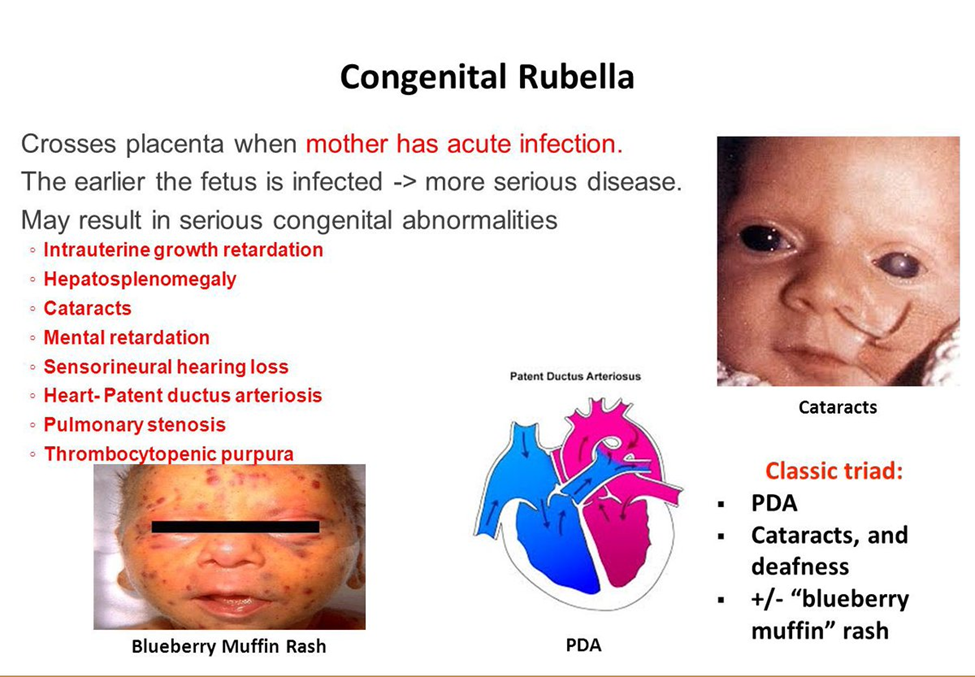
A. Rubella:
Rubella is a viral infection that, when contracted by a pregnant woman during the first trimester, can lead to congenital rubella syndrome (CRS) in the developing fetus. CRS can result in severe birth defects, including heart abnormalities, hearing impairments, and vision problems.
B. Varicella-zoster:
Varicella-zoster virus causes chickenpox. While chickenpox can cause complications in certain populations, it is not specifically associated with severe defects in the fetus when the mother is infected during pregnancy.
C. Rubeola:
Rubeola, commonly known as measles, can lead to complications, but it is not as strongly associated with severe defects in the fetus if the mother is infected during pregnancy compared to rubella.
D. Mumps:
Mumps is generally not associated with severe defects in the fetus when the mother is infected during pregnancy. However, mumps infection during pregnancy can pose risks to the mother's health.
Correct Answer is B
Explanation
A. Playing in an organized group with each other:
Toddlers typically engage in parallel play rather than organized group play. They may play near each other, but their interactions are often individual rather than coordinated in an organized group.
B. Playing independently and are side by side:
This is an accurate description of parallel play. Toddlers often play independently but are aware of and interested in what their peers are doing. They may play side by side without direct interaction.
C. Playing apart from others without being part of a group:
This option describes solitary play, where a child plays alone and does not actively engage with others. While solitary play is also common, parallel play is more characteristic of toddlers.
D. Playing together in an activity without organization:
This may describe a form of cooperative play, where children engage in an activity together. However, for toddlers, the organized aspect of play is less typical. Parallel play, where they play side by side but independently, is more common.
Whether you are a student looking to ace your exams or a practicing nurse seeking to enhance your expertise , our nursing education contents will empower you with the confidence and competence to make a difference in the lives of patients and become a respected leader in the healthcare field.
Visit Naxlex, invest in your future and unlock endless possibilities with our unparalleled nursing education contents today