
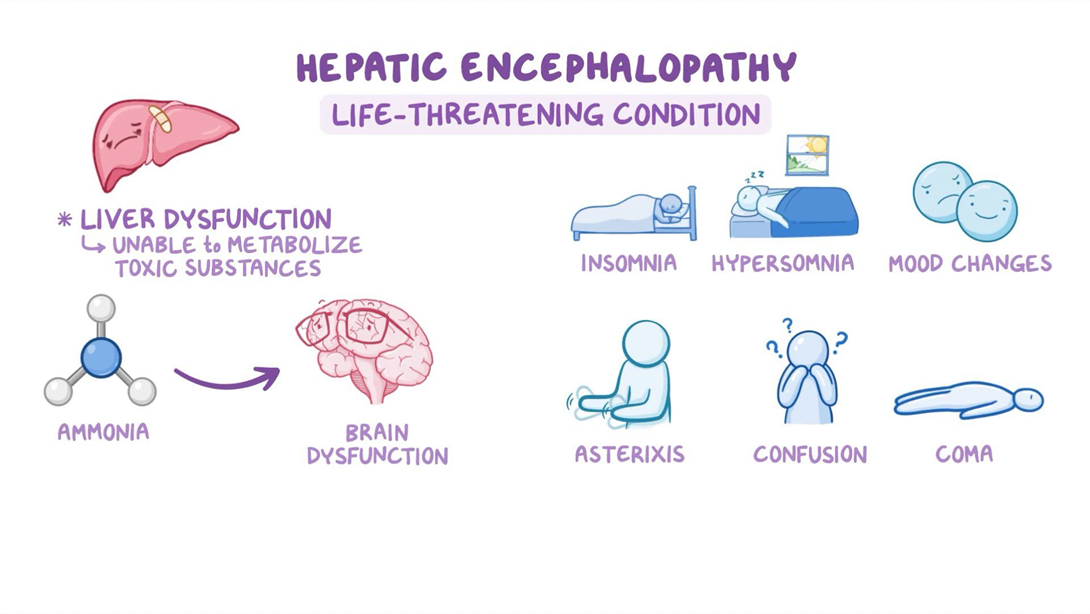
A client with hepatic encephalopathy is receiving lactulose. Which assessment provides the nurse with the best information to evaluate the client's therapeutic response to the drug?
Stool color and character.
Serum electrolytes and ammonia.
Serum hepatic enzymes.
Fingerstick glucose.
The Correct Answer is B
Choice A reason: This is not the best assessment for the nurse to use to evaluate the client's therapeutic response to lactulose. Stool color and character may change as a result of lactulose administration, as it is a laxative that lowers the pH of the colon and promotes the excretion of ammonia. However, these changes are not indicative of the effectiveness of lactulose in reducing the ammonia levels in the blood, which is the main goal of the therapy.
Choice B reason: This is the best assessment for the nurse to use to evaluate the client's therapeutic response to lactulose. Serum electrolytes and ammonia are directly affected by lactulose administration, as it lowers the blood ammonia levels by converting it to ammonium and facilitating its elimination in the stool. The nurse should monitor the serum electrolytes and ammonia levels regularly to assess the efficacy and safety of lactulose therapy, as well as to adjust the dosage as needed.
Choice C reason: This is not the best assessment for the nurse to use to evaluate the client's therapeutic response to lactulose. Serum hepatic enzymes are markers of liver function and damage, and they may be elevated in clients with hepatic encephalopathy due to cirrhosis or other liver disorders. However, lactulose does not affect the hepatic enzymes directly, and it does not reverse the underlying liver disease. The nurse should monitor the serum hepatic enzymes to assess the progression and severity of the liver condition, but not to evaluate the response to lactulose.
Choice D reason: This is not the best assessment for the nurse to use to evaluate the client's therapeutic response to lactulose. Fingerstick glucose is a measure of blood glucose levels, and it may be altered in clients with hepatic encephalopathy due to impaired glucose metabolism by the liver. However, lactulose does not affect the blood glucose levels directly, and it does not improve the liver's ability to regulate glucose. The nurse should monitor the fingerstick glucose to assess the risk of hypoglycemia or hyperglycemia, but not to evaluate the response to lactulose.
Nursing Test Bank
Naxlex Comprehensive Predictor Exams
Related Questions
Correct Answer is A
Explanation
Choice A reason: This is the highest priority action for the nurse to take. Codeine is an opioid analgesic that can cause drowsiness, dizziness, and impaired coordination. These effects can increase the risk of falls and injuries in the client, especially when ambulating to the bathroom. The nurse should instruct the client to request assistance when getting out of bed or walking, and provide adequate support and supervision.

Choice B reason: This is not the highest priority action for the nurse to take. Administering a stool softener/laxative at the same time as the analgesic is a preventive measure that can help reduce the risk of constipation, which is a common side effect of codeine. However, this action is not as urgent or important as ensuring the client's safety and preventing falls.
Choice C reason: This is not the highest priority action for the nurse to take. Advising the client that the medication should start to work in about 30 minutes is an informative and reassuring measure that can help the client cope with pain and anxiety. However, this action is not as urgent or important as ensuring the client's safety and preventing falls.
Choice D reason: This is not the highest priority action for the nurse to take. Telling the client to notify the nurse if the pain is not relieved is an evaluative and responsive measure that can help the nurse monitor the effectiveness of the analgesic and adjust the dosage or frequency as needed. However, this action is not as urgent or important as ensuring the client's safety and preventing falls.
Correct Answer is D
Explanation
Choice A reason: Decreasing pain and burning during urination is not the purpose of probenecid, which is a drug that lowers the level of uric acid in the blood. Probenecid is used to treat gout, a condition that causes painful inflammation of the joints due to the accumulation of uric acid crystals. Probenecid does not have any effect on the urinary tract or its symptoms.
Choice B reason: Increasing the strength of the urine stream is not the purpose of probenecid, which is a drug that increases the amount of uric acid in the urine. Probenecid works by blocking the reabsorption of uric acid by the kidneys, thus increasing its excretion. Probenecid does not have any effect on the bladder or its function.
Choice C reason: Preventing the formation of kidney stones is not the purpose of probenecid, which is a drug that can actually increase the risk of kidney stones. Probenecid increases the concentration of uric acid in the urine, which can lead to the formation of uric acid stones. The nurse should instruct the client to drink plenty of fluids and avoid foods high in purines, such as organ meats, seafood, and alcohol, to prevent kidney stones.
Choice D reason: Promoting excretion of uric acid in the urine is the purpose of probenecid, which is a drug that reduces the level of uric acid in the blood. Probenecid helps prevent gout attacks by preventing the buildup of uric acid crystals in the joints. The nurse should monitor the client's serum uric acid level, renal function, and urine output, and advise the client to take the medication with food to avoid stomach upset.
Whether you are a student looking to ace your exams or a practicing nurse seeking to enhance your expertise , our nursing education contents will empower you with the confidence and competence to make a difference in the lives of patients and become a respected leader in the healthcare field.
Visit Naxlex, invest in your future and unlock endless possibilities with our unparalleled nursing education contents today