
Exhibits
The nurse should plan to first administer
The Correct Answer is {"dropdown-group-1":"B","dropdown-group-2":"C"}
The nurse should plan to first administer 0.9% sodium chloride followed by Insulin
Rationale
Intravenous fluid resuscitation takes priority in the management of DKA due to the severe dehydration that occurs due to osmotic diuresis.
The next step is to administer intravenous insulin infusion as per the prescribed rate.
Nursing Test Bank
Naxlex Comprehensive Predictor Exams
Related Questions
Correct Answer is A
Explanation
A A change in level of consciousness (LOC), such as confusion, lethargy, or loss of consciousness, can indicate worsening neurological status. It reflects impaired brain function due to increased pressure on brain tissues.
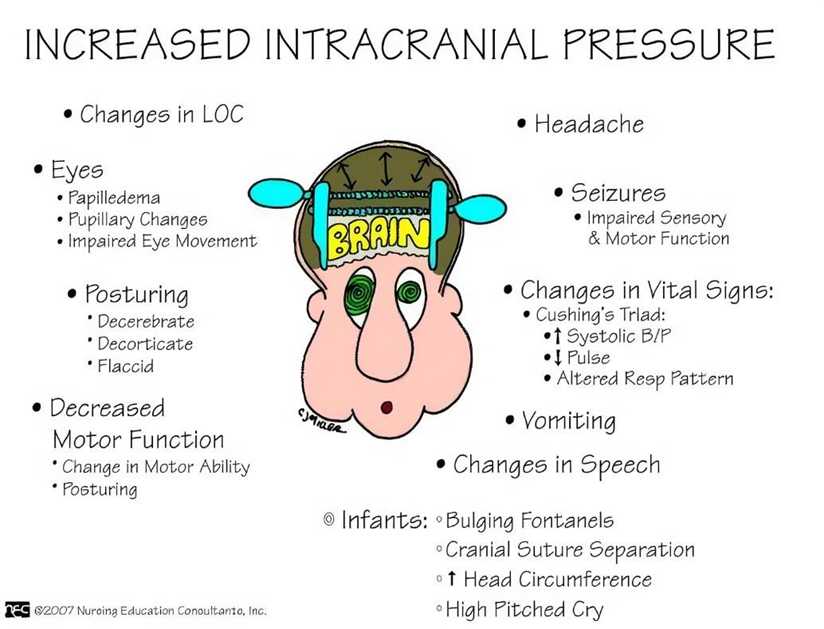
B. Pupillary changes, such as dilation or asymmetry, can occur due to pressure on the oculomotor nerve (cranial nerve III). Pupillary dilation can be a sign of increased ICP but typically occurs after other neurological changes.
C. Decorticate posturing indicates significant neurological impairment but typically appears after alterations in consciousness.
D. Cheyne-Stokes respirations indicate brainstem involvement and impaired respiratory control but are generally seen later in the progression of neurological deterioration.
Correct Answer is D
Explanation
D. Instructing the client not to bend the affected leg helps prevent accidental dislodgement of the arterial sheath or catheter and reduces the risk of bleeding or hematoma formation at the insertion site.
A While monitoring vital signs is important, doing so once every hour is not specified as a standard post- procedure action.
B. Elevating the head of the bed to a 45° angle and restricting fluid intake are not standard care measures following this procedure and could potentially be contraindicated.
C. This action is not typically necessary following a cardiac catheterization unless there are specific indications such as fluid overload or impaired renal function
Whether you are a student looking to ace your exams or a practicing nurse seeking to enhance your expertise , our nursing education contents will empower you with the confidence and competence to make a difference in the lives of patients and become a respected leader in the healthcare field.
Visit Naxlex, invest in your future and unlock endless possibilities with our unparalleled nursing education contents today