
An adolescent patient is to receive 50 mL of Cefazolin IV over 40 minutes. With a tubing drop factor of 20 gtt/mL, how many drops per minute (gtt/min) should be given?
The Correct Answer is ["25"]
To calculate the drops per minute for an IV infusion, we need to use the following formula:
gtt/min = (volume x drop factor) / time
In this case, the volume is 50 mL, the drop factor is 20 gtt/mL, and the time is 40 minutes. Plugging these values into the formula, we get:
gtt/min = (50 x 20) / 40
gtt/min = 1000 / 40
gtt/min = 25
Therefore, the adolescent patient should receive 25 drops per minute of Cefazolin IV.
Nursing Test Bank
Naxlex Comprehensive Predictor Exams
Related Questions
Correct Answer is B
Explanation
A. Tetracycline:
Tetracycline antibiotics, such as doxycycline or minocycline, can be effective against the bacteria that cause impetigo. However, their use in children, especially younger ones, might be limited due to concerns about potential effects on developing teeth and bones. Therefore, they are not the first-line choice for pediatric impetigo.
B. Penicillin:
Penicillin or other antibiotics in the penicillin family, such as dicloxacillin or amoxicillin, are commonly used to treat impetigo caused by Streptococcus pyogenes. Penicillin-based antibiotics are effective against certain strains of the bacteria responsible for impetigo. They are often a preferred choice for pediatric impetigo.
C. Metronidazole:
Metronidazole is an antibiotic with activity against anaerobic bacteria and certain parasites. However, it is not typically used to treat impetigo caused by Staphylococcus aureus or Streptococcus pyogenes.
D. Lindane:
Lindane is an anti-parasitic medication used for conditions like scabies or lice. It is not effective against the bacteria that cause impetigo. Lindane is not an appropriate treatment for impetigo, and its use is limited due to potential neurotoxicity.
Correct Answer is A
Explanation
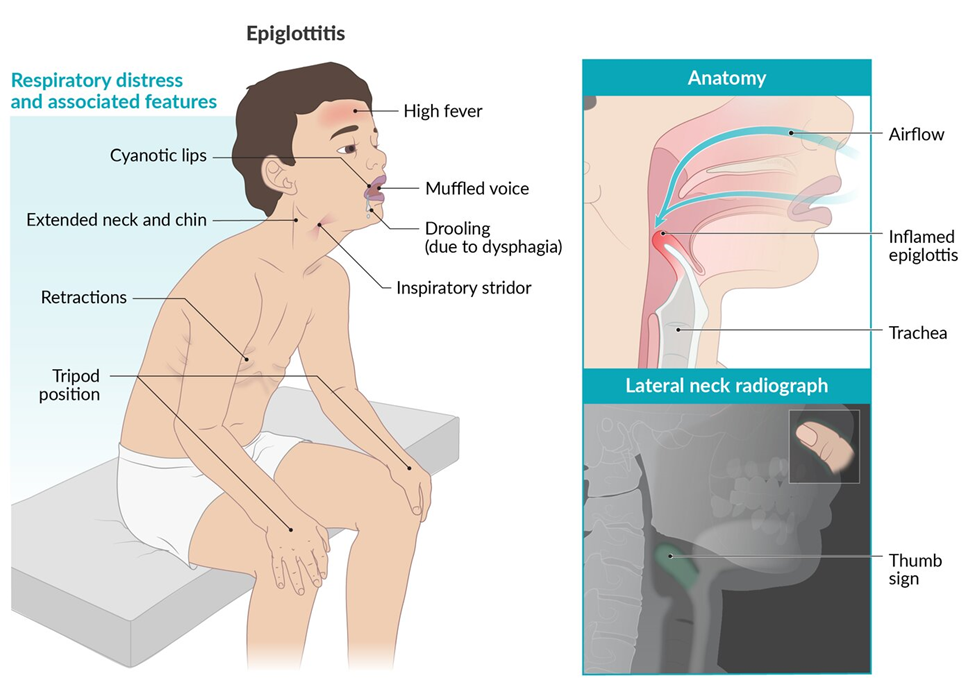
A. Epiglottitis:
Epiglottitis is an inflammation of the epiglottis, which can result in rapid onset of symptoms such as severe sore throat, high fever, and difficulty breathing. The characteristic position described, with the child preferring to sit up, lean forward, and keep the mouth open, is known as the "tripod position." This is a protective mechanism to maintain a patent airway.
B. Mild asthma:
Asthma is a chronic respiratory condition characterized by recurrent episodes of wheezing, coughing, and shortness of breath. However, the scenario does not describe typical asthma symptoms, and the child's preference for sitting up and leaning forward is more indicative of an airway obstruction.
C. Spasmodic laryngitis:
Spasmodic laryngitis is characterized by sudden episodes of severe respiratory distress, a barking cough, and sometimes stridor. It often occurs at night and is usually not associated with high fever. The child's behavior in the scenario, particularly the preference for sitting up and leaning forward, is not a common feature of spasmodic laryngitis.
D. Acute laryngotracheobronchitis:
Acute laryngotracheobronchitis, or croup, typically presents with a barking cough, stridor, and respiratory distress. It does not usually cause the preference for sitting up and leaning forward as described in the scenario. Croup is more commonly associated with a distinctive cough sound.
Whether you are a student looking to ace your exams or a practicing nurse seeking to enhance your expertise , our nursing education contents will empower you with the confidence and competence to make a difference in the lives of patients and become a respected leader in the healthcare field.
Visit Naxlex, invest in your future and unlock endless possibilities with our unparalleled nursing education contents today