
A patient received deep partial-thickness burns to the anterior trunk, perineum, and left posterior and anterior arm. Using the "Rule of nines," what is the percent of total body surface area (TBSA) that was burned?
18%
36%
40%
28%
The Correct Answer is D
Adding these percentages together:
- Anterior trunk: 18%
- Perineum: 1%
- Left anterior arm: 4.5%
- Left posterior arm: 4.5%
Total = 18% + 1% + 4.5% + 4.5% = 28%
Nursing Test Bank
Naxlex Comprehensive Predictor Exams
Related Questions
Correct Answer is ["A","C","D"]
Explanation
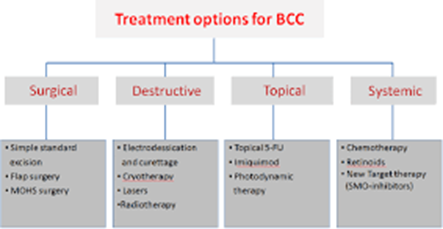
Choice A rationale: radiation therapy is one of the possible management options for basal cell carcinoma (BCC) that uses high-energy rays to kill the cancerous cells.
Choice B rationale: this is incorrect since topical corticosteroids are ineffective in BCC management and may worsen the patient’s condition by suppressing their immune system.
Choice C rationale: micrographic surgery can be used in BCC management and it involves the removal of thin layers of skin to a point where no cancer cells can be detected.
Choice D rationale: this is appropriate and involves the use of electric current to burn off the cancer cells.
Correct Answer is B
Explanation
Choice A rationale: this is a type of non-adherent dressing that can be used for wounds with minimal exudates hence this is not suitable for wounds with significant exudate since it causes maceration and leakage.
Choice B rationale: this is an absorbent dressing that can be used in wounds with moderate-significant exudate since it moistens the wound environment while facilitating autolytic debridement by forming a gel in contact with the exudate.
Choice C rationale: this is a type of hydrating dressing containing water or glycerin-based gel that is suitable for use in wounds with minimal exudate.
Choice D rationale: this is a type of occlusive dressing suitable for wounds with minimal-moderate exudates. It is unsuitable for wounds with significant exudate since it can result in maceration and leakage.
Whether you are a student looking to ace your exams or a practicing nurse seeking to enhance your expertise , our nursing education contents will empower you with the confidence and competence to make a difference in the lives of patients and become a respected leader in the healthcare field.
Visit Naxlex, invest in your future and unlock endless possibilities with our unparalleled nursing education contents today