
A nurse is teaching a client with eclampsia about the purpose of corticosteroid therapy.
Which of the following statements by the client indicates understanding of the teaching?
“This medication will help lower my blood pressure.”
“This medication will help prevent seizures.”
“This medication will help my baby’s lungs develop faster.”
“This medication will help reduce inflammation in my body.”
The Correct Answer is C
“This medication will help my baby’s lungs develop faster.” Corticosteroid therapy is given to pregnant clients with eclampsia to accelerate fetal lung maturity and reduce the risk of respiratory distress syndrome in the newborn.
Some possible explanations for the other choices are:
• Choice A is wrong because corticosteroids do not lower blood pressure. Antihypertensive drugs such as hydralazine or labetalol are used to treat hypertension in eclampsia.
• Choice B is wrong because corticosteroids do not prevent seizures. Magnesium sulfate is the drug of choice for seizure prophylaxis and treatment in eclampsia.
• Choice D is wrong because corticosteroids do not reduce inflammation in the body. They may have anti-inflammatory effects in some conditions, but their main purpose in eclampsia is to enhance fetal lung development.
Normal ranges for blood pressure and proteinuria in pregnancy are:
• Blood pressure: less than 140/90 mm Hg
• Proteinuria: less than 300 mg/24 hours or less than 1+ on dipstick
Nursing Test Bank
Naxlex Comprehensive Predictor Exams
Related Questions
Correct Answer is ["A","B","C","E"]
Explanation
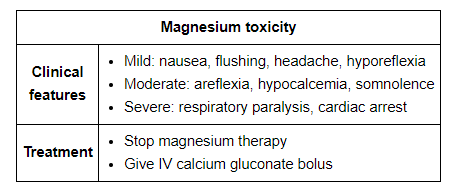
The correct answer is choice A, B, C and E.The nurse should monitor the client’s deep tendon reflexes hourly because magnesium sulfate can cause neuromuscular blockade and decreased reflexes.The nurse should keep calcium gluconate readily available because it is the antidote for magnesium toxicity.The nurse should maintain a urine output of at least 40 mL/hr because magnesium is excreted by the kidneys and low urine output can indicate renal impairment or fluid overload.The nurse should check the client’s blood pressure every 15 minutes because magnesium sulfate can cause hypotension and preeclampsia can cause hypertension.
Choice D is wrong because the medication should not be infused via a peripheral IV line, but rather through a central line or a large-bore IV catheter to prevent tissue damage.
Correct Answer is C
Explanation
To accelerate fetal lung maturity.Corticosteroids are given to pregnant women with severe pre-eclampsia who are at risk of preterm delivery to help the development of the fetus’s lungs and reduce the risk of respiratory distress syndrome.
This can improve the survival and health outcomes of the newborn.
Choice A is wrong because corticosteroids do not reduce inflammation in pre-eclampsia.They are used for other inflammatory conditions such as asthma or arthritis.
Choice B is wrong because corticosteroids do not prevent infection in pre-eclampsia.They can actually increase the risk of infection by suppressing the immune system.
Choice D is wrong because corticosteroids do not increase platelet count in pre-eclampsia.They can actually decrease the platelet count by causing thrombocytopenia.
Whether you are a student looking to ace your exams or a practicing nurse seeking to enhance your expertise , our nursing education contents will empower you with the confidence and competence to make a difference in the lives of patients and become a respected leader in the healthcare field.
Visit Naxlex, invest in your future and unlock endless possibilities with our unparalleled nursing education contents today