
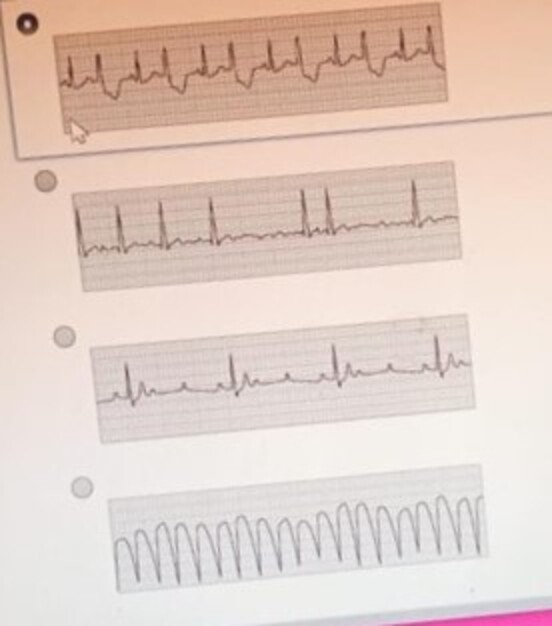
A nurse is reviewing ECG rhythm strips for a group of clients. The nurse should identify that which of the following rhythms indicates bradycardia?
A
B
C
D
The Correct Answer is C
Sinus bradycardia is a type of cardiac arrhythmia characterized by a heart rate lower than 60 beats per minute in adults, or below the normal range for age in children. It can be diagnosed by an electrocardiogram (ECG) that shows regular P waves with constant morphology preceding every QRS complex, and positive in lead II.
Nursing Test Bank
Naxlex Comprehensive Predictor Exams
Related Questions
Correct Answer is C
Explanation
Metformin is an oral medication used to treat type 2 diabetes. It should be withheld before and after a procedure that requires IV contrast dye because it can increase the risk of lactic acidosis, a serious condition caused by the buildup of lactic acid in the blood. The other medications are not contraindicated with IV contrast dye and can be given as scheduled.
Correct Answer is B
Explanation
The nurse should consult the client before approaching the dog, as the service animal is working and may have specific instructions from the handler on how to interact with others. The nurse should respect the client's autonomy and preferences regarding their service animal and not interfere with their bond or function.
Whether you are a student looking to ace your exams or a practicing nurse seeking to enhance your expertise , our nursing education contents will empower you with the confidence and competence to make a difference in the lives of patients and become a respected leader in the healthcare field.
Visit Naxlex, invest in your future and unlock endless possibilities with our unparalleled nursing education contents today