
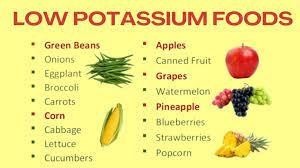
A nurse is reinforcing dietary teaching with a client who has chronic kidney disease and requires a lowpotassium diet. Which of the following food by the client demonstrates an understanding of the teaching?
1 cup of cantaloupe
1 large baked potato
4 oz of banana chips
1 cup of applesauce
The Correct Answer is D
A: Cantaloupe is relatively high in potassium and is not a suitable choice for a low-potassium diet.
B: Baked potatoes are high in potassium and should be avoided in a low-potassium diet.
C: Banana chips are also high in potassium and should not be included in a low-potassium diet.
D: Correct. Applesauce is a low-potassium food and is an appropriate choice for a client with chronic kidney disease following a low-potassium diet.
Nursing Test Bank
Naxlex Comprehensive Predictor Exams
Related Questions
Correct Answer is B
Explanation
A. Check the capillary refill every 4 hrs Incorrect
The nurse should check capillary refill distally every 4 hr for a client whops elastic bandages on their lower extremities.
B. Compare the pedal pulses every 4 hrs CORRECT
The nurse should compare the pedal pulses bilaterally every week to check for adequate circulation for a client who has elastic bandages on their
lower extremities.
Correct Answer is A
Explanation
A. The reduced muscle tone had relaxed the law muscles CORRECT
Prior to death, decreased muscle tone causes jaw muscles to relax resulting in an open mouth.
B. "That happens when a person gets close to death INCORRECT
This automatic response is nontherapeutic and does not address the family member's question
C. "I can apply a chin strap to help hold the mouth closed INCORRECT
Applying a chin strap is a postmortem action that the nurse can take to keep the mouth closed
Whether you are a student looking to ace your exams or a practicing nurse seeking to enhance your expertise , our nursing education contents will empower you with the confidence and competence to make a difference in the lives of patients and become a respected leader in the healthcare field.
Visit Naxlex, invest in your future and unlock endless possibilities with our unparalleled nursing education contents today