
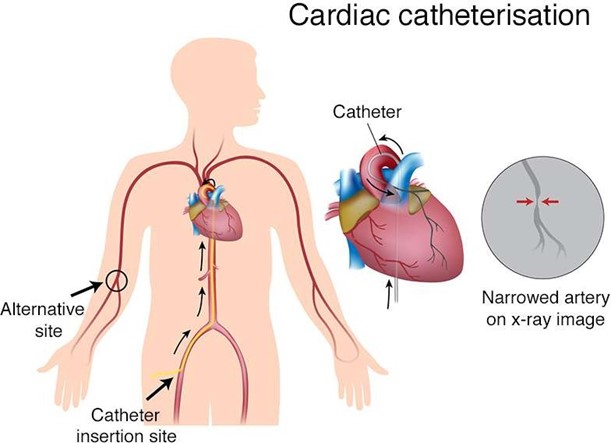
A nurse is providing teaching to a 10-year-old child who is scheduled for an arterial cardiac catheterization.
Which of the following information should the nurse include in the teaching?
"You will need to keep your leg straight for 8 hours following the procedure.”
"You will have your dressing removed 12 hours after the procedure.”
"You will be on a clear liquid diet for 24 hours following the procedure.”
"You will be on bed rest for 2 days after the procedure.”
The Correct Answer is A
After an arterial cardiac catheterization, the patient will need to keep their leg straight for several hours following the procedure to prevent bleeding from the catheter insertion site.
Choice B is wrong because droplet isolation precautions are not necessary after an arterial cardiac catheterization.
Choice C is wrong because assisting the child into a supine position may not be necessary and could be uncomfortable for the child.
Choice D is wrong because checking oxygen saturation every 4 hours may not be frequent enough for a child who has undergone an arterial cardiaccatheterization and may require more frequent monitoring of oxygen saturation.
Nursing Test Bank
Naxlex Comprehensive Predictor Exams
Related Questions
Correct Answer is C
Explanation
This statement provides the child with factual information about the purpose of the medication and why it is important for them to take it.
Choice A is wrong because it may not be true that the medication tastes like candy and could lead to mistrust.
Choice B is wrong because it does not address the urgency of taking a stat dose of medication.
Choice D is wrong because it does not provide any information about the purpose of the medication and may not be relevant to the child’s feelings.
Correct Answer is A
Explanation
Varicella (chickenpox) is highly contagious and can be spread through the air by coughing or sneezing.
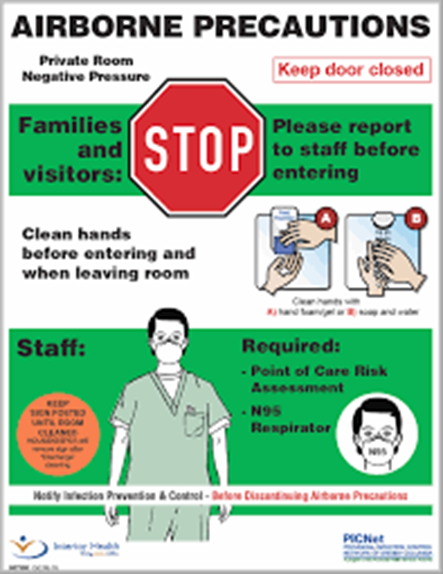
Airborne precautions help prevent the spread of the disease to others.
Choice B is wrong because Koplik spots are a symptom of measles, not varicella.
Choice C is wrong because providing a warm blanket is not a specific intervention for a child with varicella.
Choice D is wrong because aspirin should not be given to children with varicella due to the risk of Reye’s syndrome.
Whether you are a student looking to ace your exams or a practicing nurse seeking to enhance your expertise , our nursing education contents will empower you with the confidence and competence to make a difference in the lives of patients and become a respected leader in the healthcare field.
Visit Naxlex, invest in your future and unlock endless possibilities with our unparalleled nursing education contents today