
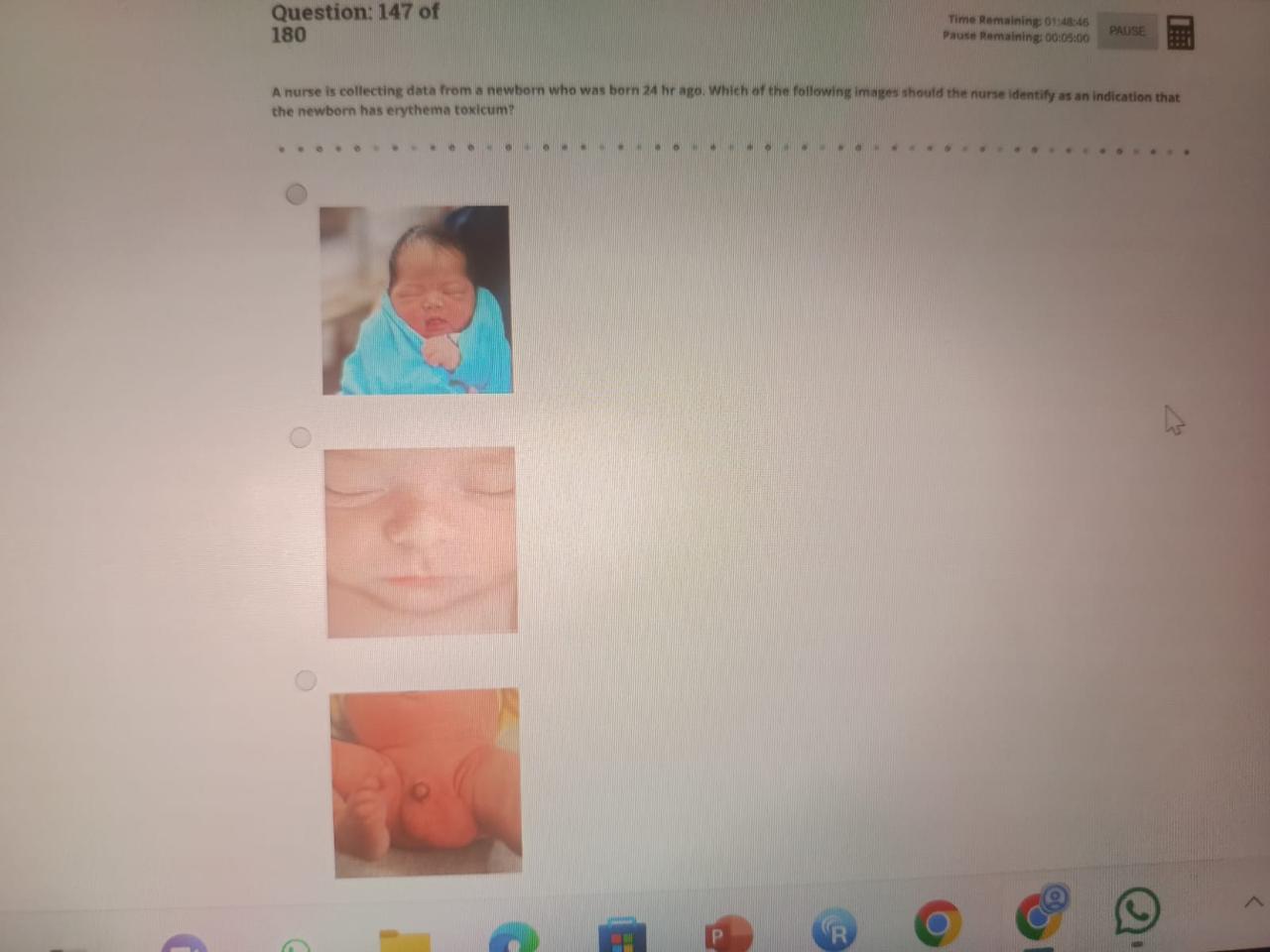
A nurse is collecting data from a newborn who was born 24 hr ago. Which of the following images should the nurse identify as an indication that the newborn has erythema toxicum?
A
B
C
The Correct Answer is B
Rationale:
A. This image shows a newborn with normal skin tone and no visible skin lesions. There are no signs of erythema, pustules, or macules that would suggest erythema toxicum.
B. This image displays multiple small, erythematous macules and papules, especially on the face. These are classic signs of erythema toxicum neonatorum, a common and harmless rash seen in the first days of life.
C. The newborn in this image has generally red skin, which could be due to normal newborn circulation changes or mild erythema, but it lacks the distinctive papular or pustular rash pattern seen in erythema toxicum.
Nursing Test Bank
Naxlex Comprehensive Predictor Exams
Related Questions
Correct Answer is C
Explanation
Rationale:
A. Librium: Librium (chlordiazepoxide) is a benzodiazepine used primarily during alcohol withdrawal to manage symptoms such as anxiety, tremors, or seizures. It is not used for long-term relapse prevention due to the risk of dependence and lack of deterrent effect on alcohol use.
B. Clonidine: Clonidine is an antihypertensive agent that can help reduce autonomic symptoms during acute alcohol or opioid withdrawal. However, it does not play a role in preventing relapse or deterring future alcohol use.
C. Disulfiram: Disulfiram works by producing unpleasant effects like nausea and vomiting when alcohol is consumed, thereby discouraging the client from drinking. It is specifically used for relapse prevention in clients who are motivated to remain abstinent and understand the consequences of drinking while on the medication.
D. Phenobarbital: Phenobarbital, a barbiturate, may be used in certain alcohol withdrawal protocols for seizure control or severe withdrawal symptoms. However, it is not used for relapse prevention and carries a high potential for dependence and sedation.
Correct Answer is A
Explanation
Rationale:
A. Ask the client to describe the incident: The first step is to gather detailed and accurate information about what happened. This not only allows the nurse to assess the severity and risk of harm but also builds trust with the client. Understanding the specifics of the situation is essential before planning further interventions.
B. Assist the client with developing a safety plan: While crucial for long-term well-being, safety planning should come after assessing the current situation. The nurse must first understand the context of the incident to tailor the plan effectively and ensure it aligns with the client’s readiness and safety.
C. Provide the client with information about local shelters: Offering shelter information is supportive and may be part of discharge or follow-up teaching. However, this should follow the initial assessment, as the client may not yet be ready to consider leaving or may have specific needs not met by general resources.
D. Refer the client to a support group: Support groups are helpful for emotional healing and connection but are not an immediate priority. Without understanding the client’s current circumstances, risk level, and readiness to engage, such a referral may not be appropriate at this stage.
Whether you are a student looking to ace your exams or a practicing nurse seeking to enhance your expertise , our nursing education contents will empower you with the confidence and competence to make a difference in the lives of patients and become a respected leader in the healthcare field.
Visit Naxlex, invest in your future and unlock endless possibilities with our unparalleled nursing education contents today