
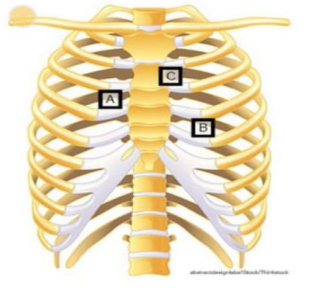
A nurse is collecting data from a 1-week-old infant who is scheduled for a cardiac catheterization. Which of the following locations should the nurse palpate in order to identify the infant's point of maximal impulse? (You will find hot spots to select in the artwork below. Select only the hot spot that corresponds to your answer.)
A
B
C
None
None
None
The Correct Answer is B
Point A: Represents the third intercostal space at the right sternal border, which corresponds anatomically to the aortic valve area. This is a key auscultation site used during cardiac assessment to listen for murmurs and abnormalities related to the aortic valve. It is not used for palpation.
Point B: Fourth intercostal space at the left midclavicular line and is the correct location for palpating the point of maximal impulse (PMI) in infants and young children. In this age group, the PMI is typically found here due to the more horizontal position of the heart in the chest.
Point C: This location is at the 2nd or 3rd intercostal space, which is too high to assess the PMI in an infant. This area is used more for evaluating pulmonic valve sounds, not the apex of the heart.
Nursing Test Bank
Naxlex Comprehensive Predictor Exams
Related Questions
Correct Answer is C
Explanation
A. “I can leave my child alone in the bathtub for up to 15 minutes after they learn to swim." Leaving a toddler alone in the bathtub is not safe, even if they know how to swim. Drowning occurs very quickly, and toddlers should always be supervised when in or near water.
B. "Open windows are safe as long as the screens fit snugly." Even if the screens fit snugly, open windows still pose a risk of falls for toddlers. It is important to keep windows securely closed or use window guards to prevent accidents.
C. "The water heater should be set to 120 degrees Fahrenheit or less." Setting the water heater to 120°F or lower is an appropriate and safe recommendation to prevent burns. Water temperatures higher than 120°F can cause serious burns, especially in young children.
D. “I will tell my toddler to never touch a firearm." Simply telling a toddler to avoid firearms may not be enough. Firearms should be securely stored in a locked, childproof safe, away from the child's reach, regardless of what the child is told.
Correct Answer is {"dropdown-group-1":"A","dropdown-group-2":"D"}
Explanation
Rationale for Correct Choices:
- Ceftriaxone: The infant has a documented allergy to amoxicillin, and ceftriaxone is a cephalosporin antibiotic that has potential cross-reactivity with amoxicillin. Therefore, the nurse should clarify the prescription for ceftriaxone to ensure it’s safe for the infant.
- Allergy: The infant’s known allergy to amoxicillin suggests a potential allergy to ceftriaxone as well. Given the risk of anaphylaxis or other allergic reactions, the nurse must clarify the use of ceftriaxone with the healthcare provider.
Rationale for Incorrect Choices:
- Furosemide: Furosemide is a diuretic used to manage fluid retention, especially in conditions like heart failure or VSD. There are no contraindications based on the infant's current findings, such as the heart rate, medical history, or electrolyte values.
- Digoxin: Digoxin is used to help regulate heart function in infants with conditions like VSD. The infant's heart rate of 84/min is within an acceptable range for digoxin administration.
- Acetaminophen: Acetaminophen is used to manage the infant’s fever (39.2°C). Given that the infant’s temperature is elevated, acetaminophen is appropriate for fever reduction and does not require clarification.
- Ibuprofen: Ibuprofen could also be used for fever management, no immediate concerns require clarification for ibuprofen. The nurse should monitor the infant closely for any side effects, but it doesn't necessitate clarification.
- Diet: The infant's diet is not directly related to the concern about ceftriaxone administration. The infant is being fed via gastrostomy tube, and while this is a consideration for medication administration, it does not specifically affect the need to clarify ceftriaxone due to an allergy.
- Temperature: The infant’s temperature of 39.2°C indicates fever, but it is not directly related to the need to clarify the ceftriaxone prescription.
- Heart rate: The infant’s heart rate is within an acceptable range for digoxin administration (84/min), and there’s no concern regarding bradycardia or tachycardia that would require clarifying the prescription for digoxin.
- Medical history: While the infant has Down syndrome and a ventricular septal defect (VSD), which require ongoing care, the focus here is on the allergy to amoxicillin, which is directly relevant to the ceftriaxone prescription.
Whether you are a student looking to ace your exams or a practicing nurse seeking to enhance your expertise , our nursing education contents will empower you with the confidence and competence to make a difference in the lives of patients and become a respected leader in the healthcare field.
Visit Naxlex, invest in your future and unlock endless possibilities with our unparalleled nursing education contents today