
A nurse is caring for a client with eclampsia who is receiving magnesium sulfate intravenously.
Which of the following findings indicates magnesium toxicity?
Hyperreflexia
Tachycardia
Oliguria
Hypertension
The Correct Answer is C
Fetal heart rate decelerations indicate a possible compromise of fetal oxygenation and should be reported to the provider immediately. Decelerations can be caused by various factors such as cord compression, uterine hyperstimulation, maternal hypotension, or placental abruption .
Choice A is wrong because a fetal heart rate of 140 beats per minute is within the normal range of 110 to 160 beats per minute .
Choice B is wrong because uterine contractions every 10 minutes are not abnormal in a client with severe pre-eclampsia who is receiving magnesium sulfate. Magnesium sulfate is used to prevent seizures and lower blood pressure in pre-eclampsia, but it does not stop labor .
Choice D is wrong because uterine contractions lasting 60 seconds are not a sign of …
Nursing Test Bank
Naxlex Comprehensive Predictor Exams
Related Questions
Correct Answer is A
Explanation
Two or more accelerations of at least 15 beats/min above baseline lasting for at least 15 seconds in a 20-minute period.This indicates a reactive test, which means that the fetus is well oxygenated and not in distress.
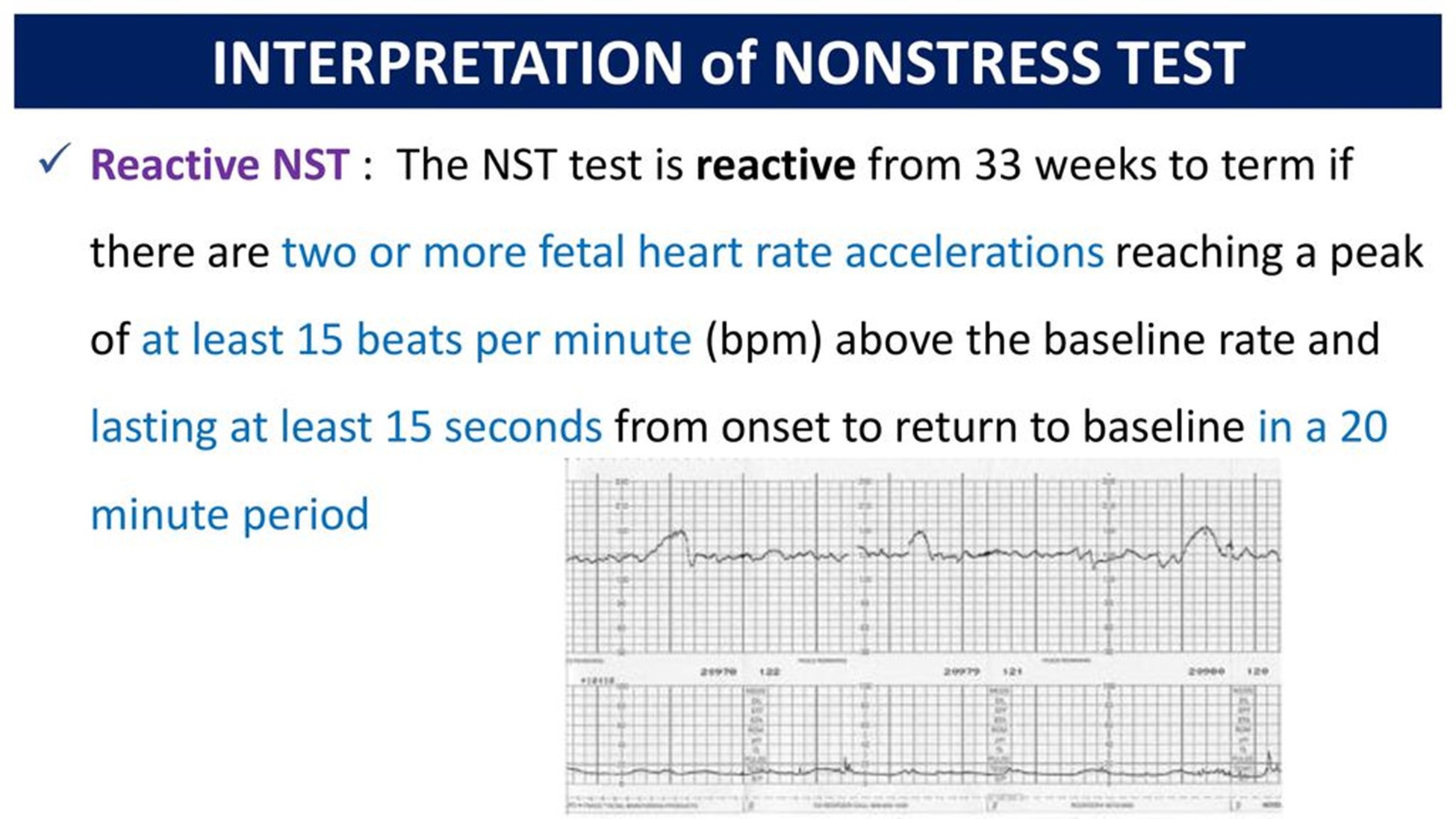
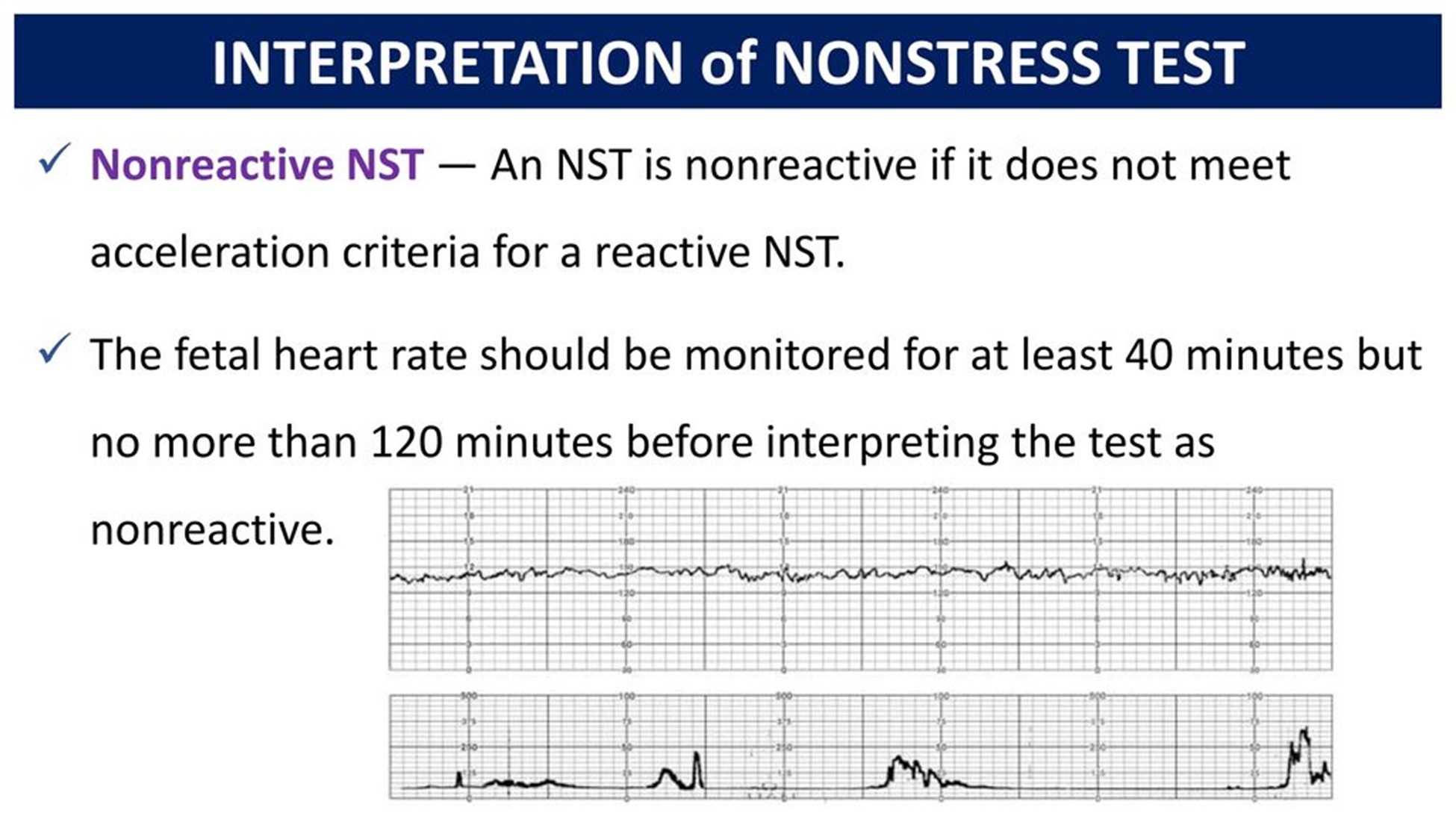
Choice B is wrong because no accelerations or decelerations in a 20-minute period indicate a non-reactive test, which may suggest fetal hypoxia or acidosis.
Choice C is wrong because one acceleration of at least 10 beats/min above baseline lasting for at least 10 seconds in a 20-minute period is the criterion for a reactive test for gestational age less than 32 weeks, not 34 weeks.
Choice D is wrong because variable decelerations with normal variability in a 20-minute period indicate cord compression or fetal head compression, not a reactive test.
Correct Answer is D
Explanation
Protein excretion of 450 mg indicates proteinuria.Proteinuria is the presence of excess protein in the urine, which can be a sign of kidney damage or disease.Normal protein excretion in a 24-hour urine collection is less than 150 mg.
Choice A is wrong because protein excretion of 150 mg is within the normal range.
Choice B is wrong because protein excretion of 250 mg is slightly above the normal range, but not enough to indicate proteinuria.
Choice C is wrong because protein excretion of 350 mg is also above the normal range, but not enough to indicate proteinuria.
Preeclampsia is a condition that affects some pregnant women, usually after 20 weeks of pregnancy.It causes high blood pressure and proteinuria, which can harm both the mother and the baby.A 24-hour urine collection is a simple lab test that measures what’s in the urine and checks kidney function.The test is done by collecting all the urine passed in a 24-hour period in a special container that must be kept cool until returned to the lab.
Whether you are a student looking to ace your exams or a practicing nurse seeking to enhance your expertise , our nursing education contents will empower you with the confidence and competence to make a difference in the lives of patients and become a respected leader in the healthcare field.
Visit Naxlex, invest in your future and unlock endless possibilities with our unparalleled nursing education contents today