
A nurse is caring for a client who is in the early stages of labor and requests nonpharmacological interventions for pain. Which of the following actions should the nurse take?
Encourage the client to void often.
Assist the client in remaining awake between contractions.
Minimize the client's position changes.
Limit the amount of time the support person remains in the room.
The Correct Answer is A
A) Correct - Encouraging the client to void often is important, as a full bladder can increase discomfort and interfere with labor progress.
B) Incorrect- Remaining awake between contractions might not directly address pain management strategies.
C) Incorrect- Position changes can help with pain management, so minimizing them would not be appropriate.
D) Incorrect- The presence of a support person is often encouraged during labor, and there is no need to limit their time in the room.
Nursing Test Bank
Naxlex Comprehensive Predictor Exams
Related Questions
Correct Answer is B
Explanation
A) Incorrect- While placing the baby in the bassinet in the room is a good practice, it may not be sufficient to prevent abduction.
B) Correct - Ensuring that anyone caring for or transporting the baby is wearing an identification badge helps confirm their authorized status to handle the baby.
C) Incorrect- Carrying the baby in the arms is a safe practice, but it doesn't specifically address preventing abduction.
D) Incorrect- Placing the identification band in the bassinet drawer is not a recommended practice, as it can potentially lead to confusion or misidentification.
Correct Answer is A
Explanation
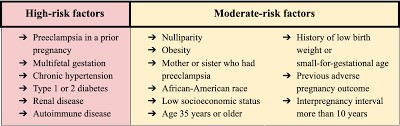
A) Correct - Chronic hypertension is a significant risk factor for developing preeclampsia during pregnancy. Preeclampsia is characterized by high blood pressure and organ damage, typically occurring after 20 weeks of pregnancy.
B) Incorrect- Maternal age of 30 years is not a specific risk factor for preeclampsia.
However, maternal age over 40 is considered a risk factor.
C) Incorrect- A prepregnancy BMI of 19 falls within the healthy weight range and is not typically associated with an increased risk of preeclampsia.
D) Incorrect- Having a third pregnancy is not inherently a strong risk factor for preeclampsia. Women experiencing their first pregnancy are at a slightly higher risk.
Whether you are a student looking to ace your exams or a practicing nurse seeking to enhance your expertise , our nursing education contents will empower you with the confidence and competence to make a difference in the lives of patients and become a respected leader in the healthcare field.
Visit Naxlex, invest in your future and unlock endless possibilities with our unparalleled nursing education contents today