
A nurse is caring for a client who is immunocompromised. Which of the following actions should the nurse take?
Place the client in a semiprivate room.
Have the client apply a mask when children are visiting.
Cleanse hands with an alcohol-based hand rub before client contact.
Use sterile gloves to provide perineal care.
The Correct Answer is C
When caring for an immunocompromised client, the nurse should prioritize infection prevention and control measures. One essential action is to cleanse hands with an alcohol-based hand rub before client contact. Hand hygiene is crucial in reducing the transmission of microorganisms and preventing infections. Using an alcohol-based hand rub is effective in killing many types of germs, including bacteria and viruses.
Let's now discuss why the other
Options are not the correct answers:
a. Place the client in a semiprivate room: Placing the client in a semiprivate room increases the risk of exposure to potential infections from other individuals. Immunocompromised clients have a weakened immune system, making them more susceptible to infections. Therefore, it is recommended to provide them with a private room to minimize the risk of exposure to pathogens.
b. Have the client apply a mask when children are visiting: While it is generally important to take precautions when visitors are present, having the client wear a mask when children are visiting may not be sufficient to protect the immunocompromised client. Children can carry and transmit various infectious diseases, even without displaying symptoms. Therefore, it is more appropriate for healthcare providers and visitors, including children, to adhere to strict hand hygiene and other infection control measures to minimize the risk of infection transmission.
d. Use sterile gloves to provide perineal care: The use of sterile gloves is not necessary for routine perineal care unless there is a specific indication, such as an open wound or surgical site. For routine perineal care, clean, non-sterile gloves are sufficient. Using sterile gloves unnecessarily can contribute to the development of antimicrobial resistance and increase healthcare costs without providing any additional benefits.
In summary, when caring for an immunocompromised client, the nurse should prioritize infection prevention and control. Cleansing hands with an alcohol-based hand rub before client contact is an important action to reduce the risk of infection transmission. The other
Options, such as placing the client in a semiprivate room, having the client wear a mask when children are visiting, and using sterile gloves for routine perineal care, are not the appropriate actions in this scenario.

Nursing Test Bank
Naxlex Comprehensive Predictor Exams
Related Questions
Correct Answer is D
Explanation
A. Palpate the abdomen: Palpating the abdomen before auscultating bowel sounds could potentially alter the findings by stimulating peristalsis or causing discomfort in the client, particularly in cases of appendicitis or other acute abdominal conditions.
B. Administer an antiemetic:A thorough assessment, including auscultation of bowel sounds, is needed first to rule out conditions like a bowel obstruction or paralytic ileus where antiemetics may be contraindicated.
C. Offer pain medication:Pain medication can mask symptoms and interfere with the nurse's or physician's ability to accurately assess the underlying cause of the client's symptoms, such as appendicitis.
D. Auscultate bowel sounds:Auscultating bowel sounds is the first action the nurse should take because it is a non-invasive assessment that can provide critical information. It helps determine if bowel sounds are present, hyperactive, hypoactive, or absent, which can guide further interventions and diagnostic steps.
Correct Answer is A
Explanation
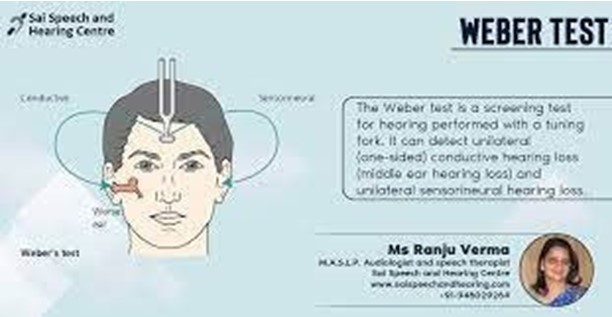
The correct answer is that the nurse should place the base of a vibrating tuning fork on the top of the client's head when performing Weber's test. Weber's test is a screening test for hearing that can detect unilateral (one-sided. conductive hearing loss (middle ear hearing loss) and unilateral sensorineural hearing loss (inner ear hearing loss)².
Options b, c and d are not correct actions for performing Weber's test. Counting how many seconds a client can hear a tuning fork after it has been struck, placing the base of a vibrating tuning fork on the client's mastoid process and moving a vibrating tuning fork in front of the client's ear canals one after the other are not part of Weber's test.
Whether you are a student looking to ace your exams or a practicing nurse seeking to enhance your expertise , our nursing education contents will empower you with the confidence and competence to make a difference in the lives of patients and become a respected leader in the healthcare field.
Visit Naxlex, invest in your future and unlock endless possibilities with our unparalleled nursing education contents today