
A nurse is caring for a client who asks, "Can I decide not to continue with chemotherapy?" The nurse responds, "This is your choice, and I'll support whatever decision you make."
The nurse's response is an example of which of the following ethical principles?
Autonomy
Beneficence
Nonmaleficence
Veracity
The Correct Answer is A
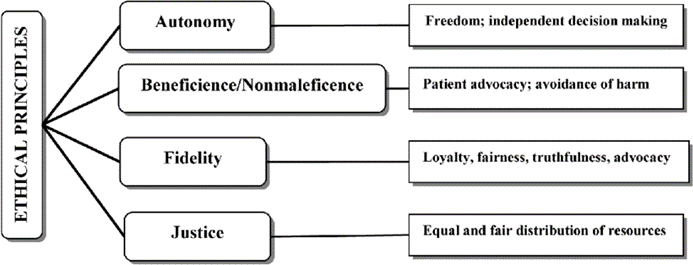
The nurse's response demonstrates respect for the client's autonomy, which is the principle of respecting the client's right to make decisions about their own healthcare. The nurse acknowledges the client's right to make a decision and offers support for whatever decision the client makes. Beneficence is the principle of doing good for the client, while nonmaleficence is the principle of avoiding harm. Veracity is the principle of telling the truth to the client, which is not necessarily demonstrated in this scenario.
Nursing Test Bank
Naxlex Comprehensive Predictor Exams
Related Questions
Correct Answer is A
Explanation
The nurse's response demonstrates respect for the client's autonomy, which is the principle of respecting the client's right to make decisions about their own healthcare. The nurse acknowledges the client's right to make a decision and offers support for whatever decision the client makes. Beneficence is the principle of doing good for the client, while nonmaleficence is the principle of avoiding harm. Veracity is the principle of telling the truth to the client, which is not necessarily demonstrated in this scenario.
Correct Answer is A
Explanation
Pain expression is highly influenced by cultural background, and it is important for healthcare providers to understand how different cultures may express pain differently.
In Middle Eastern cultures, it is considered a sign of strength and stoicism to suppress pain and not show any outward signs of discomfort.
In contrast, Chinese culture views pain endurance as a virtue and a way to avoid bringing shame or dishonor to one's family.
Puerto Rican culture may view open expressions of pain as shameful, while Native American culture often views being outspoken about pain as a way of expressing oneself and communicating their needs to healthcare providers.
Whether you are a student looking to ace your exams or a practicing nurse seeking to enhance your expertise , our nursing education contents will empower you with the confidence and competence to make a difference in the lives of patients and become a respected leader in the healthcare field.
Visit Naxlex, invest in your future and unlock endless possibilities with our unparalleled nursing education contents today