
A nurse is assisting a client during ambulation when the client begins to fall. Which of the following actions should the nurse take?
Lean the client toward the wall.
Assume a narrow base of support.
Lower the client to the floor.
Provide support by holding the client's arm
The Correct Answer is C
Choice A rationale: Leaning the client toward the wall may not provide sufficient support and could lead to a fall.
Choice B rationale: Assuming a narrow base of support does not provide adequate stability when a client is falling.
Choice C rationale: Lowering the client to the floor is a safety measure to prevent injury during a fall. It reduces the distance of the fall and minimizes the risk of injury.
Choice D rationale: Providing support by holding the client's arm may not be sufficient to prevent a fall. Lowering the client to the floor is a safer option.
Nursing Test Bank
Naxlex Comprehensive Predictor Exams
Related Questions
Correct Answer is A
Explanation
Choice A rationale: A purplish-colored stoma may indicate compromised blood supply and should be reported to the provider.
Choice B rationale: A shiny, moist stoma is a healthy characteristic of a colostomy. Choice C rationale: Stoma oozing red drainage is a normal finding after colostomy surgery.
Choice D rationale: "Budded" stoma is not a recognized term related to colostomy assessment.
Correct Answer is B
Explanation
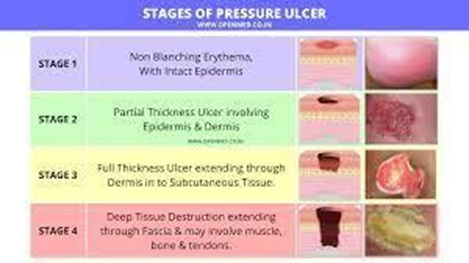
Choice A rationale: Stage III pressure ulcers involve full-thickness tissue loss with visible fat but do not extend to the underlying muscle.
Choice B rationale: Stage IV pressure ulcers involve full-thickness tissue loss with exposed muscle, bone, or other structures.
Choice C rationale: Stage II pressure ulcers involve partial-thickness skin loss but do not extend into the deeper layers.
Choice D rationale: Unstageable ulcers have a base covered by slough or eschar, making it difficult to assess the depth of tissue involvement. In this case, the wound's base is described as muscle, indicating a stage IV pressure ulcer.
Whether you are a student looking to ace your exams or a practicing nurse seeking to enhance your expertise , our nursing education contents will empower you with the confidence and competence to make a difference in the lives of patients and become a respected leader in the healthcare field.
Visit Naxlex, invest in your future and unlock endless possibilities with our unparalleled nursing education contents today