
A nurse in a pediatric clinic is providing teaching to the guardian of an infant who has a new prescription for digoxin.
Which of the following manifestations should the nurse include as an indication of digoxin toxicity?
Polyuria.
Diaphoresis.
Bradycardia.
Jaundice.
The Correct Answer is C
Bradycardia, or a slow heart rate, is a sign of digoxin toxicity in infants.
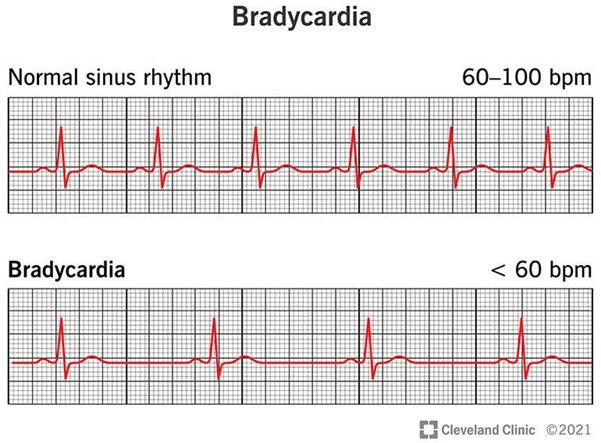
Digoxin is a medication used to improve the strength and efficiency of the heart and to control the rate and rhythm of the heartbeat.
However, an overdose can cause changes in the rate or rhythm of the heartbeat, including bradycardia.
Choice A is wrong because polyuria is not a sign of digoxin toxicity.
Choice B is wrong because diaphoresis is not a sign of digoxin toxicity.
Choice D is wrong because jaundice is not a sign of digoxin toxicity.
Nursing Test Bank
Naxlex Comprehensive Predictor Exams
Related Questions
Correct Answer is A
Explanation

Ataxia is a neurological sign that refers to a lack of muscle coordination and can cause staggering. Inhalation of gasoline vapors can cause symptoms such as dizziness or lightheadedness, headache, facial flushing, coughing or wheezing, staggering, slurred speech, blurry vision and weakness.
Choice B is wrong because Hypothermia is not an answer because hypothermia refers to a dangerously low body temperature and is not a symptom of gasoline inhalation.
Choice C is wrong because Hyperactive reflexes are not an answer because hyperactive reflexes refer to overactive or overresponsive reflexes and are not a symptom of gasoline inhalation.
Choice D is wrong because Pinpoint pupils are not an answer because pinpoint pupils refer to abnormally small pupils and are not a symptom of gasoline inhalation.
Correct Answer is D
Explanation
Sudden infant death syndrome (SIDS) death has a devastating effect on parents.

There is no known cause, so parents experience guilt about what they might have done or not done to contribute to the death.
Acknowledging the family members’ feelings of guilt can help provide support to the family.
Choice A is wrong because there are no specific instructions discouraging the parents from allowing siblings to view the body.
Choice B is wrong because avoiding discussing details of the attempt to revive the infant may not necessarily provide support to the family.
Choice C is wrong because while providing a follow-up phone call 1 week following the infant’s death may be helpful, it is not the only action that should be taken by the nurse.
Whether you are a student looking to ace your exams or a practicing nurse seeking to enhance your expertise , our nursing education contents will empower you with the confidence and competence to make a difference in the lives of patients and become a respected leader in the healthcare field.
Visit Naxlex, invest in your future and unlock endless possibilities with our unparalleled nursing education contents today