
A drug that is classified as being a "hypnotic" means that it will:
induce sleep.
create a stupor.
affect pain.
mimic hypnosis.
The Correct Answer is A
A. Hypnotic drugs are primarily used to induce sleep or promote sleepiness. They act on the central nervous system to depress its activity, leading to sedation and ultimately sleep. These drugs are commonly prescribed to treat insomnia or to induce anesthesia for surgical procedures.
B. While some hypnotic drugs can cause a stupor-like state, inducing a state of reduced consciousness or awareness, this is not the primary function of all hypnotic medications. Stupor typically refers to a state of extreme lethargy or mental dullness, which may be induced by certain drugs but is not inherent to the classification of hypnotics.
C. Hypnotic drugs are not primarily intended to affect pain. While some hypnotic medications may have analgesic properties, their primary function is to induce sleep or sedation rather than directly targeting pain relief. Pain relief is typically achieved through the use of analgesic medications such as opioids, NSAIDs, or other pain relievers.
D. Hypnotic drugs do not mimic the state of hypnosis induced by techniques such as hypnotherapy. While both hypnosis and hypnotic drugs can alter consciousness, they work through different mechanisms
Nursing Test Bank
Naxlex Comprehensive Predictor Exams
Related Questions
Correct Answer is D
Explanation
D. fluids and medications that may be irritating to peripheral veins can be given through a central venous access device (CVAD). CVADs are beneficial because they allow for the administration of vesicants, irritant solutions, or large volumes of fluid that could damage smaller, peripheral veins. They also provide reliable venous access for patients who are critically ill, have poor venous access, or require long-term medication treatment, such as for pain, infection, cancer, or to supply nutrition.
A. While central lines do have a risk of sepsis, it is not necessarily lower than peripheral sites
B. Patency confirmation methods are not exclusive to CVADs and are also applicable to peripheral IV catheters.
C. Both placement and maintenance require strict aseptic techniques to minimize the risk of infection.
Correct Answer is D
Explanation
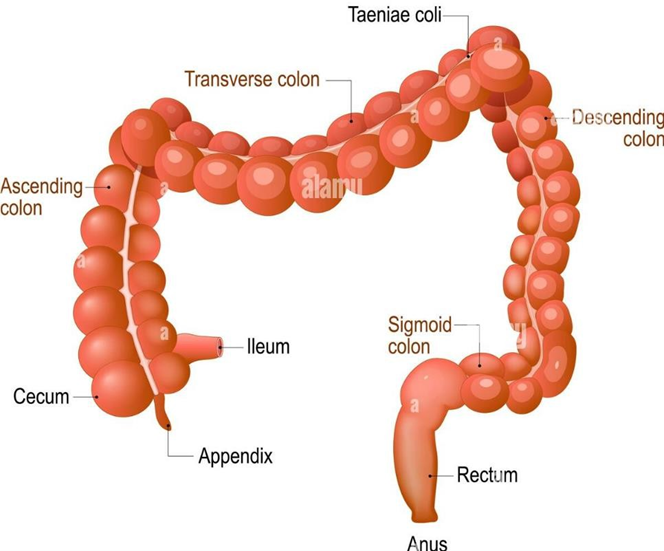
D. The sigmoid colon is the last part of the large intestine before the rectum. It functions to store fecal material and absorb water and electrolytes. Fecal material passing through the sigmoid colon tends to become more solid as water is absorbed, resulting in a more formed stool compared to other parts of the colon.
A. The transverse colon is located in the upper abdomen and is responsible for further absorption of water and electrolytes from the stool. Fecal material passing through the transverse colon tends to become more solid as water is absorbed, but it may not be as solid as stool from the descending colon or sigmoid colon.
B. The ascending colon is where stool is in a more liquid form as it moves up from the cecum. It undergoes further absorption of water and electrolytes as it travels through the colon, but it typically does not produce solid fecal output.
C. The ileum is the final portion of the small intestine and connects to the large intestine (colon). Stool passing through the ileum is still in a relatively liquid state as it contains undigested food particles, bile salts, and digestive enzymes. The primary function of the ileum is absorption of nutrients rather than water reabsorption, so fecal output from an ileostomy is usually more liquid.
Whether you are a student looking to ace your exams or a practicing nurse seeking to enhance your expertise , our nursing education contents will empower you with the confidence and competence to make a difference in the lives of patients and become a respected leader in the healthcare field.
Visit Naxlex, invest in your future and unlock endless possibilities with our unparalleled nursing education contents today