
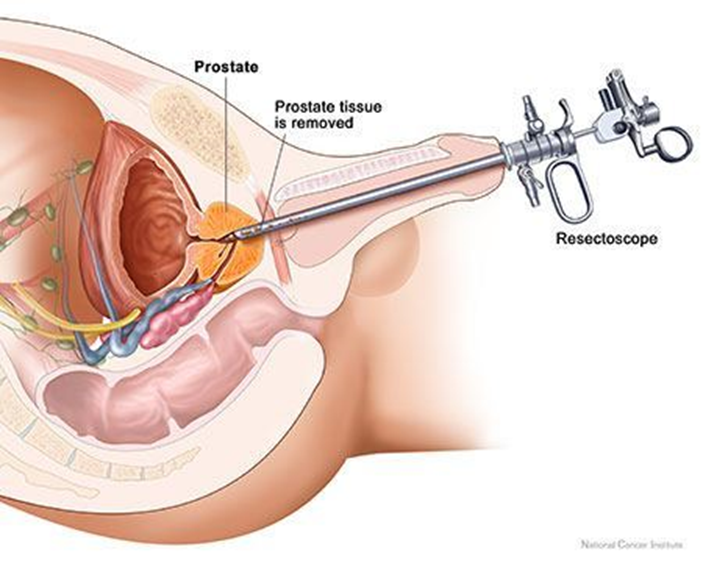
A client arrives to the medical-surgical unit 4 hours after a transurethral resection of the prostate. A triple-lumen catheter for continuous bladder irrigation with normal saline is infusing and the nurse observes dark, pink-tinged outflow with blood clots in the tubing and collection bag. Which action should the nurse take?
Irrigating the catheter manually.
Monitoring catheter drainage.
Discontinuing infusing solution.
Decreasing the flow rate.
The Correct Answer is B
A. Irrigating the catheter manually:
Manually irrigating the catheter without an order may disrupt the clotting process and increase the risk of bleeding. It is not a routine nursing intervention post-TURP without specific orders.
B. Monitoring catheter drainage.
It is not within the nurse's scope of practice to manually irrigate the catheter without a healthcare provider's order, especially in the context of post-TURP care. The dark, pink-tinged outflow with blood clots indicates some expected bleeding following the procedure. The nurse should closely monitor the catheter drainage for the amount, color, and presence of clots.
C. Discontinuing infusing solution:
Discontinuing the normal saline irrigation may lead to clot formation and obstruction, potentially worsening the situation. The continuous bladder irrigation is often used to prevent clot formation and maintain catheter patency post-TURP.
D. Decreasing the flow rate:
The flow rate is typically set by the healthcare provider to maintain catheter patency and prevent clot formation. Decreasing the flow rate without specific orders may not be appropriate in this situation.
Nursing Test Bank
Naxlex Comprehensive Predictor Exams
Related Questions
Correct Answer is B
Explanation
A. Administer a prescribed sedative:
Sedatives may depress the respiratory drive, which can be detrimental in a client with respiratory distress. It is not the appropriate intervention in this case.
B. Assist the client to an upright position.
Positioning the client upright helps improve respiratory mechanics by reducing the pressure on the diaphragm and allowing better lung expansion. This position can enhance the efficiency of breathing and alleviate symptoms of breathlessness.
C. Encourage the client to drink water:
While maintaining hydration is important, it may not directly address the immediate respiratory distress. Addressing the respiratory symptoms with an upright position is more crucial at this moment.
D. Apply a high-flow venturi mask:
While oxygen therapy may be necessary for a client with COPD experiencing respiratory distress, the first step is to assist the client to an upright position to improve respiratory mechanics. Applying a high-flow venturi mask may be a subsequent intervention based on the overall assessment, but positioning is the initial priority.
Correct Answer is B
Explanation
A. Increased temperature to the lower extremity:
While increased temperature could indicate inflammation or infection, it is not as immediately concerning as impaired circulation.
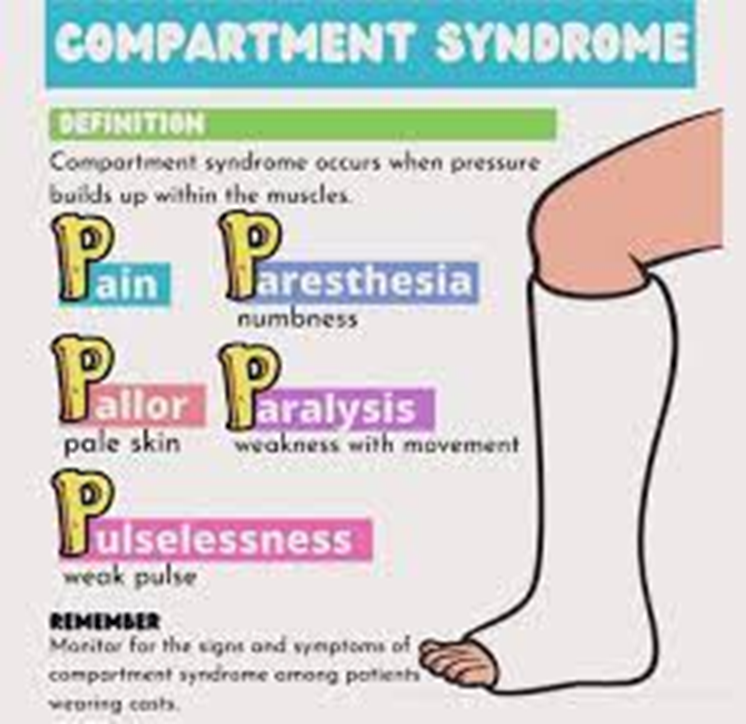
B. Right foot pale with sluggish capillary refill.
This finding suggests a potential impairment in blood flow to the right foot, which could be due to complications such as compartment syndrome or impaired circulation. Compartment syndrome is a serious condition that occurs when there is increased pressure within a muscle compartment, leading to reduced blood flow. Pale color and sluggish capillary refill indicate compromised circulation and require prompt intervention to prevent further damage.
C. Circumferential edema of the right foot:
Edema is a common finding after a fracture and cast application. However, in the context of pale color and sluggish capillary refill, it may indicate increased pressure within the compartment, requiring immediate attention.
D. Complaint of throbbing right leg pain:
Pain is a common complaint after a fracture, and throbbing pain may be expected. However, the priority is to address the potential compromise in circulation indicated by the pale color and sluggish capillary refill.
Whether you are a student looking to ace your exams or a practicing nurse seeking to enhance your expertise , our nursing education contents will empower you with the confidence and competence to make a difference in the lives of patients and become a respected leader in the healthcare field.
Visit Naxlex, invest in your future and unlock endless possibilities with our unparalleled nursing education contents today