
Why are behavior modification programs the treatment of choice for clients diagnosed with eating disorders?
These programs help clients correct distorted body image
These programs help clients manage uncontrollable behaviors
These programs allow clients to maintain control
These programs address underlying client anger
The Correct Answer is B
A. These programs help clients correct distorted body image:
While behavioral programs may incorporate components related to body image, the primary focus is often on addressing and modifying specific behaviors associated with eating disorders, such as binge eating, purging, or restrictive eating.
B. These programs help clients manage uncontrollable behaviors:
This is the correct answer. Behavior modification programs aim to address and modify specific behaviors that contribute to eating disorders. This can include establishing healthier eating patterns, reducing binge-purge cycles, and promoting more adaptive coping strategies.
C. These programs allow clients to maintain control:
While the concept of control is relevant to eating disorders, behavior modification programs are designed to help clients gain control over maladaptive behaviors and establish healthier patterns. It's not about maintaining control over the disorder itself.
D. These programs address underlying client anger:
While emotions, including anger, may play a role in eating disorders, behavior modification programs are more focused on targeting and modifying specific behaviors rather than addressing underlying emotions directly. Emotional aspects may be addressed through additional therapeutic interventions
Nursing Test Bank
Naxlex Comprehensive Predictor Exams
Related Questions
Correct Answer is C
Explanation
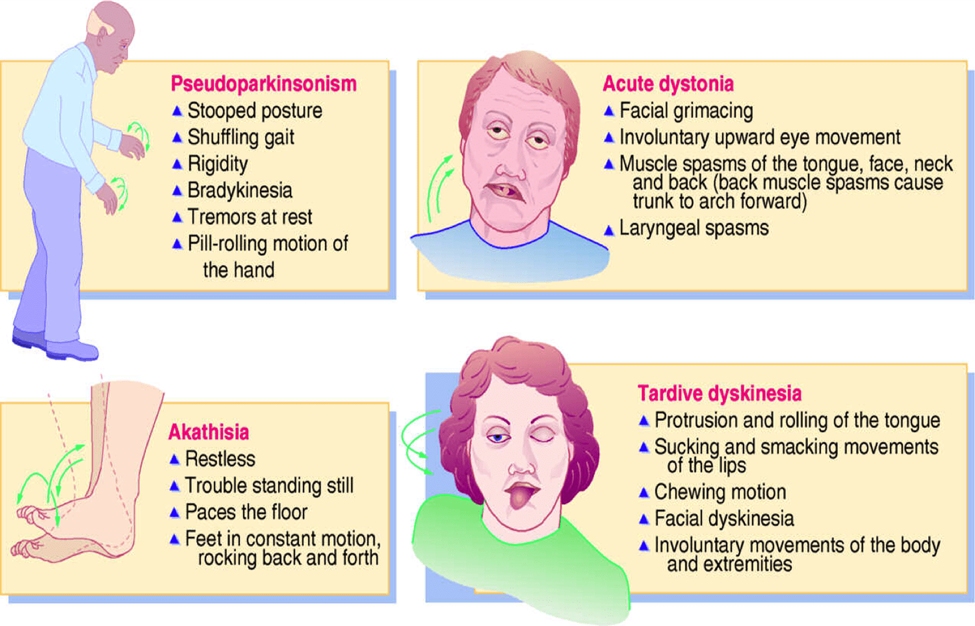
A. Neuroleptic malignant syndrome, treated by discontinuing antipsychotic medications: The symptoms described (uncontrollable tongue movements, stiff neck, difficulty swallowing) are more indicative of tardive dyskinesia than neuroleptic malignant syndrome. Neuroleptic malignant syndrome is characterized by hyperthermia, autonomic dysregulation, altered mental status, and generalized muscle rigidity. Treatment involves discontinuing antipsychotic medications and supportive care.
B. Agranulocytosis treated by administration of clozapine (Clozaril): Agranulocytosis is a rare but serious side effect of clozapine, not a treatment for the symptoms described. The symptoms presented are more consistent with tardive dyskinesia.
C. Tardive dyskinesia treated by discontinuing antipsychotic medication: This is the correct answer. Tardive dyskinesia is a movement disorder characterized by involuntary and abnormal movements, including tongue protrusion and facial grimacing. It can result from long-term use of antipsychotic medications, and discontinuing or reducing the dose of the antipsychotic is a primary intervention.
D. Headache treated by administration of Hydrochlorothiazide: Hydrochlorothiazide is a diuretic used to treat conditions like high blood pressure and edema, not headache or the symptoms described, which are more indicative of tardive dyskinesia.
Correct Answer is C
Explanation
A. Concrete thinking: Concrete thinking refers to a style of thinking that is focused on immediate and literal aspects of information. The patient's statement involves more than concrete thinking; it includes an irrational belief about the consequences of contagious bacteria, indicating a distorted perception of reality.
B. Agitation: Agitation refers to a state of restlessness or increased activity. The patient's statement does not necessarily reflect agitation but rather a specific paranoid belief about the consequences of bacteria exposure.
C. Paranoia: This is the correct answer. Paranoia involves irrational thoughts and fears of being harmed or persecuted by others. The patient's belief that contagious bacteria are everywhere and will lead to being locked up with other infected people is indicative of paranoid ideation.
D. Poverty of thought: Poverty of thought is characterized by a lack of meaningful or detailed thought content. The patient's statement is not an example of poverty of thought; rather, it involves specific and elaborate content related to a paranoid belief.
Whether you are a student looking to ace your exams or a practicing nurse seeking to enhance your expertise , our nursing education contents will empower you with the confidence and competence to make a difference in the lives of patients and become a respected leader in the healthcare field.
Visit Naxlex, invest in your future and unlock endless possibilities with our unparalleled nursing education contents today