
While cleansing a client's surgical incision, the nurse observes the incision as seen in the picture. How should the nurse document the appearance of the incision?
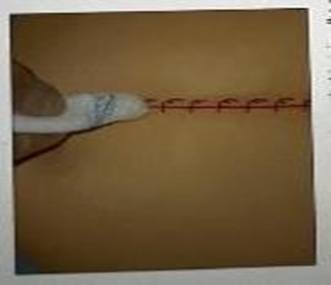
Dehiscence present.
Incision healing well.
Infected incision.
Edges approximated.
The Correct Answer is D
A. Dehiscence refers to the separation or opening of a wound’s edges, usually occurring after surgical closure. This can be due to several factors including infection, mechanical stress, or inadequate wound healing. If the incision shows signs of separation or gaping, this term would be appropriate. However, without a visual description or image, it’s unclear if the incision exhibits these characteristics.
B. This term implies that the incision is progressing towards recovery with no significant issues such as infection or dehiscence. This documentation is used when the wound appears clean, dry, and without signs of complications.
C. An infected incision typically shows signs such as increased redness, warmth, swelling, purulent drainage, or an unpleasant odor. If the incision displays these signs, it would be appropriate to document it as infected.
D. This term indicates that the edges of the incision are closely aligned, which is often used to describe an incision that is healing by primary intention. The edges are expected to come together neatly without separation.
Nursing Test Bank
Naxlex Comprehensive Predictor Exams
Related Questions
Correct Answer is A
Explanation
A. The Z-track technique helps to prevent medication from leaking into the subcutaneous tissue and minimizes irritation by sealing the medication in the muscle. This is especially important for medications that are known to cause irritation or staining, such as iron supplements or some antipsychotics
B. The length of the needle is not directly related to the use of the Z-track technique. The Z-track method is used to minimize irritation and ensure that the medication is deposited in the muscle rather than leaking into the subcutaneous tissue.
C. The reason for using the Z-track technique is related to preventing irritation and ensuring proper medication delivery, rather than simply following a prescription.
D. The volume of medication is not the primary reason for using the Z-track technique. While the Z-track method can be used for administering larger volumes of medication, the technique's primary purpose is to prevent leakage and reduce tissue irritation.
Correct Answer is D
Explanation
A. This can strain the back and increase the risk of injury. It's important to use proper body mechanics, such as bending the knees and keeping the back straight, when reaching for objects.
B. Bending at the waist can strain the back and increase the risk of injury. It's important to lift objects with the legs, not the back.
C. This can strain the back and hips. It's important to use proper body mechanics, such as using the legs and core muscles to push or pull heavy objects.
D. Standing erect with knees bent provides a strong base of support and helps to distribute weight evenly. Bending the knees allows for lifting with the legs, which is less stressful on the back and reduces the risk of injury. Pulling a draw sheet and moving a client in bed requires a combination of strength and proper body mechanics. Standing erect with knees bent helps to prevent strain on the back and muscles
Whether you are a student looking to ace your exams or a practicing nurse seeking to enhance your expertise , our nursing education contents will empower you with the confidence and competence to make a difference in the lives of patients and become a respected leader in the healthcare field.
Visit Naxlex, invest in your future and unlock endless possibilities with our unparalleled nursing education contents today