
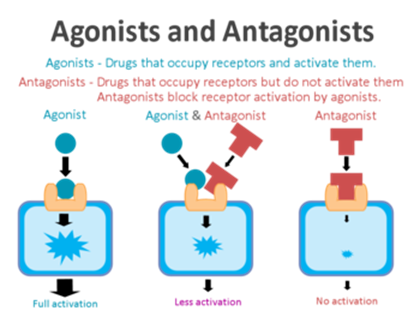
Which of the following describes the action of an agonist?
A molecule that prevents receptor activation by other medications
An endogenous molecule or a medication that can activate a receptor
A medication that increases the affinity of a receptor for a different medication
A therapeutic agent that both blocks and activates a receptor
The Correct Answer is B
An agonist is a molecule that can bind to and activate a receptor to induce a biological response ³. Agonists can be endogenous molecules, such as hormones or neurotransmitters, or medications that mimic the action of endogenous agonists ³.
Option A is incorrect because an agonist does not prevent receptor activation by other medications.
Option C is incorrect because an agonist does not increase the affinity of a receptor for a different medication.
Option D is incorrect because an agonist does not both block and activate a receptor.
Nursing Test Bank
Naxlex Comprehensive Predictor Exams
Related Questions
Correct Answer is B
Explanation
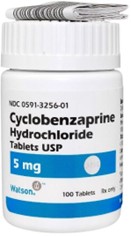
Cyclobenzaprine is structurally similar to tricyclic antidepressants (TCAs) and has similar anticholinergic side effects ³. Common anticholinergic side effects of cyclobenzaprine include dry mouth ¹⁵, constipation ¹⁵, and photophobia ³.
Option A is not correct because bradycardia is not a common side effect of cyclobenzaprine.
Option C is not correct because muscle rigidity, restless movements, and tremors are not common side effects of cyclobenzaprine.
Option D is not correct because flushing, tachycardia, and hives are not common side effects of cyclobenzaprine.
Correct Answer is A
Explanation
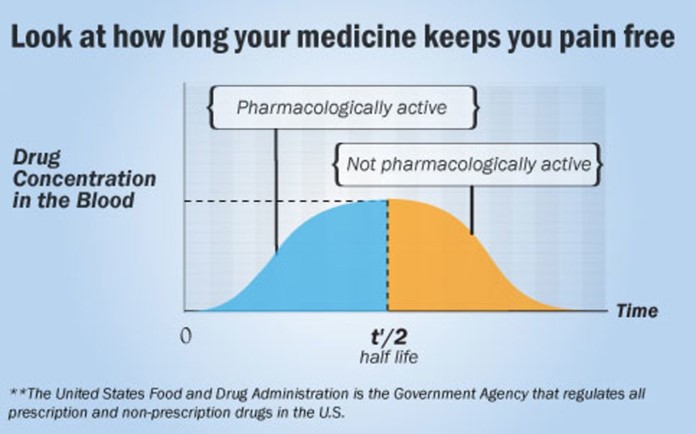
The half-life of a medication is the time it takes for the concentration of the medication in the body to decrease by half. In this case, the medication has a half-life of 2 hours and a current toxic level of 40 mEq/dL. After 2 hours, the level will decrease to 20 mEq/dL. After another 2 hours (4 hours total), the level will decrease to 10 mEq/dL, which is within the normal range. However, it will take another 21 half-lives (42 hours) for the level to reach 5 mEq/dL, which is the lower end of the normal range. Therefore, it will take a total of 25 hours (4 + 21) for the medication to reach the normal range.
Option B is incorrect because it would take much longer than 24 hours for the medication to reach the normal range.
Option C is incorrect because it would only take 2 hours for the medication to decrease by half, not reach the normal range.
Option D is incorrect because it would take longer than 4 hours for the medication to reach the normal range.
Whether you are a student looking to ace your exams or a practicing nurse seeking to enhance your expertise , our nursing education contents will empower you with the confidence and competence to make a difference in the lives of patients and become a respected leader in the healthcare field.
Visit Naxlex, invest in your future and unlock endless possibilities with our unparalleled nursing education contents today