
What cavity of the heart normally has the thickest wall?
Left atrium.
Left ventricle.
Right ventricle
Right atrium
The Correct Answer is B
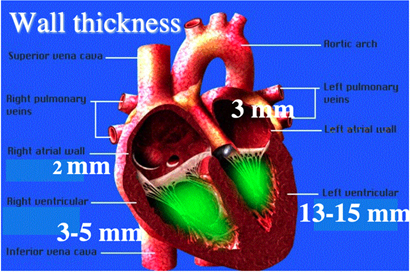
The left ventricle of the heart normally has the thickest wall, which is composed mainly of cardiac muscle tissue (myocardium). The left ventricle has to generate enough force to pump oxygen-rich blood to the rest of the body through the systemic circulation, which requires greater muscular effort than the right ventricle, which pumps blood only to the lungs via the pulmonary circulation. The thickness of the left ventricular wall ensures that it can withstand the pressure required to generate this forceful contraction.
Nursing Test Bank
Naxlex Comprehensive Predictor Exams
Related Questions
Correct Answer is A
Explanation
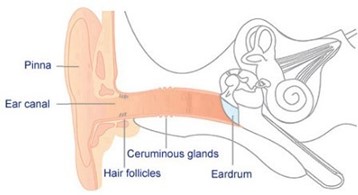
Ceruminous glands are specialized sweat glands located in the skin of the ear canal. These glands secrete a waxy substance called cerumen or ear wax. Ear wax helps to lubricate and protect the skin of the ear canal and prevent the entry of foreign particles, such as dust and insects, into the ear. It also has antibacterial properties that help to protect the ear from infection. The amount and composition of ear wax vary from person to person and can be affected by factors such as age, genetics, and environmental conditions.
Correct Answer is C
Explanation
The ABCD rule is a mnemonic used to identify the characteristics of melanoma, which is a type of skin cancer. The leters stand for:
A -Asymmetry: One half of the mole or lesion does not match the other half.
B - Border irregularity: The edges are ragged, notched, or blurred.
C - Color: The color is not uniform and may include different shades of brown or black, or sometimes patches of pink, red, white, or blue.
D - Diameter: The size of the mole or lesion is greater than 6 mm (about the size of a pencil eraser), although melanomas can sometimes be smaller.
This rule is not as useful in detecting other types of skin cancer, such as squamous cell carcinoma, basal cell carcinoma, or sarcoma, as they tend to have different characteristics. However, any new or changing mole or lesion on the skin should be examined by a dermatologist to determine if it is cancerous.

Whether you are a student looking to ace your exams or a practicing nurse seeking to enhance your expertise , our nursing education contents will empower you with the confidence and competence to make a difference in the lives of patients and become a respected leader in the healthcare field.
Visit Naxlex, invest in your future and unlock endless possibilities with our unparalleled nursing education contents today