
The nurse observes the external genitalia of a female client in preparation for inserting an indwelling urinary catheter. At which location should the catheter be inserted? (Mark location on image)
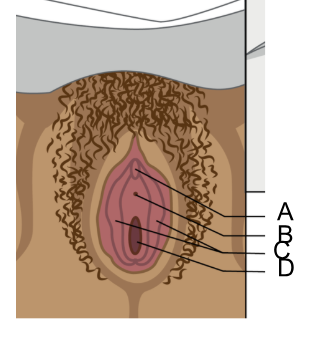
A
B
C
D
The Correct Answer is B
A. Clitoris: This is a highly sensitive erectile tissue and not connected to the urinary system.
B. Urethra: This is the correct site for catheter insertion, as it leads directly into the urinary bladder.
C. Labia: These are external folds of skin that surround the urethral and vaginal openings, not the site for catheter insertion.
D. Vagina: Inserting a catheter here would result in incorrect placement. The vagina is posterior to the urethra.
Nursing Test Bank
Naxlex Comprehensive Predictor Exams
Related Questions
Correct Answer is B
Explanation
A. Diabetes mellitus: While diabetes mellitus can affect circulation and healing, it is not a direct contraindication for the use of lidocaine. However, monitoring for effects on circulation and neuropathy may be necessary in diabetic patients.
B. Heart block: Lidocaine is a local anesthetic that can have systemic effects, especially on the cardiovascular system. It can cause conduction abnormalities, including heart block, so it is crucial to assess for this condition before administering lidocaine to avoid exacerbating cardiac issues.
C. Gastric ulcers: Lidocaine's effects are primarily cardiac and neurological, and it does not have a known adverse effect on gastric ulcers that would require pre-administration review. This condition is more relevant for oral medications that can irritate the gastric mucosa.
D. Glaucoma: Lidocaine does not have a significant effect on intraocular pressure or glaucoma. The main concern with lidocaine is its effect on the heart and nervous system, rather than its impact on eye conditions.
Correct Answer is ["B","C","D"]
Explanation
A. Monitor collection container and replace when full: The nurse should monitor the collection container to ensure it doesn't become full, as this could cause backflow into the pleural cavity. Replacing it when full is essential to maintain proper drainage.
B. Encourage frequent use of the incentive spirometer: Using the incentive spirometer helps prevent atelectasis and pneumonia by promoting lung expansion. It is important for postoperative recovery to maintain good respiratory function.
C. Assess area around chest tube for subcutaneous emphysema: Subcutaneous emphysema can occur if air leaks into the tissues around the chest tube. The nurse should check for this condition as it could indicate complications like an air leak or pneumothorax.
D. Keep tubing loosely coiled below the level of the chest: The tubing should be positioned below the chest to facilitate gravity drainage. Keeping it loosely coiled ensures that fluid and air drain efficiently without backflow.
E. Verify air bubbling present in the water seal chamber: Continuous bubbling in the water seal chamber is not expected and may indicate an air leak. Intermittent bubbling may be normal if the lung is still re-expanding, but ongoing bubbling should be reported, not simply verified.
Whether you are a student looking to ace your exams or a practicing nurse seeking to enhance your expertise , our nursing education contents will empower you with the confidence and competence to make a difference in the lives of patients and become a respected leader in the healthcare field.
Visit Naxlex, invest in your future and unlock endless possibilities with our unparalleled nursing education contents today