
The nurse observes an unlicensed assistive personnel (UAP) begin to provide oral care to an unresponsive client who is at risk for aspiration as seen in the picture. Which instruction(s) should the nurse provide the UAP? Select all that apply.
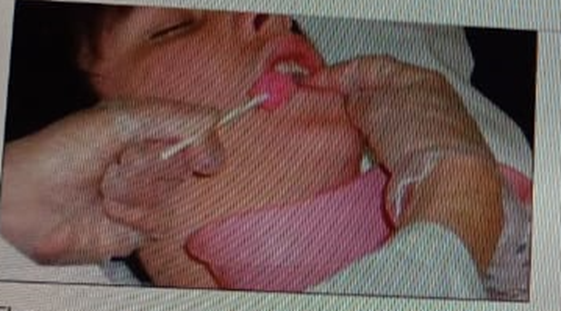
Remove the gloved finger from the mouth.
Flex the client's neck forward.
Apply lubricant to the tootherte
Turn the client's head to the side.
Elevate the head of the bed to semi-Fowler's
Correct Answer : B,D,E
A. Removing the gloved finger from the mouth is not necessarily appropriate unless the UAP is at risk of injury or if the client has a gag reflex that is causing a problem.
B. Flex the client's neck forward helps facilitate drainage and reduces the risk of aspiration while providing oral care.
C. Applying lubricant to the toothettes is not a priority in this scenario and may not be necessary.
D. Turn the client's head to the side is an important safety measure to prevent aspiration of saliva or oral care products.
E. Elevate the head of the bed to semi-Fowler's helps reduce the risk of aspiration by allowing gravity to assist in the drainage of fluids and secretions.
Nursing Test Bank
Naxlex Comprehensive Predictor Exams
Related Questions
Correct Answer is C
Explanation
A. Loss of bone mineral density occurs in osteoporosis, not osteoarthritis.
B. An infectious process in synovial fluid suggests septic arthritis, not osteoarthritis.
C. Osteoarthritis is caused by wear-and-tear destruction of joint cartilage, leading to pain and stiffness.
D. A systemic inflammatory response is characteristic of rheumatoid arthritis, not osteoarthritis.
Correct Answer is A
Explanation
A. Identifying support systems is the first step in addressing the client’s emotional distress and providing the appropriate resources, such as therapy or support groups, for recovery.
B. Exploring feelings of hope is important, but first, it’s essential to establish a support system that can provide the client with the care they need.
C. Inquiring about plans for further education may not be appropriate at this moment, as the client’s emotional needs should take priority.
D. Explaining the ELISA test would be irrelevant since the client has already been diagnosed as HIV positive.
Whether you are a student looking to ace your exams or a practicing nurse seeking to enhance your expertise , our nursing education contents will empower you with the confidence and competence to make a difference in the lives of patients and become a respected leader in the healthcare field.
Visit Naxlex, invest in your future and unlock endless possibilities with our unparalleled nursing education contents today