
The nurse is caring for a client one week post-surgery. Which finding should the nurse expect to see if the surgical incision is healing properly?
Eschar and slough in the wound.
A well-approximated incision site.
Beefy red granulation tissue.
Erythema and serosanguineous exudate.
The Correct Answer is B
Choice A reason: Eschar and slough in the wound are not signs of proper healing. They are necrotic tissue that impairs wound healing and increases the risk of infection. They should be removed by debridement to promote wound closure.
Choice B reason: A well-approximated incision site is a sign of proper healing. It means that the edges of the wound are close together and aligned, without gaps or separation. It indicates that the wound is healing by primary intention, which is the fastest and most desirable method of wound healing.
Choice C reason: Beefy red granulation tissue is a sign of healing, but not of proper healing for a surgical incision. It is new tissue that fills the wound bed and consists of blood vessels and connective tissue. It indicates that the wound is healing by secondary intention, which is a slower and less desirable method of wound healing.
Choice D reason: Erythema and serosanguineous exudate are not signs of proper healing. They are signs of inflammation and possible infection. Erythema is redness of the skin around the wound, and serosanguineous exudate is a mixture of blood and serum that drains from the wound. They should be monitored and reported to the health care provider.
Nursing Test Bank
Naxlex Comprehensive Predictor Exams
Related Questions
Correct Answer is A
Explanation
Choice A reason: Neuropathic pain is caused by damage or dysfunction of the nervous system. It is often described as burning, shooting, or tingling sensations. The client's symptoms are consistent with neuropathic pain.
Choice B reason: Visceral pain is caused by stimulation of pain receptors in the internal organs. It is often described as deep, dull, or cramping sensations. The client's symptoms are not consistent with visceral pain.
Choice C reason: Acute pain is caused by a sudden or short-term injury or illness. It is often described as sharp, throbbing, or stabbing sensations. The client's symptoms are not consistent with acute pain.
Choice D reason: Nociceptive pain is caused by stimulation of pain receptors in the skin, muscles, bones, or joints. It is often described as aching, sore, or pressure sensations. The client's symptoms are not consistent with nociceptive pain.
Correct Answer is B
Explanation
Choice A reason: This is an incorrect action as it indicates poor posture and balance. The client should walk with the elbows slightly flexed and the shoulders relaxed.
Choice B reason: This is the correct action as it ensures proper fit and comfort of the crutch. The client should fit the crutch 2 finger widths from the axilla to prevent nerve damage and pressure ulcers.
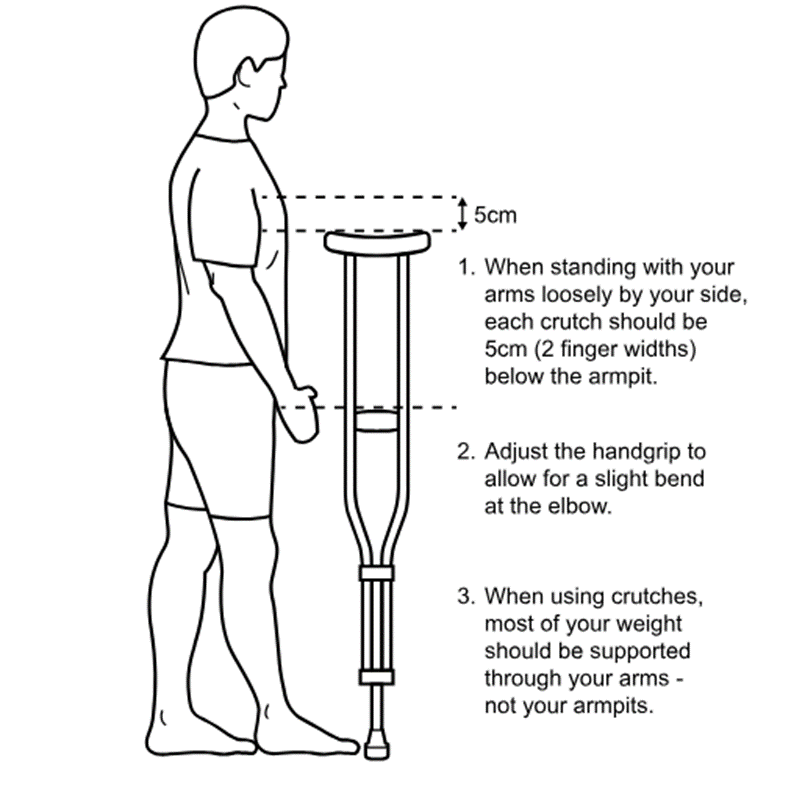
Choice C reason: This is an incorrect action as it may cause pain and injury to the wrists and hands. The client should adjust the height of the hand grips to allow a 30-degree bend at the elbow.
Choice D reason: This is an incorrect action as it may cause instability and falls. The client should hold the crutch 4 to 6 inches (10 to 15 cm) in front and to the side of the foot.
Whether you are a student looking to ace your exams or a practicing nurse seeking to enhance your expertise , our nursing education contents will empower you with the confidence and competence to make a difference in the lives of patients and become a respected leader in the healthcare field.
Visit Naxlex, invest in your future and unlock endless possibilities with our unparalleled nursing education contents today