
A charge nurse is observing a staff nurse who is caring for a child who has pertussis.
Which of the following actions by the staff nurse indicates an understanding of infection control practices?
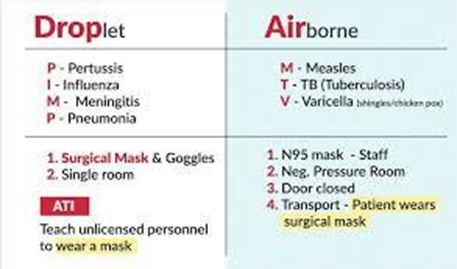
Maintains droplet precautions while the child is coughing and sneezing
Applies a face mask after entering the child's room
Wears gloves when assisting the child to the bathroom
Follows airborne precautions by wearing an N95 respirator while caring for the child
The Correct Answer is A
Rationale:
A. Maintaining droplet precautions while the child is coughing and sneezing is appropriate because pertussis is primarily transmitted via respiratory droplets. Droplet precautions include wearing a surgical mask when within 3 feet of the patient to prevent droplet transmission.
B. Applying a face mask after entering the child's room is not necessary if droplet precautions are already being followed during periods of coughing and sneezing.
C. Wearing gloves when assisting the child to the bathroom is not directly related to preventing the spread of pertussis, which is primarily transmitted via respiratory droplets.
D. Airborne precautions with an N95 respirator are not indicated for pertussis, as it is not transmitted via airborne particles.
Nursing Test Bank
Naxlex Comprehensive Predictor Exams
Related Questions
Correct Answer is C
Explanation
A. Hypotension is not a common adverse effect of cefazolin. While hypotension can occur in severe allergic reactions, it is not a typical side effect of this medication.
B. Prolonged wound healing is not a primary concern with cefazolin. This antibiotic does not typically affect wound healing directly.
C. Stevens-Johnson syndrome is correct. Cefazolin can cause serious skin reactions, including Stevens-Johnson syndrome, which is a severe, life-threatening condition characterized by blistering and peeling of the skin. The nurse should monitor for signs of this reaction.
D. Bradypnea is not a common adverse effect of cefazolin. Respiratory depression is not typically associated with this medication.
Correct Answer is C
Explanation
Rationale:
A. This statement describes peritoneal dialysis, not hemodialysis.
B. Hemodialysis does not use an electrolyte solution to clean the blood.
C. Hemodialysis indeed involves circulating the blood outside the body through an artificial membrane in the dialysis machine to remove waste products and excess fluids.
D. Hemodialysis involves intermittent filtration of the blood, not continuous filtration.
Whether you are a student looking to ace your exams or a practicing nurse seeking to enhance your expertise , our nursing education contents will empower you with the confidence and competence to make a difference in the lives of patients and become a respected leader in the healthcare field.
Visit Naxlex, invest in your future and unlock endless possibilities with our unparalleled nursing education contents today