
A school-age child has been admitted to the hospital with an exacerbation of nephrotic syndrome. Which clinical manifestations should the nurse expect to assess? (Select all that apply)
Facial edema
Cloudy smoky brown-colored urine
Weight loss
Frothy appearing urine
Correct Answer : A,D
Choice A reason:
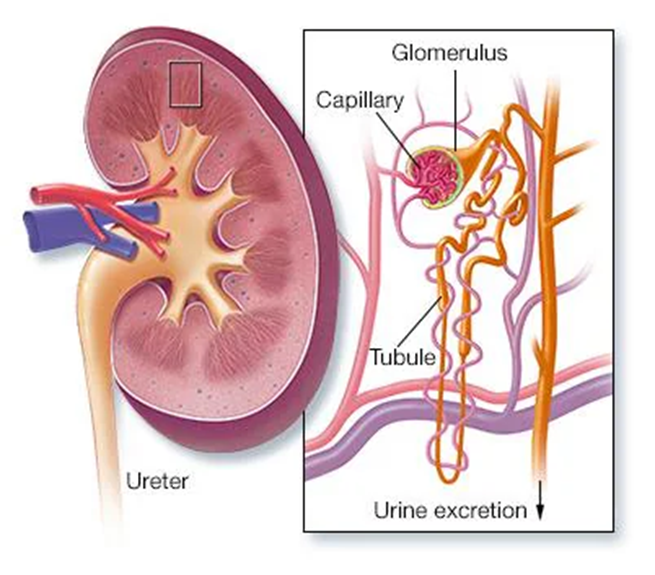
Facial edema is a common clinical manifestation of nephrotic syndrome in children. This occurs due to the retention of fluid in the tissues, which is a result of the kidneys leaking protein into the urine (proteinuria). The loss of protein reduces the oncotic pressure in the blood vessels, leading to fluid accumulation in the interstitial spaces, particularly noticeable around the eyes and face.
Choice B Reason:
Cloudy smoky brown-colored urine is not typically associated with nephrotic syndrome. This symptom is more indicative of hematuria, which is the presence of blood in the urine. Hematuria is more commonly seen in conditions such as glomerulonephritis rather than nephrotic syndrome.
Choice C Reason:
Weight loss is not a characteristic symptom of nephrotic syndrome. In fact, children with nephrotic syndrome often experience weight gain due to fluid retention. The accumulation of fluid in the body can lead to an increase in weight, rather than a loss.
Choice D Reason:
Frothy appearing urine is a hallmark sign of nephrotic syndrome. The frothiness is due to the high levels of protein being excreted in the urine (proteinuria). When protein is present in the urine, it can cause the urine to appear foamy or frothy.
Nursing Test Bank
Naxlex Comprehensive Predictor Exams
Related Questions
Correct Answer is ["A","B","C","D","E","F","G","H","I"]
Explanation
The correct answer is
A. Unable to roll over back to front
B. Head lag
C. Feeding difficulties
D. Floppy posture
E. Arms are stiff
F. Does not smile
G. Unable to sit without support
H. Irritable and cries often
I. Unable to pass an object between hands
Choice A reason
Unable to roll over back to front: At 3 months, infants typically start to develop the ability to roll over from their stomach to their back. Rolling over from back to front usually occurs later, around 4 to 6 months. However, the inability to roll over at all by 3 months could indicate developmental delays or muscle weakness, which requires follow-up.
Choice B Reason
Head lag: By 3 months, infants should have enough neck muscle strength to hold their head up when pulled to a sitting position. Persistent head lag at this age can be a sign of developmental delay or neuromuscular disorders, necessitating further evaluation.
Choice C Reason
Feeding difficulties: Infants should be able to suck and swallow effectively by 3 months. Feeding difficulties can lead to inadequate nutrition and growth, and may indicate underlying issues such as gastrointestinal problems or neurological disorders. This requires prompt attention and intervention.
Choice D Reason
Floppy posture: A 3-month-old should start to show more control over their body movements and have a more stable posture. Floppy posture, also known as hypotonia, can be a sign of various conditions, including genetic disorders, muscle diseases, or central nervous system issues. It is important to investigate the cause of hypotonia.
Choice E Reason
Arms are stiff: Stiffness in the arms, or hypertonia, can indicate neurological problems such as cerebral palsy or other motor disorders. It is crucial to assess the underlying cause of increased muscle tone and provide appropriate interventions.
Choice F Reason
Does not smile: Social smiling typically begins around 6 to 8 weeks of age. If a 3-month-old does not smile, it could be a sign of developmental delay, visual impairment, or other social and emotional issues. This warrants further assessment to determine the cause.
Choice G Reason
Unable to sit without support: While sitting without support is not expected until around 6 months, the inability to show any signs of trying to sit or maintain a sitting position with support at 3 months could indicate developmental delays. This should be monitored and addressed if necessary.
Choice H Reason
Irritable and cries often: Excessive irritability and frequent crying can be signs of discomfort, pain, or underlying medical conditions such as infections, gastrointestinal issues, or neurological problems. It is important to identify and address the cause of the infant’s distress.
Choice I Reason
Unable to pass an object between hands: By 3 months, infants should start to develop hand-eye coordination and the ability to grasp objects. The inability to pass an object between hands may indicate developmental delays or motor skill issues, which require further evaluation.
Correct Answer is ["A","B","C","E"]
Explanation
The correct answer is a) Positive Ortolani click, b) Unequal gluteal folds, c) Trendelenburg sign, and e) Telescoping of the affected limb.
Choice A reason:
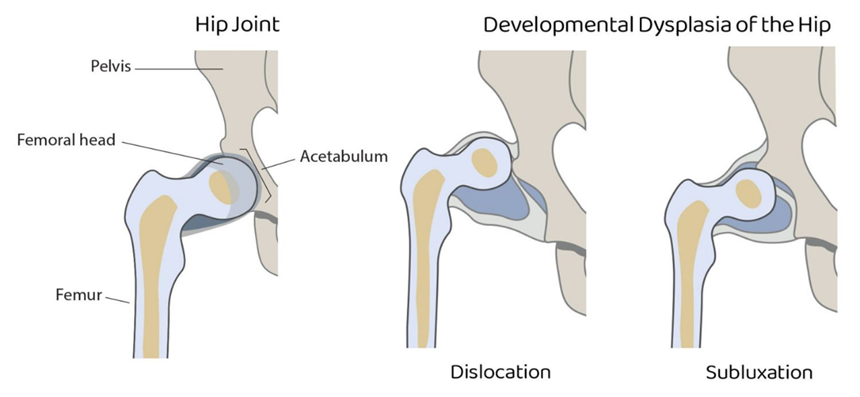
A positive Ortolani click is a clinical manifestation of developmental dysplasia of the hip (DDH). The Ortolani maneuver is used to detect hip dislocation or subluxation in infants. When the hip is abducted and gentle pressure is applied to the proximal thigh from behind, a palpable “clunk” is noticed as the femoral head relocates into the acetabulum. This indicates hip instability, which is a characteristic of DDH.
Choice B reason:
Unequal gluteal folds are another clinical manifestation of DDH. Asymmetrical gluteal creases can suggest hip dysplasia in infants. This is because the dislocation or subluxation of the hip can cause one leg to appear shorter than the other, leading to uneven gluteal folds.
Choice C reason:
The Trendelenburg sign is a clinical test used to assess the integrity and strength of the hip abductor muscles, particularly the gluteus medius and gluteus minimus. A positive Trendelenburg sign usually indicates weakness in these muscles, which can be associated with hip abnormalities such as congenital hip dislocation3. In DDH, the hip instability can lead to a positive Trendelenburg sign.
Choice D reason:
A negative Babinski sign is not a clinical manifestation of DDH. The Babinski reflex is a normal reflex in infants up to 2 years old, where the big toe moves upward and the other toes fan out when the sole of the foot is stroked. A negative Babinski sign would indicate the absence of this reflex, which is not related to DDH.
Choice E reason:
Telescoping of the affected limb is a clinical manifestation of DDH. In a child with DDH, the hip socket is shallow, and the head of the femur may slip in and out, leading to a telescoping effect. This means the femoral head can move further out of the socket, causing the limb to appear shorter or longer depending on the position.
Whether you are a student looking to ace your exams or a practicing nurse seeking to enhance your expertise , our nursing education contents will empower you with the confidence and competence to make a difference in the lives of patients and become a respected leader in the healthcare field.
Visit Naxlex, invest in your future and unlock endless possibilities with our unparalleled nursing education contents today