
How is the term “health disparity” best defined?
Health equity
The difference between an expected incidence and prevalence and that which actually occurs in a comparison population group.
The systematic elimination of the culture of another resulting in decreased wellness.
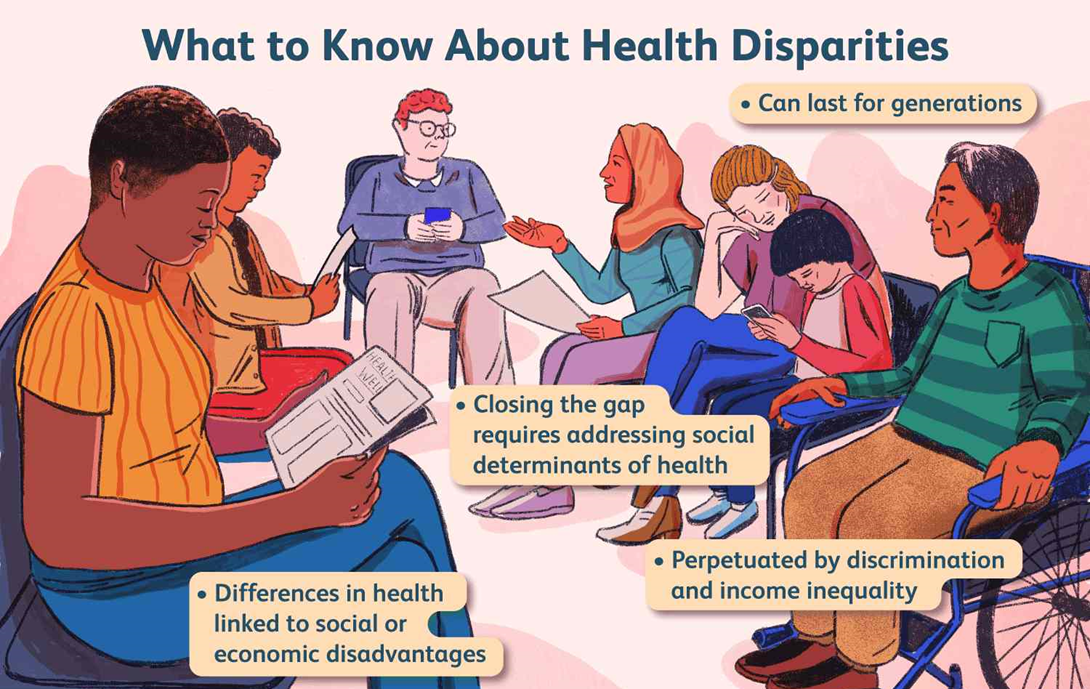
Differences in health outcomes between groups.
The Correct Answer is D
Choice A reason: Health equity is not the definition of health disparity, but rather the opposite of it. Health equity is the state of fair and equal opportunity for everyone to achieve optimal health, regardless of social or economic factors.
Choice B reason: The difference between an expected incidence and prevalence and that which actually occurs in a comparison population group is not the definition of health disparity, but rather a way of measuring it. Incidence and prevalence are epidemiological terms that refer to the number of new and existing cases of a disease or condition in a population, respectively.
Choice C reason: The systematic elimination of the culture of another resulting in decreased wellness is not the definition of health disparity, but rather an example of cultural genocide. Cultural genocide is the deliberate destruction of the identity, heritage, or traditions of a group of people.
Choice D reason: Differences in health outcomes between groups is the definition of health disparity, as it describes the situation where some groups of people experience worse health status or quality of life than others, due to factors such as race, ethnicity, gender, income, education, or geography.
Nursing Test Bank
Naxlex Comprehensive Predictor Exams
Related Questions
Correct Answer is A
Explanation
Choice A reason: Controlling fluid balance is the most important goal in the nursing plan of care to decrease the frequency of hospitalizations for acute exacerbations of HF in older adults, as fluid overload is the main cause of HF worsening and hospital admission. Fluid balance can be controlled by monitoring weight, intake and output, edema, and lung sounds, and by administering diuretics, restricting sodium and fluid intake, and elevating the legs.
Choice B reason: Controlling blood pressure is an important goal in the nursing plan of care to decrease the frequency of hospitalizations for acute exacerbations of HF in older adults, as hypertension is a risk factor and a complication of HF. However, it is not the most important goal, as blood pressure may not always reflect the fluid status or the severity of HF. Blood pressure can be controlled by administering antihypertensive medications, such as angiotensin-converting enzyme inhibitors, beta-blockers, or calcium channel blockers, and by encouraging lifestyle modifications, such as smoking cessation, weight management, and stress reduction.
Choice C reason: Preventing deconditioning is an important goal in the nursing plan of care to decrease the frequency of hospitalizations for acute exacerbations of HF in older adults, as deconditioning is a common problem in HF patients due to reduced physical activity, fatigue, and muscle wasting. However, it is not the most important goal, as deconditioning may not directly affect the fluid balance or the cardiac function. Deconditioning can be prevented by providing exercise training, such as aerobic, resistance, or interval training, and by promoting self-care and adherence to the treatment regimen.
Choice D reason: Maintaining client safety is an important goal in the nursing plan of care to decrease the frequency of hospitalizations for acute exacerbations of HF in older adults, as HF patients are at risk of falls, injuries, infections, or adverse drug reactions. However, it is not the most important goal, as client safety may not specifically address the fluid balance or the cardiac function. Client safety can be maintained by providing a safe environment, such as removing clutter, providing adequate lighting, and using assistive devices, and by preventing complications, such as monitoring for signs of infection, bleeding, or electrolyte imbalance, and by educating the client and the family about the medications, the signs and symptoms of HF worsening, and the emergency measures.
Correct Answer is ["A","B","C","D"]
Explanation
Choice A: "Client slept throughout the night" - Good sleep can be an indicator of effective pain management. Pain can disrupt sleep, so if the client is sleeping well, it may suggest that their pain is being effectively managed¹.
Choice B: "Client cooperative during AM care" - If the client is cooperative during care, it may suggest that they are not in significant pain. Uncontrolled pain can make people irritable and uncooperative¹.
Choice C: "Client ate 80% of breakfast, 70% of lunch and 100% of dinner" - Pain can affect appetite. If the client is eating well, it may suggest that their pain is under control¹.
Choice D: "Client winces only when turned and repositioned" - If the client only shows signs of discomfort during movement, it may suggest that their pain is generally well-controlled¹.
Choice E: "Client slept during dressing change" - This is not necessarily an indicator of effective pain management. The client could be sleeping due to fatigue, medication effects, or other reasons unrelated to their pain level¹.
Whether you are a student looking to ace your exams or a practicing nurse seeking to enhance your expertise , our nursing education contents will empower you with the confidence and competence to make a difference in the lives of patients and become a respected leader in the healthcare field.
Visit Naxlex, invest in your future and unlock endless possibilities with our unparalleled nursing education contents today