
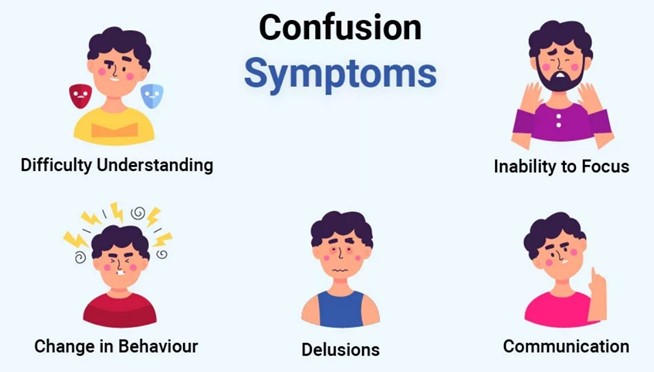
An older female adult who was admitted to a long-term care facility yesterday is confused about what day of the week it is. Her history does not indicate that she was confused prior to admission. What action should the practical nurse (PN) take?
Document the client's loss of memory in the record.
Notify the family of the change in the client's condition.
Remind the client what day of the week it is.
Encourage the client to rest during the day.
The Correct Answer is C
This is the best action for the PN to take because it provides reality orientation and helps the client cope with the change in environment. The client may be experiencing acute confusion or delirium due to stress, medication, infection, or other factors. The PN should remind the client of the date, time, and place frequently and use other strategies such as calendars, clocks, and familiar objects to reduce confusion.
A. Documenting the client's loss of memory in the record is not enough and does not address the client's needs.
B. Notifying the family of the change in the client's condition is not a priority and may not be necessary if the confusion is temporary or reversible.
D. Encouraging the client to rest during the day is not appropriate and may worsen the confusion or disrupt the sleep-wake cycle.
Nursing Test Bank
Naxlex Comprehensive Predictor Exams
Related Questions
Correct Answer is ["A","B","E"]
No explanation
Correct Answer is D
Explanation
The correct answer is choice D, Pupils reactive to accommodation. Choice A rationale:
"Peripheral vision intact”. refers to the ability to see objects at the outer edges of one's visual field. It is not relevant to the assessment of pupillary response and does not describe the finding of pupils constricting as they change focus from a far object to a near object.
Choice B rationale:
"Nystagmus present with pupillary focus”. suggests involuntary rapid eye movements accompanied by changes in pupillary response. Nystagmus is not an expected finding during pupillary accommodation, and its presence would indicate a neurological issue rather than a normal response.
Choice C rationale:
"Consensual pupillary constriction present”. refers to both pupils constricting when light is shined into one eye. While this finding is normal, it does not specifically describe the pupils' response during accommodation when focusing from a far object to a near object.
Choice D rationale:
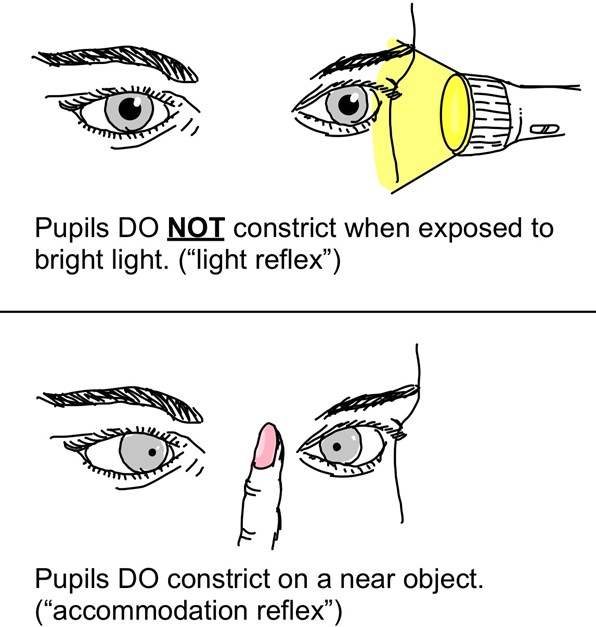
"Pupils reactive to accommodation”. accurately describes the normal physiological response of the pupils constricting as they change focus from a distant object to a nearby object. This response ensures that the appropriate amount of light enters the eyes to maintain clear vision during different distances of focus.
Whether you are a student looking to ace your exams or a practicing nurse seeking to enhance your expertise , our nursing education contents will empower you with the confidence and competence to make a difference in the lives of patients and become a respected leader in the healthcare field.
Visit Naxlex, invest in your future and unlock endless possibilities with our unparalleled nursing education contents today