
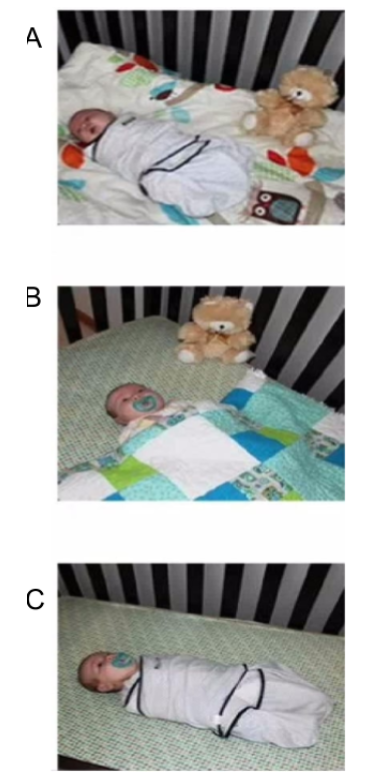
A nurse is teaching about preventing sudden unexpected infant death (SUID) to a parent of a 1-month-old infant. Which of the following ling indicates that the parent understands how to place the infant in the crib at bedtime?
A
B
C
The Correct Answer is C
A. The infant is swaddled but there is a blanket and a stuffed toy in the crib. Loose items increase the risk of suffocation and SUID, so this does not demonstrate safe sleep practices.
B. The infant is placed on their back, but there is a blanket and a stuffed toy in the crib. These items pose a suffocation risk and do not follow safe sleep guidelines.
C. The infant is placed on their back in a swaddle with no loose blankets or toys in the crib. This position aligns with American Academy of Pediatrics (AAP) recommendations for safe sleep to reduce the risk of SUID, demonstrating proper understanding of safe sleep practices.
Nursing Test Bank
Naxlex Comprehensive Predictor Exams
Related Questions
Correct Answer is {"A":{"answers":"B"},"B":{"answers":"A"},"C":{"answers":"A"},"D":{"answers":"A"},"E":{"answers":"B"}}
Explanation
Rationale
• Supplement feeding with sterile water: Sterile water provides no nutritional value and dilutes electrolyte balance, increasing health risks without reducing bilirubin. It can interfere with adequate breast milk intake, which is essential for promoting bilirubin excretion. Hydration for jaundiced infants must come from breast milk or formula, not water.
• Dress in only a diaper: Phototherapy requires maximum skin exposure so bilirubin can be broken down effectively through light absorption. Limiting clothing allows more surface area to receive therapeutic light. Keeping only a diaper on also prevents overheating or obstruction from unnecessary garments. This setup ensures optimal treatment efficiency.
• Cover newborn’s eyes with a shield: The bright phototherapy lights can damage the newborn’s developing retina, so eye protection is essential. Soft shields prevent retinal injury while still allowing the infant to move comfortably. The shields are removed only during feeding or parent interaction to allow bonding. Consistent use is a critical safety component of phototherapy.
• Breastfeed every 2 to 3 hr: Frequent breastfeeding promotes bilirubin excretion through stooling and hydration, supporting the infant’s ability to lower bilirubin naturally. More frequent feeds also prevent lethargy from worsening and help maintain stable glucose levels. Breast milk intake is a key measure for preventing severe hyperbilirubinemia progression during phototherapy.
• Apply lotion to skin every 4 hr: Lotions can absorb heat and increase skin irritation under phototherapy lights. Some topical products may also intensify light absorption, raising the risk of burns. The newborn’s skin must remain clean and dry to prevent adverse reactions. Avoiding lotions keeps the skin safe during therapy.
Correct Answer is C
Explanation
A. Instill normal saline drops to nares before meals: Saline drops are used to loosen nasal secretions in conditions like the common cold or bronchiolitis. They do not address epiglottitis and are not a primary intervention for this life-threatening airway condition.
B. Perform chest percussion and postural drainage twice per day: Chest physiotherapy is indicated for conditions with increased pulmonary secretions, such as cystic fibrosis or pneumonia. Epiglottitis primarily affects the upper airway, so these interventions are not appropriate.
C. Initiate droplet precautions: Epiglottitis is often caused by Haemophilus influenzae type b and can be transmitted via respiratory droplets. Implementing droplet precautions protects healthcare workers and other clients from infection while the child receives care.
D. Administer pancreatic enzymes with meals: Pancreatic enzyme replacement is used in conditions like cystic fibrosis to aid digestion. It is unrelated to epiglottitis and does not address the acute respiratory risk posed by airway inflammation.
Whether you are a student looking to ace your exams or a practicing nurse seeking to enhance your expertise , our nursing education contents will empower you with the confidence and competence to make a difference in the lives of patients and become a respected leader in the healthcare field.
Visit Naxlex, invest in your future and unlock endless possibilities with our unparalleled nursing education contents today