
A nurse is teaching a client who has a new prescription for a metered-dose inhaler. Which of the following instructions should the nurse include in the teaching? (Select all that apply.)
"You may use a spacer with this device."
"Inhale slowly to distribute the medication."
"Hold the mouthpiece between your lips when you inhale.
Take this medication for quick relief"
"Rinse your mouth after using the medication."
Correct Answer : A,B,C,E
A. Spacers are devices that can be attached to MDIs to help improve medication delivery to the lungs. They reduce the need for precise coordination between inhalation and actuation, making it easier for the medication to reach the lungs.
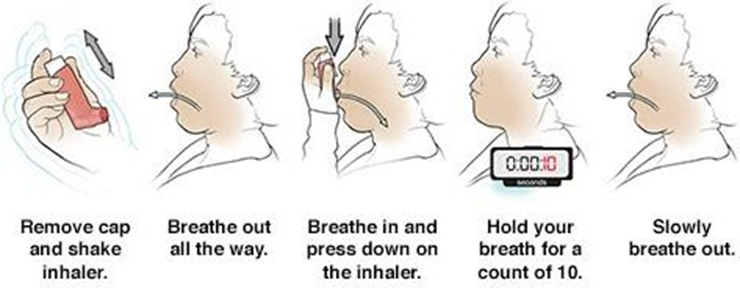
B Inhaling slowly allows the medication to be dispersed and distributed more effectively throughout the lungs. Rapid inhalation may cause the medication to impact the back of the throat rather than reaching the lungs. Instructing the client to inhale slowly helps maximize the amount of medication that reaches the airways.
C. Holding the mouthpiece between the lips and forming a good seal with the lips helps ensure that the medication is delivered directly into the airways. This technique ensures that the client inhales the medication effectively. Holding the mouthpiece between the lips also prevents the medication from escaping and ensures that it reaches the lungs.
E. Some medications delivered via MDIs, especially corticosteroids, can cause oral candidiasis (thrush) or irritation if not rinsed out of the mouth. Rinsing the mouth with water after using the MDI helps reduce the risk of side effects such as thrush or irritation in the mouth and throat. This instruction is particularly important for clients using corticosteroid inhalers.
D. MDIs can deliver medications for both quick relief (short-acting bronchodilators) and long-term control (maintenance medications). This instruction is correct if the medication prescribed is a short- acting bronchodilator (e.g., albuterol) used for quick relief of symptoms like wheezing or shortness of breath. However, if the medication is a long-term control medication (e.g., corticosteroid inhaler), it should be used regularly as prescribed to manage underlying inflammation.
Nursing Test Bank
Naxlex Comprehensive Predictor Exams
Related Questions
Correct Answer is A
Explanation
A. Hypotension (low blood pressure) is a common side effect of epidural anesthesia due to the vasodilatory effects of the local anesthetic. It can lead to decreased perfusion to vital organs and compromise fetal oxygenation. Hypotension is a critical finding because it can affect both the mother and the fetus. In severe cases, hypotension can lead to maternal dizziness, nausea, vomiting, decreased
uteroplacental perfusion, and fetal distress. Prompt intervention such as administering IV fluids and positioning the client to improve venous return is necessary to stabilize blood pressure and prevent adverse outcomes.
B. Leg weakness can occur as a result of epidural anesthesia affecting the lower extremities. It is typically a transient and expected side effect. While leg weakness can impact the client's comfort and mobility, it is not as immediately concerning as hypotension in terms of potential complications for both the mother and the fetus.
C. Urinary retention is a common side effect of epidural anesthesia but is generally managed by monitoring and, if necessary, catheterization. While it requires attention, it is not typically considered a higher priority compared to hypotension.
D. An elevated temperature can indicate infection or a systemic inflammatory response, which may require investigation and treatment. While an elevated temperature is concerning and warrants further assessment to determine its cause, it is not typically the highest priority compared to managing hypotension, which can have more immediate and significant effects on both the mother and the fetus.
Correct Answer is C
Explanation
C. Crackles in the lungs can indicate fluid accumulation, such as pulmonary edema or pneumonia. Morphine can exacerbate respiratory conditions by depressing the respiratory drive and increasing the risk of respiratory complications. Crackles in the lungs suggest potential pulmonary issues that may compromise respiratory function. The nurse should withhold morphine and contact the provider to assess the client's respiratory status and determine if further evaluation or treatment is needed before administering morphine.
A. Urinary retention is a potential side effect of morphine. However, it is not typically a reason to withhold morphine unless it is severe or accompanied by other concerning symptoms. The nurse should monitor urinary output and consider interventions to alleviate retention if necessary, but it may not require withholding morphine alone.
B. A respiratory rate of 16 breaths per minute is within the normal range for adults. However, the nurse should assess for any signs of respiratory distress, such as shallow breathing or decreased respiratory effort, which could indicate impending respiratory depression. If there are concerns about potential respiratory depression, the nurse should withhold morphine and notify the provider for further assessment.
D. Morphine can cause bradycardia as a side effect by depressing the cardiovascular system. A heart rate of 68 beats per minute is within the normal range for adults. However, the nurse should consider the client's baseline heart rate and any signs of hemodynamic instability. If the client shows signs of significant bradycardia or other concerning cardiovascular symptoms, withholding morphine and contacting the provider for further evaluation would be appropriate.
Whether you are a student looking to ace your exams or a practicing nurse seeking to enhance your expertise , our nursing education contents will empower you with the confidence and competence to make a difference in the lives of patients and become a respected leader in the healthcare field.
Visit Naxlex, invest in your future and unlock endless possibilities with our unparalleled nursing education contents today